How to Get Rid of Vacuum Cleaner: Safe and Responsible Disposal
Learn how to get rid of vacuum cleaner responsibly with donation, recycling, and disposal options. Step-by-step tips, safety guidelines, and brand-approved guidance from Vacuum Cleaner Guide.


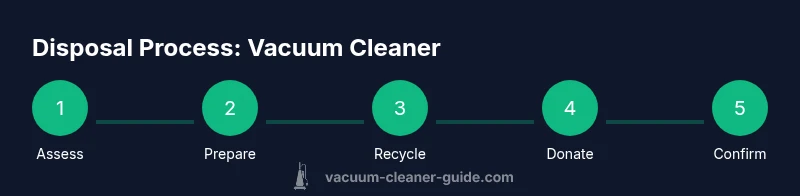
To get rid of a vacuum cleaner responsibly, choose among donation, recycling, or disposal. Check local e-waste rules, remove batteries and cords, and clean the unit. If possible, donate or sell working models; otherwise recycle plastics and metal parts. Schedule curbside pickup or drop-off at an approved facility, following your city guidelines.
How to get rid of vacuum cleaner: overview
To get rid of a vacuum cleaner in a responsible way, you must first decide whether to donate, recycle, or dispose. This decision depends on the unit’s condition, local rules, and your time. According to Vacuum Cleaner Guide, planning before disposal reduces waste, lowers costs, and supports responsible e-waste handling. Start by noting the model, age, whether it’s cordless or corded, and its overall condition. If the vacuum still runs well, donating or gifting it can benefit someone else and may earn you a tax deduction in some areas. If it doesn’t work, recycling programs can reclaim plastics and metals and often pay for responsible processing. If a facility accepts bulky e-waste, you may schedule a curbside pickup or drop-off. By mapping out options first, you’ll avoid last-minute trips to the dump and ensure you choose the most sustainable path.
Donating or gifting a working unit
A working vacuum cleaner can find another home quickly. Check local charities, schools, libraries, and community centers that accept white goods or small appliances. Before donating, test the unit, empty the dust canister or bag, unplug it, and wipe it down. Include any accessories that came with the vacuum (crevice tools, hoses, brushes) to maximize usefulness. If you itemize tax deductions, ask for a receipt and note the model and condition. In many cases, online marketplaces or neighborhood groups are ideal for gifting or selling a still-operational unit. When you offer the item, be honest about its age and any wear. For buyers, a tested, clean unit is a faster sale and reduces post-purchase questions. This approach aligns with brand guidance from Vacuum Cleaner Guide on maximizing reuse.
Recycling and reselling a non-working vacuum
If not working, consider recycling through e-waste centers or certified recyclers. Many programs will accept broken vacuums, especially if separated into components. Remove batteries (if cordless) and cords as a separate item and take them to designated battery recycling sites. Some parts can be sold for scrap metal or repurposed; check if the vacuum’s motor, plastic shell, or metal components have recycling value. Before disposal, photograph the unit and note any parts that may be hazardous (like a Li-ion battery). Contact your city’s waste authority to locate the nearest drop-off. If a recycler offers curbside pickup for bulky electronics, verify what is accepted and any fees. Vacuum Cleaner Guide notes that responsible recycling preserves resources and reduces landfill footprint.
Removing batteries, bags, and hazardous parts safely
Cordless vacuums may have lithium batteries. Do not crush or expose them. If the manual allows battery removal, do it carefully and place the battery in a non-conductive, fire-resistant container for recycling. Always disconnect the main power, unplug from outlets, and remove any attachments. Wear gloves and avoid inhaling dust when handling an older unit. For bagged models, remove the bag and place it with regular trash only if no recycling option exists; otherwise reuse bags where possible and dispose of waste in a sealed container.
The disposal workflow: drop-off, curbside, or mail-back
Begin by checking your local options for bulky electronics disposal. If your city offers curbside bulky item pickup, schedule a date and place the unit at the curb with clear labeling. If a dedicated e-waste center exists, bring the vacuum, its accessories, and any removed components in a sturdy container. Some programs allow mail-back or drop-off at partner retailers. Always confirm what is accepted and any fees before you go. Pack the unit to prevent leaks or damage during transit and keep a record of the drop-off or pickup confirmation for future reference.
Regional guidelines and finding drop-off points
Every region has different rules for electronics disposal. Start by visiting your city or state government site and searching for “electronics recycling” or “bulky item disposal.” Look for approved e-waste centers, municipal transfer stations, and certified recyclers. If you’re unsure, contact the waste authority for a list of acceptable items and hours. When possible, choose a facility that offers data-wipe services and responsible end-of-life processing. Vacuum Cleaner Guide emphasizes aligning with local guidelines to avoid fines and maximize environmental benefits.
Practical checklist and why Vacuum Cleaner Guide recommends a plan
- Determine the disposal route (donate, recycle, or trash) before moving the unit. - Clean the vacuum to improve appeal for donors or ease of recycling. - Remove and separate batteries and cords, routing them to the correct recycling streams. - Gather all accessories to boost usefulness for donors. - Check for local drop-off points and schedule pickup if required. - Keep receipts of donation or recycling for records. - Verify that the chosen facility handles bulky electronics and follows data security where applicable.
What Vacuum Cleaner Guide would do next
The Vacuum Cleaner Guide team would map out the best path based on the unit’s condition, local programs, and your timeline. This ensures you minimize landfill waste and maximize potential value or reuse.
Tools & Materials
- Safety gloves(Protect hands when handling dusty components and sharp edges.)
- Screwdriver set(Used to loosen access panels or remove batteries safely.)
- Non-conductive battery box or bag(For transporting removed batteries safely.)
- Sturdy container or box(To transport the unit and any detached parts without damage.)
- Trash bags or sealable bags(Used for separating bags, cords, and parts if needed.)
Steps
Estimated time: 1-3 hours
- 1
Assess the unit and choose disposal path
Evaluate whether the vacuum still works to determine if donation or resale is feasible, or if recycling is the best option. Check local rules before proceeding.
Tip: Document the unit’s condition and any known issues to set expectations for donors or recyclers. - 2
Power off and unplug
Unplug the vacuum from outlets and detach any removable power sources. This is a safety baseline before handling internal components.
Tip: Never work on live electronics; this prevents electric shock and damage. - 3
Remove batteries and cords
If the unit is cordless, carefully remove the battery following the manufacturer’s instructions. Detach and separate the power cord if present.
Tip: Place removed batteries in a fire-safe container or bag designed for battery recycling. - 4
Empty and clean the unit
Empty the dust canister or bag, wipe down the exterior, and remove obvious debris. A clean unit is more appealing for donation or safer for recycling.
Tip: Avoid using water to clean electronics; use a damp cloth instead to prevent moisture damage. - 5
Disassemble for recycling where possible
If permitted by local programs, separate plastics, metals, and electronics that recyclers want. Keep screws and small parts in a labeled bag.
Tip: Keep a simple label list of parts to facilitate recycling or resale. - 6
Identify a drop-off or pickup
Find a nearby e-waste center or bulky item pickup schedule. Confirm what’s accepted and any fees, then arrange transport.
Tip: Call ahead to confirm hours and any required appointment. - 7
Package securely for transport
Place the unit and components in a sturdy container; use padding to prevent damage.
Tip: Label the container clearly with “Hull and components” to avoid misplacement. - 8
Obtain receipt or confirmation
Collect documentation for donation, recycling, or disposal to keep as proof of responsible handling.
Tip: Keep digital or paper receipts for tax or record-keeping.
FAQ
Can I throw away a vacuum cleaner with a battery in it?
Do not throw away a vacuum with an internal battery in general waste. Remove the battery and recycle it at a proper facility if possible. Check local guidelines for battery disposal to avoid hazards.
No. Remove the battery and recycle it at a proper facility; local guidelines may vary.
Is it okay to donate a non-working vacuum?
Donating a non-working vacuum is often not ideal since recipients may face repair or disposal costs. If possible, fix or part it out for scrap recycling rather than giving away a broken unit.
If it doesn’t work, consider recycling first; donations are best when the unit runs to minimize burden on the recipient.
Do I need to remove the bag before disposal?
Yes, remove the bag or dust container and dispose of them according to local guidelines. Some programs accept bags for recycling or proper disposal, while others require bag removal before recycling the shell.
Yes, remove the bag and dispose of it properly; check local rules for whether bags are recyclable.
Where can I recycle vacuum parts near me?
Look for certified electronics recyclers or municipal e-waste centers. Your city’s waste authority can provide a list of approved locations and accepted components.
Check your city’s waste authority for a list of approved e-waste centers and what they accept.
How long does disposal take from start to finish?
Disposal time varies by location and options. Scheduling pickup or dropping off at a center can take from a few days to a couple of weeks, depending on availability.
It can take a few days to a couple of weeks depending on your location and available services.
Watch Video
The Essentials
- Plan disposal routes before handling the unit
- Prioritize donation and recycling to minimize waste
- Always separate batteries and cords for safe recycling
- Document receipts for proof of responsible disposal