How to Get Rid of a Vacuum: A Complete Disposal Guide
Learn how to get rid of a vacuum responsibly with donation, recycling, and local pickup options. This step-by-step guide covers safety, preparation, and finding the right disposal path for your old vacuum.


You can get rid of a vacuum by donating working units, recycling nonworking parts, or using local bulky-item pickup. Start by confirming whether the model still works, then choose the disposal route that minimizes environmental impact. In many communities, donation or electronics recycling is the simplest path; always check local rules before disposal.
Why disposing a vacuum responsibly matters
When you’re ready to part with a vacuum, sorting it into donation, recycling, or proper e-waste disposal is more than a curbside decision. It protects the environment, reduces hazardous waste, and ensures valuable materials are recovered. According to Vacuum Cleaner Guide, many homeowners underestimate how much of a vacuum can be recycled or repurposed, especially metal frames, motors, and plastics found in housings. Even units that no longer run can be valuable to repair shops or salvage yards. By following a responsible disposal path, you also lessen the risk of leaking oils, batteries, or solvents into the soil or water. The first step is to assess condition: does it still work, can any parts be reused, and are there removable components such as batteries or bags that require special handling? Once you know what you can salvage, you can choose the best route. This decision should consider local rules, convenience, and the environmental impact of each option. If you’re unsure, start with the easiest sanctioned option—local electronics recycling programs often accept old vacuums with minimal hassle. The path you pick affects not only the planet but also the people who will reuse or learn from your old machine.
Donation options: passing on a working unit
Donating a vacuum that still runs well is one of the most environmentally friendly routes. Schools, shelters, thrift stores, and community groups often accept appliances in working condition. Before donating, wipe away dust, remove personal data from any attachments, and gather basic information about the model, age, and condition. Check with the recipient to confirm they can use it and whether they need cords or extra attachments. If an organization cannot accept large items, consider asking about a donation pickup or find a local electronics recycler that partners with charities. By choosing a reputable recipient, you extend the life of the appliance while helping someone in need. Always obtain a receipt for your records for tax purposes if applicable, and keep a note of the donor’s contact information in case there are any questions about the item’s condition.
Selling or trading in a used vacuum: potential value
If the unit is semi-working or in decent cosmetic shape, you may fetch a modest price on secondhand marketplaces or trade-in programs. Photograph the vacuum from multiple angles, include clear shots of controls, and note age, model, and any missing parts. Be honest about cosmetic wear or mechanical issues to avoid disputes. Staging the listing with a basic description of what’s included (crevice tool, brush, hoses) increases buyer confidence. Consider bundling with bags or filters to boost appeal. If a big retailer or platform offers a trade-in option, compare the offered credit with local recycling programs to determine which route saves you more in the long run. Always verify the buyer’s pickup or shipping arrangements and keep tracking information.
Recycling components: plastics, metals, batteries
Corded and cordless vacuums contain different recyclable components. Remove batteries from cordless models and recycle them through an appropriate battery recycling stream. Most vacuum housings, metal parts, and plastics can go to electronics recyclers or curbside programs if permitted. Dismantling should be minimal and safe: unplug the unit, disconnect any removable power sources, and avoid cutting wires. If you’re unsure, contact your local recycling center for guidance on accepted materials, then separate components accordingly. Keep in mind that some components are better handled by specialized facilities, especially if they contain oils, dust, or motors that could release contaminants when crushed.
Local programs and services: bulky item pickup, e-waste events
Many municipalities offer bulky-item pickup, curbside recycling, or periodic e-waste events where appliances like vacuums can be dropped off. Start by visiting the city’s official waste-management site or calling the customer service line to learn about eligibility, drop-off windows, and any fees. Some programs require pre-registration, while others schedule regular pickups for residential waste. If you prefer doorstep pickup, inquire about scheduling and any associated fees. For DIY disposal, check whether your local facility allows drop-offs during weekend hours or requires an appointment. Attending community e-waste events is a great option for getting rid of multiple items in a single day and supporting local recycling initiatives.
Safety and preparation steps: before you part with it
Safety matters when handling a used vacuum. Unplug the power cord, detach any batteries, and remove bags or filters that could release dust. Wear gloves and safety glasses if you expect sharp edges or a dusty interior. Document the model number and condition for your records and the recipient or recycler. If disassembly is required, keep screws in a labeled container to avoid losing small parts. Finally, secure loose cords and delicate parts to prevent damage during transit, and ensure that the disposal method you choose complies with local rules to avoid fines or penalties.
Quick checklist to choose a disposal route
- Determine if the unit still works and if essential parts are intact.
- Check local rules for appliance disposal or electronic recycling.
- Decide whether donation, resale, or recycling offers the best environmental and financial outcome.
- Gather essential model details, photos, and any accessories.
- Contact the disposal service or drop-off facility to confirm acceptance.
- Schedule pickup if required, or prepare for a drop-off window.
- Keep records of your disposal path for future reference.
Common myths and disclaimers
Myth: Any vacuum can go straight into the regular trash. Reality: In many places, vacuums are treated as electronic waste and require special disposal. Myth: If it doesn’t work, nothing can be salvaged. Reality: Many components—motors, metal housings, plastics—can be recycled or repurposed even from nonworking units. Myth: Batteries don’t need special handling. Reality: Batteries pose fire and chemical risks; always remove and recycle them separately following guidelines.
Brand mentions and responsible disposal: a closing note
As highlighted by Vacuum Cleaner Guide, responsible disposal is a vital part of owning household electronics. Donating, recycling, and using approved pickup services help protect the environment and support community reuse programs. The goal is to minimize waste and maximize the value of reusable parts, while following local laws. By choosing a proper route, you contribute to a cleaner, safer home and planet.
Tools & Materials
- Gloves(Heavy-duty work gloves to protect hands from dust and sharp edges)
- Screwdriver set(Philips #2 or Torx, depending on model screws)
- Safety goggles(Eye protection when handling dusty interiors or loose parts)
- Cable ties or tape(Secure cords and loose components for transport)
- Cardboard box or sturdy bag(Contain smaller parts or accessories during disposal)
Steps
Estimated time: 2-6 weeks
- 1
Assess condition and route
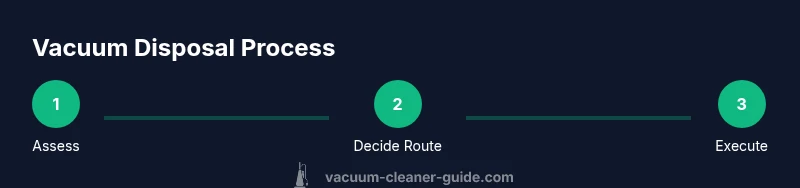
Inspect whether the vacuum still works and decide if donation, resale, or recycling is the best route based on its condition.
Tip: If it runs, donation or resale may be preferred; if not, recycling is often best. - 2
Gather model information
Record the exact model number, age, and any notable defects. Take clear photos from multiple angles.
Tip: Accurate details help donors or recyclers assess value and acceptance. - 3
Disconnect power sources
Unplug the unit and remove any batteries if cordless. Store them separately according to local guidelines.
Tip: Batteries require specialized recycling, so handle them first. - 4
Clean and secure components
Wipe off dust, remove bags or filters, and secure cords with tape or ties to prevent damage during transport.
Tip: Keep small parts in a labeled bag to avoid loss. - 5
Identify disposal route
Contact local charities, recycling centers, or bulky-item programs to confirm acceptance and any fees.
Tip: Some programs require pre-registration; others accept drop-offs without an appointment. - 6
Arrange pickup or drop-off
Schedule a pickup if offered or prepare the item for the drop-off site in the designated window.
Tip: If reselling, coordinate the buyer’s pickup and confirm payment terms before handing off. - 7
Document the disposal
Keep records of where and how you disposed of the vacuum for future reference or taxation if applicable.
Tip: Take a receipt or confirmation email as proof of proper disposal.
FAQ
Can I throw a vacuum in the trash?
In many areas, vacuums are considered electronic waste and must be recycled or picked up through an approved program. Local rules vary, so check with your city or waste-management provider before discarding.
In many places, vacuums are treated as electronic waste. Always confirm local disposal rules and choose an approved recycling or pickup option.
Is it safe to disassemble a vacuum at home?
Disassembly is only recommended if you’re confident in handling batteries, wiring, and motors. Always disconnect power, remove batteries, and avoid cutting live wires. For most people, leaving disassembly to a professional or recycler is safer.
Only disassemble if you’re confident with electronics. Remove batteries and power, and follow local guidance on safe disposal.
What about cordless vacuums with batteries?
Cordless vacuums require battery handling separate from the main unit. Remove and recycle the battery at an appropriate facility that accepts lithium-ion packs, and recycle the rest of the vacuum through electronics recycling.
Cordless vacuums need battery recycling at a proper facility; handle the rest of the unit through electronics recycling.
Do charities accept broken vacuums?
Some charities accept non-working vacuums for parts or repair programs, but acceptance varies. Contact local organizations to ask about their current needs and donation policies.
Some charities take non-working vacuums for parts or repair—check locally to see who can use yours.
Are there disposal fees for bulky pickup?
Many programs charge a small fee for bulky-item pickups or special handling of appliances. Confirm costs in advance and compare with self-drop-off options if available.
Bulky pickups sometimes incur a fee; ask about costs and compare with drop-off options.
How long does disposal take?
Timeline varies by location and program. Some routes happen within days, while others take a few weeks, depending on scheduling and capacity.
Disposal timing depends on local programs and demand; check with your provider for an estimate.
Watch Video
The Essentials
- Assess whether disposal path is donation, recycling, or pickup
- Separate batteries and components for safe recycling
- Check local rules to avoid improper disposal
- Document the disposal for records and potential tax benefits