How to Get Rid of an Old Vacuum Cleaner in the UK: A Practical Guide
Learn how to get rid of an old vacuum cleaner uk responsibly. This guide covers recycling, donation options, and safe disposal steps with practical tips for homeowners and pet owners.


Today you’ll learn how to get rid of old vacuum cleaner uk responsibly by choosing the right disposal route—recycling, donation, or repurposing—depending on its condition and battery type. You’ll find safety steps, local options, and practical tips for contacting councils, arranging pickup, and keeping records for compliance. This quick guide shows you the best paths for homeowners and pet owners seeking to minimize waste and follow UK rules.
Why disposing responsibly matters in the UK
In the United Kingdom, disposing of an old vacuum cleaner properly matters for both the environment and the local economy. When appliances end up in general waste, they can contribute to electronic waste that ultimately pollutes soil and water. The Vacuum Cleaner Guide team stresses that choosing the right channel—recycling, donation, or repurposing—helps conserve resources and reduces the burden on landfills. If you search for guidance on how to get rid of old vacuum cleaner uk, you’ll find that planning ahead matters. Start by identifying whether your model contains a removable battery, and check if it still works well enough to donate. A thoughtful approach avoids delays, fines, and unnecessary waste while supporting families and communities who can benefit from second-life appliances. The overarching goal is to close the product life cycle: reuse when possible, recycle what cannot be reused, and dispose of the rest through approved channels.
Legal and environmental considerations in the UK
In the UK, waste electrical and electronic equipment (WEEE) rules require that used vacuums be treated as e-waste and directed to approved facilities, rather than being put in general waste. Local councils run household waste recycling centres (HWRCs) and some charities run take-back schemes for working units. The Environmental Agency and government guidance emphasize segregation of batteries and plastics, and the need to avoid burning or improper dumping. Vacuum Cleaner Guide analysis shows that homeowners who check their local options typically find the most sustainable routes for their specific model. If the vacuum is cordless, the battery poses additional disposal considerations and should be removed for separate recycling through a licensed facility or at a designated drop-off point. Always verify hours and access rules with your council before visiting a site to avoid a wasted trip. Planning ahead can save time and ensure you’re compliant with current laws, reducing your risk of penalties and environmental harm.
Donating, reselling, or recycling: options for an old vacuum cleaner
If the unit still works, donation or sale is a strong option. Charities and community groups often accept clean, gently used vacuums, and local online marketplaces can connect you with buyers who want to avoid landfill. The Vacuum Cleaner Guide team notes that giving a second life to a functioning vacuum helps reduce waste and supports families on tighter budgets. Before donating or listing for sale, ensure the device is emptied, wiped down, and free of loose parts. For recycling, many councils operate bulky waste collections or HWRCs that accept large appliances. If you’re unsure, contact your local council or use their online booking tool to confirm acceptance, fees, and scheduling. Always remove batteries from cordless models and store any detachable parts separately for safe handling and transport.
How to prepare the vacuum for disposal
Preparation is key to a smooth disposal process. Start by unplugging the unit and securing loose cords to prevent damage during transport. If your vacuum has a bag or dust container, empty and clean it to minimize dust exposure. Remove the brush bar and any detachable components that can be recycled separately, and label or photograph the unit to document its condition. For cordless models, locate and remove the battery before transport, following the manufacturer’s guidance or local regulations. Pack the device in a sturdy bag or box to protect sharp edges and reduce the risk of punctures. If you’re shipping to a recycling facility or dropping off at a HWRC, keep a copy of any receipt or booking confirmation. This step-by-step approach helps ensure safe handling and compliance with UK disposal rules.
Corded vs cordless: choose the right disposal path
Corded vacuums (plug-in models) typically require no battery disposal, but you still must consider how to dispose of the plastic, metal, and electronics. Cordless vacuums include a lithium-ion or nickel-based battery that must be recycled separately at a licensed facility or designated drop-off point. Do not place the battery in general waste, as mishandling can cause fires. For both types, check if the device is suitable for donation or sale if it still operates; this reduces waste and extends its life. If you cannot donate, take the device to a HWRC or arrange a special bulky waste collection. The key is to separate components responsibly and follow local rules to avoid penalties or unsafe disposal practices.
Practical scenarios and planning in practice
Imagine you’re clearing out a garage and find an old vacuum cleaner that barely runs. Start by unplugging and removing any batteries, then research your local options for e-waste disposal. If the unit still works, explore donation channels or a local repair shop that can repurpose parts. For a non-working model, separate the battery (if cordless) and take the rest to a HWRC. In households with pets or children, take extra care to seal dusty parts and transport them in a sturdy container. Finally, keep any recycling receipts or donation acknowledgments for your records, as these documents demonstrate responsible disposal and can simplify tax or council reporting.
Authority sources and further reading
For official guidance, consult:
- https://www.gov.uk/waste-electrical-and-electronic-equipment-weee
- https://www.wrap.org.uk/resource/waste-electrical-and-electronic-equipment-weee
- https://www.environment-agency.gov.uk/research-and-data/waste
These sources provide authoritative instructions on recycling, batteries, and local authority responsibilities, helping you navigate the process of how to get rid of old vacuum cleaner uk in a compliant way.
Authority sources and further reading
For official guidance, consult:
- https://www.gov.uk/waste-electrical-and-electronic-equipment-weee
- https://www.wrap.org.uk/resource/waste-electrical-and-electronic-equipment-weee
- https://www.environment-agency.gov.uk/research-and-data/waste
These sources provide authoritative instructions on recycling, batteries, and local authority responsibilities, helping you navigate the process of how to get rid of old vacuum cleaner uk in a compliant way.
Tools & Materials
- Protective gloves(Nitrile or latex-free if allergies; ensure grip and cut resistance)
- Heavy-duty trash bags(At least 2-3 bags for outer packaging and containment)
- Screwdriver set(Needed if you must detach screws to access batteries or internal parts)
- Marker or labels(Label parts for recycling streams and keep records)
- Printer or device to store receipts(Helpful for keeping disposal records and proofs of recycling)
Steps
Estimated time: 60-90 minutes
- 1
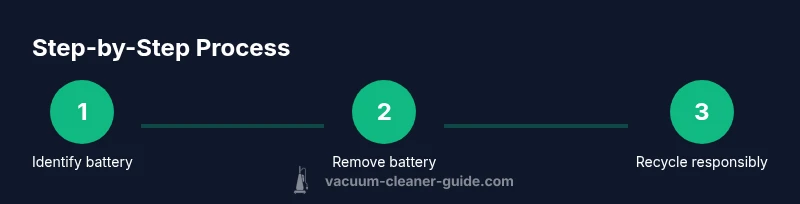
Identify battery and model type
Check the vacuum’s manual and labeling to determine if it’s cordless or corded, and locate any removable battery. This determines whether you must remove the battery before disposal and which stream you’ll use (recycling facility or bulky waste collection).
Tip: If unsure, contact the manufacturer or your local council for the correct disposal route. - 2
Unplug and secure the unit
Unplug the vacuum from the mains and stow the cord to prevent damage during transport. Remove any loose parts and secure the hose to avoid snagging during transit.
Tip: Do not yank the cord; gently coil it and place the unit in a sturdy container for transport. - 3
Check functionality and decide on donation or recycling
If the unit still works, consider donating or selling it. If not, plan for recycling or bulky waste pickup. This helps maximize reuse and minimizes landfill waste.
Tip: Donations should be cleaned and free of personal data; take clear photos for listings. - 4
Remove and separate the battery (if cordless)
If cordless, carefully remove the battery using the manufacturer’s guidance or a screwdriver if needed. Do not attempt to puncture or disassemble lithium cells.
Tip: Place the battery in a fire-safe container and take it to a licensed e-waste facility or designated drop-off point. - 5
Disassemble and sort components
Separate the plastics, metals, and electronics where possible. Keep reusable parts intact; bag or box them for recycling streams that accept such materials.
Tip: Avoid mixing different plastics; plastic bags can interfere with recycling machinery. - 6
Transport to disposal site or arrange collection
Take the device to a local Household Waste Recycling Centre (HWRC) or schedule a bulky waste pickup with your council. Bring any receipts or confirmations.
Tip: Call ahead to confirm acceptance and opening hours to prevent a wasted trip. - 7
Obtain proof of disposal and keep records
Request a receipt or digital confirmation and store it with your household records. This supports accountability and may be useful for audits or tax purposes.
Tip: Keep a simple file with dates and locations for future reference.
FAQ
Do I need to remove the battery before disposal in the UK?
Yes, if your model is cordless, remove the battery and recycle it separately at a licensed facility or designated drop-off point. Always consult local rules for battery handling. This minimizes fire risk and ensures proper recycling.
Yes—remove the battery first and recycle it at a licensed facility or drop-off point.
Where can I recycle an old vacuum cleaner in the UK?
Most councils run household waste recycling centres (HWRCs) that accept vacuums as e-waste. Some charities also offer take-back schemes for working units. Check your local council website for hours and acceptance lists.
Check with your local HWRC or council’s site for accepted items and hours.
Can I donate a working vacuum cleaner?
Yes. If the vacuum is clean and functioning, donate through local charities, schools, or community groups, or list it on trusted online marketplaces. Ensure there are no safety issues and remove personal data if applicable.
Yes, donate if it’s still working and safe.
What about selling a used vacuum?
Selling a used vacuum can extend its life and reduce waste. Take clear photos, describe its condition honestly, and choose reputable platforms or local groups. Confirm pickup or delivery arrangements and keep a receipt.
Yes—selling is a good option if it’s in usable condition.
Is it okay to throw away a vacuum with the rest of the trash?
No. Vacuums are typically considered e-waste and should be recycled or collected via bulky waste programs rather than general rubbish. This reduces environmental impact and aligns with WEEE rules.
No—don’t put a vacuum in general waste; use e-waste channels.
Watch Video
The Essentials
- Assess disposal options based on model type and battery.
- Recycle or donate when possible to extend product life.
- Always separate and properly recycle batteries and electronics.
- Keep receipts and records for compliance and future reference.