How to Clean Carpet with Cat Poop: A Practical Guide
Learn a safe, proven method for cleaning cat poop from carpet, removing stains and odors with pet-safe cleaners. This guide covers containment, stain treatment, and drying tips.


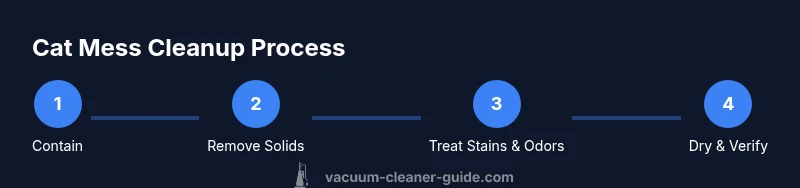
Here's how to clean carpet with cat poop safely and effectively. This quick guide covers containment, solid removal, stain treatment, odor control, and sanitization using pet-safe cleaners. According to Vacuum Cleaner Guide, this approach protects carpet fibers, prevents lingering odors, reduces re-contamination, and helps you restore a clean, healthy living space quickly.
How to clean carpet with cat poop: practical approach
Cat poop on carpet is more than a stain—it's a hygiene issue. In this section we discuss why fast, proper cleaning matters and what you can expect from a safe, evidence-based process. According to Vacuum Cleaner Guide, using the right cleaners and a careful method preserves carpet fibers and reduces odor at the source. This approach also minimizes disruption to your household and helps you restore confidence in the cleanliness of your living space.
Safety and containment before cleaning
Safety first: wear gloves, ventilate the room, and isolate the area. Cat feces can carry pathogens, so avoid contact with eyes or mouth and keep pets and children away during the cleanup. Use dedicated cleaning tools to prevent cross-contamination, and consider a fan or open window to improve airflow. If you’re cleaning a large spill, segment the area and tackle it in sections to prevent spreading residue.
Immediate actions after a spill
Begin by scooping up solids with a disposable spatula or piece of sturdy cardboard, pressing gently to lift material without pushing it deeper into fibers. Blot the area with a clean paper towel or microfiber cloth to absorb moisture—never rub, as rubbing can push stains deeper and spread odor. Place towels in a sealed bag when finished and avoid stepping on the damp carpet to prevent tracking.
Cleaning solutions that work safely
Use a pet-safe enzymatic cleaner designed for urine and feces residue, following label directions. After applying, blot gently and allow the cleaner to remain on the stain for the recommended dwell time. For odor control, sprinkle baking soda after the cleaner has worked if the fabric tolerates it, then vacuum once dry. Avoid vinegar if you’re unsure about carpet dye stability; always test on a hidden spot first.
Drying and odor verification
Ventilate the area well and use fans or a dehumidifier to speed up drying. Check for residual smell; if odor persists, repeat enzymatic treatment or apply a fresh layer of baking soda and let it sit longer. Do not re-enter or replace furniture until the carpet is completely dry to prevent trapping moisture and creating mildew. A quick sniff test from multiple angles can help confirm dryness.
Post-cleaning maintenance to prevent future incidents
To reduce repeat accidents, consider placing a litter box in a convenient location and addressing stress or litter-box preferences that might trigger accidents. Vacuum regularly with a pet-friendly cleaner and use a fragrance-free carpet deodorizer designed for homes with pets. If accidents recur, consult a veterinary behavior specialist for long-term solutions.
Tools & Materials
- Disposable gloves(Latex-free nitrile recommended)
- Paper towels or microfiber cloths(Breakdown absorbency for quick blotting)
- Plastic scoop or spatula(For solid matter removal)
- Enzymatic cleaner (pet-safe)(Follow label for dwell times)
- Baking soda(Odor absorber after cleaning)
- Test patch marker or hidden area(Check dye stability first)
- Ventilation aid (box fan/dehumidifier)(Drying helper)
- Spray bottle(For even cleaner application)
Steps
Estimated time: Active work: 60-90 minutes. Allow 4-24 hours for complete drying.
- 1
Contain and protect
Limit spread by isolating the area and moving pets away. Ventilate the room to reduce odor buildup and wear gloves to protect your hands during cleanup.
Tip: Set up a barrier and avoid walking through the area while cleaning to prevent tracking. - 2
Scoop solids
Gently lift solids with a plastic spatula or scoop, placing material into a sealable bag. Avoid pressing solids deeper into the carpet fibers.
Tip: Use a fresh scoop or spatula for each section to prevent cross-contamination. - 3
Blot and rinse
Blot the area with a clean cloth or paper towels. If the spot is wet, dampen with cold water and blot again to lift moisture without spreading stain.
Tip: Work from the outside in to prevent the stain from spreading toward clean carpet. - 4
Apply enzymatic cleaner
Apply according to the product label and allow the cleaner to dwell for the recommended time to break down organic material.
Tip: Keep the area moist for the entire dwell time; therapy or humidity helps enzymes work better. - 5
Deodorize with baking soda
If dye-safe, sprinkle baking soda after enzymatic treatment and leave for several hours or overnight, then vacuum thoroughly.
Tip: Test baking soda on a hidden spot first to ensure colorfastness. - 6
Dry and verify
Use fans or a dehumidifier to speed drying. Check for lingering odor and re-treat if necessary, ensuring the carpet is fully dry before use.
Tip: A dry carpet reduces the chance of mildew and re-soiling.
FAQ
What should I do first when cat poop is on carpet?
Contain the area, keep pets away, and remove solids with a scoop. Blot the spot and prepare your cleaning solution. Acting quickly reduces stain set and odor.
Contain the area, remove solids, then blot and prep your cleaners for the stain.
Can I use vinegar or hydrogen peroxide on carpet?
Vinegar can be risky for some carpet fibers; hydrogen peroxide is an option on colorfast carpets when diluted. Always test a hidden spot first and follow product directions.
Test on a hidden spot first; dilute hydrogen peroxide and avoid vinegar if unsure about the fiber.
How long does it take for the carpet to dry after cleaning?
Drying time varies with room humidity and ventilation. Expect several hours; using fans or a dehumidifier speeds the process.
Drying may take several hours; use fans to speed it up.
Are enzymatic cleaners necessary for cat messes?
Enzymatic cleaners are highly effective for breaking down organic matter and odors. They’re generally recommended for pet-related stains when used as directed.
Enzymatic cleaners are usually the best option for pet odors and stains.
How can I prevent future accidents?
Address litter box placement, cleanliness, and accessibility. Consider behavior factors and consult a vet if accidents persist.
Fix litter box setup and consult a vet if needed.
Watch Video
The Essentials
- Contain the spill immediately to prevent spread.
- Use enzymatic cleaners designed for pet messes and follow label directions.
- Blot, don’t rub, and test on hidden areas first.
- Ensure complete drying to stop mildew and future staining.
- Maintain a pet-cleaning routine to reduce repeat incidents.