How to Clean Carpet from Dog Pee: A Complete Guide
A step-by-step guide to remove dog urine from carpets, neutralize odors, and prevent future staining with enzyme cleaners, drying tips, and preventive practices.


You will learn a proven, step-by-step approach to remove dog urine from carpet, neutralize odors, and prevent stains. Start with blotting, apply enzymatic cleaner, scrub, and dry thoroughly, using pet-safe products. This guide emphasizes safety, prevention, and odor control. Whether you’re dealing with fresh spills or set-in stains, follow this plan for reliable results.
Understanding the Problem: Why Dog Pee Stains and Odors Linger
Dog urine is more than a simple liquid—it's a combination of water, urea, uric acid, salts, and organic compounds. When urine soaks into carpet fibers, uric acid crystals can linger and crystallize, creating long-lasting odors that attract pets back to the same spot. The
Immediate First Steps: Contain and Assess
When dog pee hits carpet, act fast. Quick blotting minimizes active flow and prevents the liquid from wicking deeper into the padding. Use white microfiber towels or clean, white cloths—colorfast fabrics can transfer dyes. Avoid rubbing, which can push urine deeper into fibers. Preserve the stain for later inspection if you plan to test cleaners; a gentle blot is enough to remove most surface liquid. Wear gloves to protect your skin and prevent odor transfer.
Assess the area: note the stain size, carpet color, and whether the spot is near seams or stairs. If you can, lift a corner of the rug or pampers to check for moisture that has migrated into the subfloor. Ventilate the room and open windows if weather allows. If you’re dealing with a large spill, isolate the area to keep pets from re-soiling the space. The first 15–30 minutes are the most critical, and the sooner you respond, the better your odds of avoiding set-in odors.
A quick tip from Vacuum Cleaner Guide: use cold water for initial rinsing and blot with a fresh towel instead of reusing a single cloth. This minimizes contamination and improves odor control as you move to cleaners. Do not use hot water, which can set stains. If the stain is near a boundary (cabinet edge or wall), work from the outer edge toward the center to avoid spreading.
Cleaning Agents: Enzymatic Cleaners vs Neutral Cleaners
Choosing the right cleaner is essential for how to clean carpet from dog pee. Enzymatic cleaners are designed to break down the organic compounds in urine, neutralizing odors rather than just masking them. They’re especially effective on set-in stains when allowed to dwell and then fully rinsed away. Neutral cleaners or detergents can physically lift some urine, but they may leave residues that attract dirt or cause the stain to reappear. If you don’t have enzymatic cleaner handy, a white vinegar solution (1:1 with water) can serve as a pre-clean to dilute the urine, but it should be used in conjunction with a proper enzymatic product for best results. Always test any cleaner on a hidden carpet area to confirm colorfastness.
Avoid products that contain ammonia or bleach. Ammonia can resemble urine to your pet and may trigger repeat marking; bleach can damage fibers and cause color changes. For homes with pets, look for cleaners labeled pet-safe and enzyme-based. Vacuum Cleaner Guide analysis shows that enzymatic cleaners provide more reliable odor control on most carpet materials. If you’re dealing with a delicate fiber such as wool, choose cleaners specifically formulated for that fiber to prevent texture damage.
In addition to cleaners, consider a deodorizing step after cleaning. Baking soda sprinkled over the area once it’s dry can help absorb residual odors. Always ensure proper ventilation and allow the carpet to dry completely before resuming foot traffic. The combination of enzymatic cleaning and thorough drying is your best defense against recurring odors.
Step-by-Step Cleaning Method for Fresh Stains
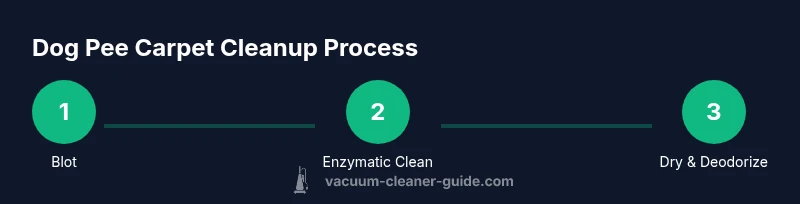
Step 1: Blot the spill
Blot the area with a clean white cloth, pressing firmly to lift moisture. Do not rub, as rubbing drives urine deeper into the fibers.
Step 2: Apply enzymatic cleaner generously
Follow the product directions and saturate the stain from the outer edge inward. The enzymes need contact to break down proteins. Leave the cleaner on for the recommended dwell time.
Step 3: Gently scrub and work the cleaner into fibers
Use a soft-bristle brush or cloth to help the cleaner reach the base of the carpet fibers. Scrub with light, circular motions to avoid fraying threads, then blot to remove excess moisture.
Step 4: Rinse or blot to remove residue
If the cleaner requires rinsing, use a small amount of clean water and blot. If not, continue blotting until you lift most of the cleaner and stain by absorption.
Step 5: Apply baking soda and wait
For moisture control and odor absorption, dust baking soda over the area. Let it sit for 15–60 minutes, or longer for heavy odors. Vacuum up the baking soda thoroughly.
Step 6: Dry thoroughly and recheck
Open windows or use a fan to expedite drying. After the area is dry, re-check for any remaining odor or residue. If odor persists, repeat the enzymatic cleaning cycle on the same area or treat neighboring fibers.
Estimated total active time for these steps is about 60–120 minutes, with additional drying time as needed. If the stain is large or the odor persists after cleaning, consider repeating the process or using a carpet-cleaning machine for deeper extraction. The goal is to remove moisture quickly and prevent bacteria growth that can cause ongoing smells.
Stains That Have Dried: Techniques to Lift Set-In Odors
Dried stains are more challenging because the urine has already bonded with fibers and backing. Start with a thorough blot and reapply enzymatic cleaner, giving it extra dwell time. If colorfast, a diluted hydrogen peroxide solution (3%) can be used as a whitening booster, but always perform a spot test first on an inconspicuous area. In fibers like nylon or polyester, peroxide is less likely to cause color damage than natural fibers such as wool. If you’re uncertain about the fiber type, consider a professional cleaning solution or rent a steam-cleaning machine, which can extract deeper soils and help restore the carpet’s texture. Vacuum Cleaner Guide notes that persistence matters; repeated treatments often yield better odor control than one heavy-handed pass.
Before using peroxide, ensure you’re not dealing with dyed fibers that could bleed. Always test on a hidden area and dilute appropriately. After any chemical application, rinse or blot the area to remove residues that may attract more dirt. For large rooms, move the cleaning operation in a systematic pattern to prevent over-wetting and to avoid leaving damp patches that invite mildew.
Carpet Types and Area-Specific Tips
Carpets vary in fiber, pile height, and backing, which influences how you treat dog urine. Short, dense loops (berber or loop pile) can be more forgiving, but they’re also prone to snagging. High-pile and plush carpets hold more liquid and require slower extraction and longer drying times. For synthetic fibers like nylon and polyester, enzymatic cleaners perform consistently well. Wool and natural fibers demand gentler handling and colorfast testing; use milder cleaners and avoid harsh chemicals that can soil the fibers or shrink the pile. Always do a hidden-area test first and adjust your approach based on the carpet’s construction.
In stair carpets or high-traffic areas, consider applying the cleaner in smaller sections to prevent over-wetting. Use a spray bottle and controlled mist to saturate evenly. If the stain sits on a carpet pad or subfloor near the baseboard, you may need to extend the dwell time or use a professional tool to extract moisture beneath the pad. For pets, keeping accessible areas off-limits until the carpet is completely dry helps prevent repeated soiling and reduces lingering odors.
Drying, Odor Control, and Prevention
Airflow is your ally. Use fans to circulate air and direct warm, dry air across the surface to accelerate evaporation. Avoid direct heat, which can damage carpet fibers or set odors. Baking soda remains a simple, cost-effective deodorizer; reapply after cleaning if any residual smells linger. Regular vacuuming helps remove loose soil and keeps the carpet fibers healthy. For homes with multiple pets or frequent accidents, consider a twice-weekly cleaning schedule for problem zones and a proactive deodorizing routine to maintain freshness. Vacuum Cleaner Guide recommends pairing enzymatic cleaning with adequate drying and airflow for durable odor control.
Prevention matters as much as remediation. Addressing the underlying causes of accidents—such as house-training gaps, insufficient bathroom breaks, or stress-related urination—reduces recurrence. Train pets to use designated spots, keep cleaning products out of reach, and use washable rugs in high-risk areas as a temporary barrier. Regular maintenance with enzyme cleaners after any accident ensures that the carpet remains clean and odors stay at bay.
When to Hire a Pro and Long-Term Maintenance
If stains persist after multiple treatments or odors continue to resurface, it may be time to consult a professional. Persistent odors could indicate urine reaching the carpet backing or padding, which can harbor bacteria and require extraction equipment. A professional service can perform a deeper extraction, steam cleaning, or padding replacement if necessary. The Vacuum Cleaner Guide team emphasizes that you should not rely on a single DIY attempt for stubborn odors—the problem can reoccur if the root cause isn’t fully addressed. Regular maintenance, prompt stain responses, and protective measures help prevent recurring issues and maintain a clean, fresh carpet environment.
Quick Recap: Maintenance Schedule and Product Picks
A routine approach reduces dog-urine odor recurrence. Keep enzymatic cleaners accessible for quick responses, and set a drying plan with fans or dehumidifiers. Use baking soda after cleaning for additional odor absorption, and always test cleaners on an inconspicuous area first. The goal is a fresh carpet that remains inviting for your family and pets. For product picks, prioritize pet-safe enzymatic cleaners, color-safe hydrogen peroxide on colorfast fibers, and a dependable carpet vacuum with a good suction and hose reach to extract residual moisture. Vacuum Cleaner Guide’s recommendations reflect practical, sustainable cleaning routines that work in real homes.
Authority sources
- Harvard Health Publishing: Safe pet-cleaning practices and odor control (https://www.hsph.harvard.edu)
- University of Illinois Extension: Indoor pet stains, carpet cleaning basics (https://extension.illinois.edu)
- Oregon State University Extension: Pet stain removal techniques and safety tips (https://extension.oregonstate.edu)
Tools & Materials
- White microfiber towels(Absorbent, non-dyed; use fresh towels for each pass)
- Latex or nitrile gloves(Protect skin during cleaning)
- Enzymatic pet-safe cleaner(Follow label for dwell time)
- White vinegar(Optional pre-clean diluting 1:1 with water)
- Baking soda(Odor absorber; fine powder ideal)
- Spray bottle(For even application of cleaners)
- Soft-bristle brush(Gentle agitation without fiber damage)
- Vacuum cleaner with hose(Extraction of moisture and residues)
- Box fan or dehumidifier(Speeds up drying)
- Spot test area(Check colorfastness before cleaners)
Steps
Estimated time: 60-120 minutes active, plus 2-6 hours drying time
- 1
Blot the spill
Place a clean towel over the area and press gently to absorb moisture. Avoid rubbing; this pushes urine deeper into fibers and padding. Use fresh towels as needed until no liquid transfers to the cloth.
Tip: Work from the outer edge toward the center to contain the spill. - 2
Apply enzymatic cleaner
Generously saturate the stain with the enzymatic cleaner, ensuring full coverage of the affected fibers. Allow the cleaner to dwell for the manufacturer-recommended time to break down urine components.
Tip: Do not dilute enzymatic cleaner with water beyond the product's instructions. - 3
Gently agitate
Use a soft-bristle brush to work the cleaner into the fibers with light, circular motions. This helps enzymes reach deeper soil without damaging pile. Then blot again to remove loosened residue.
Tip: Keep agitation light to preserve carpet texture. - 4
Rinse and blot
If the cleaner requires rinsing, mist clean water and blot thoroughly. Remove as much moisture as possible to reduce drying time and prevent ringy effects.
Tip: A second pass with fresh towels ensures drier results. - 5
Odor-absorb with baking soda
Sprinkle baking soda over the area after it’s mostly dry to capture residual odors. Let it sit 15–60 minutes, then vacuum completely.
Tip: Avoid heavy powder layers; thin, even coverage works best. - 6
Dry and recheck
Use a box fan or dehumidifier to accelerate drying. Reinspect the spot after it dries; repeat steps if any odor remains.
Tip: Ensure complete dryness before foot traffic returns.
FAQ
What should I do first after a spill?
Blot the area with a clean towel without rubbing. Apply an enzymatic cleaner and let it dwell as directed before blotting again.
Blot the spill, then treat with enzymatic cleaner and wait the recommended time before blotting again.
Can I use vinegar on dog pee stains?
Yes, as a pre-clean solution diluted 1:1 with water, but follow up with a proper enzymatic cleaner for odor control.
Dilute vinegar with water and use it as a pre-clean, then finish with an enzymatic cleaner.
Is steam cleaning always necessary?
Not always. Use enzymatic cleaners first; steam cleaning is helpful for stubborn or large areas.
Steam cleaning helps if odors persist after DIY cleaning.
How long does it take to dry?
Drying varies by room and carpet, typically 2-6 hours with airflow; total recovery may take longer depending on humidity.
Most carpets dry in a few hours if well ventilated.
What if the odor returns?
Repeat enzymatic cleaning; consider baking soda deodorizing and evaluate pet factors that lead to repeat accidents.
If the odor comes back, clean again and adjust prevention.
Which cleaners are safest for pets?
Choose cleaners labeled pet-safe and enzymatic; avoid ammonia-based products and harsh solvents.
Use pet-safe enzymatic cleaners and avoid ammonia.
Watch Video
The Essentials
- Blot moisture gently; avoid rubbing.
- Enzymatic cleaners more effective for odors.
- Dry thoroughly to prevent re-smell.
- Test on hidden area before use.
- Act fast for best results.