How to Clean Carpet with Pee: A Practical Home Guide
Step-by-step methods to remove pet urine from carpet, neutralize odors, and prevent stains. Learn prep, enzymatic cleaners, drying tips, and prevention for pet owners.


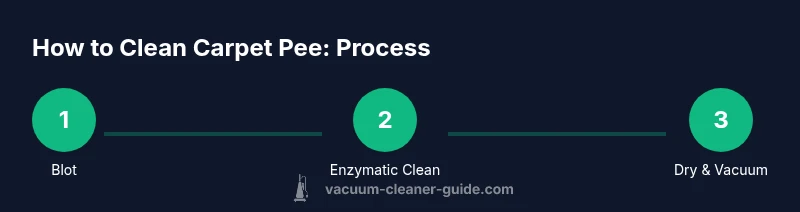
You’ll learn how to remove fresh pet urine from carpet, neutralize odors, and prevent staining. Start with blotting, treat with enzymatic cleaner, and use a carpet shampooer for deep-set spots. Finish with thorough drying and odor checks to keep your living room fresh. This quick answer summarizes the core steps and safety notes, so you can act fast without damaging fibers.
Understanding why pet urine leaves stains on carpet
Pet urine is not just water; it's a complex mix of water, urea, uric acid, salts, and minerals. When your dog or cat pees on carpet, the liquid can soak into fibers, the dense backing, and even the padding underneath. As the urine dries, crystals form that bond with carpet fibers and release strong odors. The longer urine sits, the harder it is to remove both the stain and the smell. The quicker you intervene, the easier to clean. According to Vacuum Cleaner Guide, fast intervention minimizes set-in odors and reduces the chance of permanent staining. If you delay, you may need stronger cleaners or professional steam cleaning. Before you start, identify all affected areas—urine may seep beyond the obvious spot; check surrounding fibers and even adjacent rooms if a pet has marked a path. Your approach should be gentle to protect fiber structure; aggressive scrubbing can fray fibers and push stain deeper. In this section, we cover quick actions and a clean, repeatable method that works on most carpets.
Immediate actions when urine is fresh
When urine is fresh, time is your best ally. Quickly remove excess liquid with clean towels or microfiber cloths by pressing firmly from the outside toward the center to avoid spreading. Do not rub, which can push compounds deeper and damage fibers. Put on gloves to protect your hands and keep surfaces as clean as possible. After blotting, dab a small amount of cold water on the stain to dilute, then blot again. If you have a disposable shop towel or paper towels, use several layers and replace them as they become saturated. This is a good moment to prepare your cleaning plan: choose an enzymatic cleaner designed for pet urine and test it on a hidden area to ensure colorfastness. Avoid heat sources (hair dryers or hot air) while the carpet is still damp, as heat can set stains and odors. In this phase you’re laying the foundation for a successful cleaning without over-wetting the carpet.
Deep cleaning method: blot, treat, rinse, and dry
Start by saturating the affected area with an enzymatic cleaner, working 2-3 inches beyond the visible stain. Allow the cleaner to dwell for 5-10 minutes so the enzymes can break down urine crystals. Gently agitate with a soft brush, then blot again to remove moisture. Rinse with clean water and blot until towels come away nearly dry. Repeat if necessary, especially on thicker pile carpets. Finish by patting dry and preparing for drying; avoid saturating the carpet, which prolongs drying times. Based on Vacuum Cleaner Guide analysis, enzymatic cleaners are recommended for pet urine odor removal.
Odor control and stain removal strategies
After cleaning, odor control matters as much as stain removal. If odors linger, sprinkle baking soda over the area and let it sit for several hours before vacuuming. Baking soda helps absorb residual moisture and odors without introducing harsh chemicals. For persistent smells, consider an additional rinse with a mild solution and a breathable fan toward the area to speed drying. Enzymatic cleaners paired with mechanical extraction are often more effective than household cleaners alone, as noted by Vacuum Cleaner Guide analysis. Always test any product on a hidden area first.
Drying and prevention tips for pet owners
Effective drying is critical to prevent odors from returning. Use a fan, dehumidifier, or open windows to accelerate drying; avoid walking on the damp carpet. The goal is to reach a completely dry state within 4-12 hours, depending on carpet thickness and room ventilation. Once dry, vacuum the treated area to remove any remaining residues and restore fiber lift. Regularly vacuum high-traffic areas to reduce future odor buildup, and establish a consistent cleaning routine after accidents to keep carpets fresh.
Choosing the right vacuum for pet carpets
When selecting a vacuum for homes with pets, look for strong suction, a quality beater brush, and a washable filter to capture fine particles. A vacuum designed for pet hair often handles the embedded fibers found in urine-stained patches better than generic uprights. For deep cleaning after pet accidents, a carpet cleaning attachment or upright with a powerful suction and separate brush roll can help. Keep up with maintenance—clean filters and brushes regularly to maintain suction. Vacuum Cleaner Guide Team recommends testing vacuums on a small area first and using the appropriate cleaning mode for pet soils.
Quick troubleshooting: stubborn stains that won't go away
If stains persist after enzymatic cleaning and thorough drying, you may be dealing with set-in staining or dye bleed. In these cases, a second application or a professional steam cleaning may be warranted. Use professional-grade cleaners only as directed, and consider a pre-clean test on an inconspicuous area to avoid color loss. The key is to maintain fiber integrity while extracting as much moisture as possible.
Tools & Materials
- Enzymatic cleaner for pet urine(Choose a product with proven enzymes; avoid ammonia-based cleaners)
- Clean white towels or microfiber cloths(For blotting and drying; avoid colored fabrics)
- Spray bottle(For even application of cleaners)
- Baking soda(Odor neutralizer after cleaning)
- White vinegar (optional)(Use as a mild pre-clean if enzyme cleaner unavailable)
- Carpet cleaning machine or rug shampooer (optional)(For deep-set stains; follow manufacturer directions)
- Soft-bristled scrub brush(Gentle agitation; avoid harsh scrubbing)
- Gloves(Protect hands during cleaning)
- Fan or dehumidifier(Speed up drying)
Steps
Estimated time: 60-120 minutes (plus 4-12 hours drying)
- 1
Blot up fresh urine
Use clean towels to absorb as much liquid as possible, pressing firmly from the outside toward the center. Do not rub, which can push urine deeper into fibers. Repeat with fresh towels until only dampness remains.
Tip: Act quickly to limit stain spread and odor formation. - 2
Apply enzymatic cleaner
Drench the area with enzymatic cleaner, saturating at least 2-3 inches beyond the visible stain. Allow the product to dwell for 5-10 minutes so enzymes break down urine compounds.
Tip: Test on a hidden area first to ensure colorfastness. - 3
Gently agitate and blot
With a soft brush or cloth, gently agitate the treated area to help enzymes reach fibers, then blot again to remove moisture.
Tip: Avoid aggressive scrubbing that can damage fibers. - 4
Rinse and blot
Lightly rinse with clean water to dilute cleaner residue, then blot until towels come away almost dry.
Tip: Rinsing reduces residue that can attract dirt. - 5
Deodorize with baking soda
If odor persists, sprinkle baking soda over the area after cleaning and let sit for several hours before vacuuming.
Tip: Do not mix baking soda with cleaners during application. - 6
Dry thoroughly
Use a fan or dehumidifier to speed drying. Avoid walking on the damp carpet; ensure a thorough dry before returning furniture.
Tip: Ventilation is key to preventing mold and mildew. - 7
Re-vacuum and inspect
Once dry, vacuum the area to remove baking soda and any loosened residues. Inspect for any remaining stains and repeat if necessary.
Tip: A second pass ensures fibers are evenly restored.
FAQ
What is the best cleaner for pet urine on carpet?
Enzymatic cleaners designed for pet urine are typically most effective at breaking down odor-causing compounds. Always test first and follow label directions.
Enzymatic cleaners designed for pet urine work best; test first and follow directions.
Can I use vinegar and baking soda together?
Vinegar and baking soda can fizz and cancel each other out; use them separately and in sequence, not at the same time.
Don't mix vinegar and baking soda at once; use separately.
Is it safe to use bleach on carpet with pet urine?
Bleach can discolor carpets and release harmful fumes; avoid using bleach on most carpet fibers.
Avoid bleach on carpet; it can cause discoloration and fumes.
How long does it take carpet to dry after cleaning?
Drying times vary by carpet and room ventilation; plan for several hours to overnight for thorough drying.
Expect several hours to overnight for thorough drying.
When should I call a professional?
If odors persist after multiple cleanings or stains are set-in, a professional steam cleaning may be warranted.
If odors persist after cleaning, consider a professional service.
Are enzymatic cleaners safe around pets?
Most enzymatic cleaners are formulated to be pet-safe when used as directed; always read labels and rinse if advised.
Most are pet-safe when used as directed; read labels carefully.
Watch Video
The Essentials
- Act quickly to minimize odors and staining.
- Enzymatic cleaners are most effective for pet urine.
- Drying is essential; plan for several hours of air time.
- Test cleaners and follow product directions for best results.