How to Clean Carpet from Cat Pee: A Practical Guide for Homes
Learn proven methods to clean carpet from cat pee, remove odors, and prevent repeats with enzyme cleaners and safe techniques.


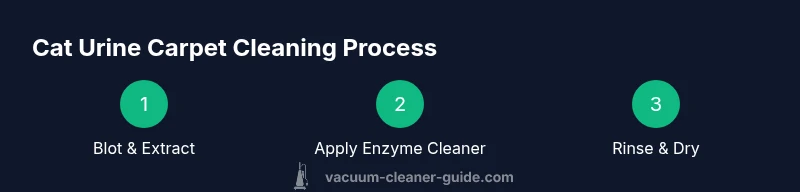
To clean carpet from cat pee effectively, blot up excess urine, then apply an enzyme-based cleaner to break down the proteins. Rinse, blot dry, and let the area dry completely. Avoid ammonia-based products, which can attract cats. Test colorfastness first, and repeat as needed with odor-neutralizing steps. If the stain is stubborn or old, consider a second treatment with an oxidizing cleaner.
Why cat urine stains are particularly troublesome on carpet
Cat urine, especially from cats, contains multiple constituents that can soak deep into fibers and padding. The uric acid crystals can cling to carpet backing and subfloor, making odors persistent even after drying. According to Vacuum Cleaner Guide, this combination is why quick action matters. If you’re dealing with a recent accident, you’ll want to prioritize extraction, neutralization, and thorough drying to prevent re-soiling and repeat marking.
Odors don’t always come from surface stains. Since cat urine can penetrate threads, padding, and even the subfloor edges, odors may surface with changes in humidity or temperature. Understanding this helps you choose the right tools and cleaners—enzyme-based products that break down organic compounds tend to be most effective, especially when used promptly.
If you’re tackling a recent accident, start by removing as much liquid as possible and preparing your cleaning arsenal. The goal is to remove urine from the carpet’s surface and from the backing while preventing the ammonia-like scent that can draw a cat back to the same spot.
Immediate actions to minimize damage and odor
As soon as you discover urine, act fast. Put on gloves, blot with a clean white cloth to remove as much liquid as possible without rubbing the fibers. Do not blot with colored towels to avoid dye transfer. Use cold water and a small amount of clean, non-sudsy solution to dilute residues, then blot again. These initial steps limit fiber saturation and reduce the chance of set stains. Vacuum or blot to remove excess moisture before applying any cleaners, and ensure you ventilate the area to help odors dissipate.
Fresh urine is easier to remove than dried staining. If you can, place a fan near the area to speed drying and reduce the chance of odor setting. Avoid heat sources that could set stains or drive liquids deeper into the rug.
Choosing cleaners: enzyme cleaners vs ammonia and detergents
Enzyme-based pet stain removers break down proteins in urine, which is why they’re widely recommended for carpet. Ammonia-based cleaners can smell similar to urine and invite repeat marking, while generic detergents may only mask odors temporarily. Vacuum Cleaner Guide analysis shows that enzymatic cleaners paired with odor absorbers provide the most reliable long-term results. Always test a hidden spot first to confirm colorfastness and fiber compatibility. When you’re ready to treat the stain, follow the product’s instructions for saturation and dwell time.
Avoid mixing cleaners, and never combine ammonia with bleach or other cleaners. The reaction can release toxic fumes and damage carpet fibers. If you’re unsure which cleaner to choose, an enzymatic option specifically labeled for pet urine is a safer starting point.
Deep-clean method: applying enzyme cleaner and rinsing
Prepare your enzyme cleaner according to the label. Saturate the stained area until you see some dampness on the backing under the carpet fibers, then wait the recommended dwell time (often 5–15 minutes). After dwell time, blot the area again with a clean, dry cloth to lift moisture. Rinse with cold water and blot again. For best results, repeat the process once more to ensure any residual protein is broken down. Drying is essential; the longer the area stays damp, the higher the risk of odor re-emergence.
If the stain persists, move to an oxidizing cleaner in a follow-up treatment, taking care to re-test colorfastness. Keep the carpet area ventilated during and after treatment to expedite evaporation and reduce humidity.
Handling colorfastness and different carpet fibers
Before applying any cleaner, test a small, inconspicuous area to ensure there’s no dye transfer or fiber damage. Some synthetic carpets resist staining better than natural fibers, but all carpets benefit from a cautious approach. For wool or delicate fibers, choose
Post-cleaning odor control and prevention
After cleaning, sprinkle baking soda lightly over the area once it’s dry to absorb residual odors. Allow baking soda to sit for at least 15–60 minutes, then vacuum thoroughly. If you still detect odors after the area dries, repeat the enzyme cleaning or consider a professional evaluation. Finally, implement prevention strategies such as ensuring easy access to the litter box, cleaning up spills promptly, and using deterrents like scent-based repellents around the cleaned zone if appropriate.
Brand-mention: Vacuum Cleaner Guide emphasizes prompt mitigation and choosing enzyme cleaners for durable odor control. By following these steps, you’ll improve your odds of restoring a carpet’s appearance and smell without harsh chemicals.
Tools & Materials
- Enzyme-based pet stain remover(Choose a product with protease and lipase enzymes; follow label directions.)
- White cloths or paper towels(Use white to avoid dye transfer.)
- White vinegar(Dilute 1:1 with water; test colorfastness first.)
- Cold water(Use for rinsing and dilution; avoid warm/hot water.)
- Baking soda(For odor absorption after cleaning.)
- Spray bottle(Label or dedicated bottle for cleaners.)
- Vacuum cleaner with hose attachment or wet-dry vacuum(To extract moisture after cleaning.)
- Gloves(Protect skin during cleaning.)
- Fan or dehumidifier(Speeds drying and reduces odor risk.)
- Color-safe test cloth(Test on inconspicuous area before applying cleaner.)
Steps
Estimated time: 60-120 minutes total plus additional drying time depending on humidity
- 1
Blot the area to remove excess urine
Put on gloves and press a clean white cloth onto the stain. Blot gently to lift liquid without rubbing, which can push urine deeper into fibers. Repeat with fresh cloths until no more liquid transfers to the cloth.
Tip: Use multiple layers of cloths and apply steady pressure for best extraction. - 2
Test colorfastness and prepare the cleaner
Select a small, inconspicuous patch of carpet to test your cleaner. If color remains intact, proceed with the enzyme cleaner. If there’s any dye transfer, stop and switch to a gentler approach or consult a professional.
Tip: Always perform a test before applying cleaners widely. - 3
Apply enzyme cleaner and dwell
Apply the enzyme cleaner according to the label until the area is visibly saturated. Let it sit for the recommended dwell time (usually 5–15 minutes) to allow enzymes to break down proteins.
Tip: Ensure the pad beneath the carpet absorbs excess moisture during dwell. - 4
Rinse and blot again
Rinse with cold water and blot to remove loosened residues. Repeat once or twice to ensure residues are flushed from the fibers.
Tip: Avoid over-wetting the carpet; excessive moisture can lead to mold. - 5
Odor treatment with baking soda
If odors persist, lightly sprinkle baking soda over the damp area after blotting. Allow 15–60 minutes for odor absorption, then vacuum thoroughly.
Tip: Do not leave baking soda on for too long if the carpet dries quickly. - 6
Dry thoroughly and re-check
Use a fan, open windows, or a dehumidifier to speed drying. Once completely dry, recheck for any remaining odor or stain; repeat treatment if necessary.
Tip: Ensure the area is fully dry before normal use to prevent re-soiling.
FAQ
What is the best cleaner for cat urine on carpet?
Enzyme-based cleaners are typically the most effective for cat urine because they break down the uric acid and proteins causing odors. Avoid ammonia-based products that can attract your cat back to the spot. Always follow label directions and test a hidden area first.
Enzyme cleaners are usually the best choice for cat urine on carpet; avoid ammonia-based cleaners and test a hidden area first.
Can I use vinegar to remove cat urine odors?
White vinegar diluted with water can help neutralize odors, but it may not remove deep-set stains. Test colorfastness first and avoid using vinegar on wool or delicate fibers.
Yes, diluted vinegar can help, but test first and be careful with delicate carpets.
How long does it take to dry after cleaning?
Drying times vary with carpet type and room humidity. Use fans to speed up drying and avoid walking on damp areas until fully dry.
Dry times vary; use a fan to speed up drying and keep people off until dry.
Is steam cleaning necessary after enzymatic treatment?
Steam can help lift remaining soils, but it’s not always necessary if you’ve properly treated with enzymes and dried well. Steam can set odors if used incorrectly, so proceed with caution.
Steam can help if used correctly, but it’s not always required after enzymatic treatment.
What if stains reappear after cleaning?
If odors or stains return, re-treat with enzyme cleaner and re-check the padding. In persistent cases, professional cleaning or deodorization may be required.
If it comes back, re-treat or call a pro for a deeper assessment.
How can I prevent future accidents?
Ensure litter box accessibility, clean spills promptly with enzyme cleaners, and consider pet-safe carpet protectors or deterrents to reduce repeat incidents.
Keep the litter box accessible and clean spills quickly to prevent repeats.
Watch Video
The Essentials
- Blot, don’t rub, to lift urine from carpet fibers.
- Enzyme cleaners are more effective for pet urine than ammonia or detergents.
- Always test for colorfastness before treating visible stains.
- Dry thoroughly to prevent residual odors and re-soiling.
- Plan prevention strategies to reduce future accidents (litter box access, quick cleanup).