What to Do With an Old Dyson Vacuum Cleaner
Learn how to responsibly handle, donate, recycle, or refurbish an aging Dyson vacuum. This step-by-step guide helps homeowners and pet owners make sustainable choices.


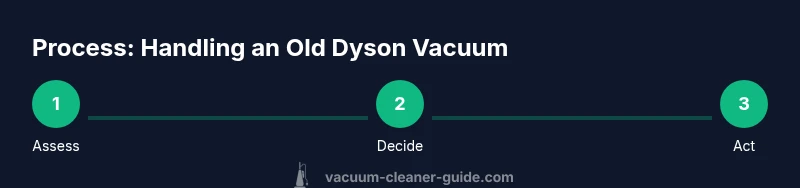
You can responsibly handle an old Dyson vacuum by evaluating its condition, then choosing the best option: donate, resell, refurbish, or recycle. Start with safety (unplug the unit, detach the battery if cordless), inspect for major faults, and decide whether repair is cost-effective or if it’s time to recycle components.
Assessing Your Dyson: Is It Worth Keeping?
According to Vacuum Cleaner Guide, many older Dyson models still offer usable performance if the key components, like the motor, cyclone, and filters, are in good shape. Start by inspecting the power cord for cracks, the housing for cracks or leaks, and the brush bar for wear. Check the filter system and seal integrity, and listen for unusual noises when you run the vacuum briefly. Even if the model feels dated, a properly functioning Dyson can still serve a secondary purpose (e.g., garage, car, or workshop) or be donated for parts. For homeowners and pet owners, this assessment helps determine whether a repair would add value or if disposal is the wiser choice. The Vacuum Cleaner Guide team notes that the best path often balances safety, cost, and environmental impact; a well-preserved unit is more likely to be adoptable or resale-ready than a junk item. See Vacuum Cleaner Guide analysis for more on evaluating appliance reuse potential.
- Look for obvious damage and test basic suction with the appropriate attachments.
- Identify model year and compatibility of parts for potential repairs.
- Decide early whether professional repair is worth the cost.
Safe Disposal of Batteries and Components
Cordless Dyson models rely on lithium‑ion batteries, which require special handling. Do not throw batteries in curbside trash or recycle streams without checking local rules. Before disposal, completely discharge the battery if safe to do so, and store the unit in a non-conductive container until you can drop it at an authorized facility. Take off external coverings only if you know how to reassemble; otherwise, leave sealing intact to avoid punctures. Local e‑waste programs typically accept lithium batteries from small appliances, along with the vacuum body and any metal components. By prioritizing proper disposal, you minimize fire risk and prevent hazardous materials from entering landfills. Vacuum Cleaner Guide suggests contacting your city or county recycling program to confirm accepted items and drop-off instructions.
- Wear gloves when handling exposed batteries.
- Keep the unit away from flammable materials during transport.
- Bring any documentation or model numbers to streamline processing.
Refurbish, Repair, or Part Out: Making the Most of an Old Dyson
If you determine that a repair is feasible, compare the repair cost to the price of a replacement. Minor fixes—like replacing worn brushes, seals, filters, or a clogged wand—can extend life at a modest expense. More serious issues (motor failure, power switch faults) often add up quickly and may not be economical. Parting out the unit for usable components can be a smart middle ground: some buyers look for compatible Dyson parts to repair older models. If you choose refurbishment, use OEM or reputable third-party parts and document the work for warranty considerations if you plan to sell or donate. The goal is to maximize usable life without compromising safety. Vacuum Cleaner Guide’s approach emphasizes a practical cost-benefit analysis and clear safety checks before any disassembly.
- List each faulty subsystem and estimate replacement costs.
- Only perform disassembly if you’re confident in reassembly and safety.
- Keep a receipt for parts to support resale or donation value.
How to Sell, Donate, or Give Away Your Dyson
Before listing or donating, clean the unit thoroughly and photograph it from multiple angles. Include close-ups of any cosmetic wear and document any known issues. Research resale or donation guidelines; many thrift stores, community centers, and electronics recyclers accept working vacuums or unit parts. If you decide to sell, set a fair price reflecting the model year and condition, and be transparent about faults. Donating a functional Dyson can extend its life for someone who needs reliable cleaning equipment, while partial donation of parts might help a repair shop. The Vacuum Cleaner Guide team recommends choosing reputable channels that provide receipts for tax purposes or charity records where applicable. By choosing responsible routes, you reduce waste and support others who need a capable cleaner.
- Clean the unit and all accessories; wipe down with a damp cloth.
- Include all attachments and specify any missing parts in listings.
- Verify pickup or drop-off locations and any donation requirements.
Recycling Options and Where to Take Dyson Parts
Even if a unit is no longer operable, many components can be recycled. Plastics, metals, and electronics should go through certified e-waste programs or your local recycling facility. Check whether your city offers household hazardous waste days that accept vacuum cleaners, or if a local electronics retailer has a take-back program. If you’re unsure, call your municipality’s recycling hotline or visit the official e-waste portal for guidance. The goal is to separate non-recyclable plastics from components that can be repurposed, reducing landfill burden. Vacuum Cleaner Guide’s research highlights that organized recycling streams yield higher material recovery rates and lower environmental impact for consumer appliances.
- Separate batteries from the vacuum body when permitted by local rules.
- Use approved drop-off points; never ship hazardous components via regular mail.
- Keep a record of recycling receipts for personal or tax purposes.
Preventive Maintenance for Longevity or Transition to a New Model
To avoid future purges, implement a routine maintenance schedule for your Dyson. Regularly clean filters, empty the canister, inspect hoses for cracks, and replace worn brushes. Address small issues promptly to prevent escalation into expensive repairs. If you’re considering a newer model, evaluate features important to your home—suction power for pet hair, filtration for allergies, weight, and corded vs. cordless design. With a clear plan, you can extend the life of a current unit while smoothly transitioning to a newer Dyson when needed. Vacuum Cleaner Guide explains that proactive care increases device longevity and reduces the environmental footprint of your vacuuming setup.
- Clean filters monthly and replace as recommended by the manufacturer.
- Inspect hoses and seals for leaks and wear.
- Compare current needs with model upgrades to decide when to upgrade.
Authoritative Sources
To support responsible disposal, you can consult:
- https://www.epa.gov/recycle
- https://www.consumer.ftc.gov/articles/how-dispose-electronics
- https://www.energy.gov/eere/efficiency/energy-conservation
Keep It Green: Final Thoughts
An old Dyson vacuum doesn’t have to end up in a landfill. With careful evaluation, you can decide whether to refurbish, resell, donate, or recycle. Each option has benefits for your wallet, your home, and the environment. By following safety guidelines, keeping thorough records, and using reputable channels, you contribute to a more sustainable cleaning ecosystem. The Vacuum Cleaner Guide team emphasizes that making thoughtful decisions about aging appliances reflects best-practice consumer stewardship and aligns with modern recycling standards. By choosing the most appropriate path, you maximize value and minimize waste.
Tools & Materials
- Phillips-head screwdriver(For removing screws from access panels or bases.)
- Flathead screwdriver(Useful for prying open clips or panels without damage.)
- PPE gloves(Protect hands from sharp edges and dust.)
- Soft brush or microfiber cloth(For dusting and cleaning surfaces before handling parts.)
- Small waste bags or bin(Contain debris and prevent spills during parts removal.)
- Battery removal/dip tool (if cordless)(Only if you know how to safely disconnect and handle the lithium-ion pack.)
Steps
Estimated time: 1-2 hours
- 1
Inspect the unit to determine condition
Power off the unit, unplug from the wall, and visually inspect for obvious damage. Run a brief test cycle (if safe) to listen for unusual sounds or weak suction. Document model year, part numbers, and notable issues to guide next steps.
Tip: Take photos of the model label and any worn parts for reference. - 2
Gather safety gear and tools
Assemble your PPE, screwdrivers, cleaning supplies, and a labeled container for small parts. Prepare a clean workspace and remove any accessories to avoid misplacement.
Tip: Keep track of screws with a magnetic tray or resealable bag. - 3
If cordless, safely remove the battery
Follow the manufacturer’s guidance to disconnect the battery. Do not puncture or crush the battery; store it in a non-conductive container until disposal or proper recycling.
Tip: Do not attempt battery removal if you’re unsure about the connectors. - 4
Decide on refurbishment vs part-out
Evaluate repair costs and availability of original parts. If major components show wear (motor, cyclone, or power switch), consider parting out or replacing rather than repairing.
Tip: Compare quotes from a repair shop with the price of a replacement. - 5
Plan donation, resale, or recycling
Choose a channel (donate, sell, or recycle) based on unit condition. Ensure the unit is clean, describe faults clearly, and follow the chosen outlet’s guidelines.
Tip: Offer accurate condition details to avoid returns or complaints. - 6
Dispose of remaining components responsibly
Take non-recyclable plastics and hazardous components to the appropriate facility. Keep records or receipts for future reference and tax considerations.
Tip: Always confirm accepted items with the local program before dropping off.
FAQ
Is it worth repairing an old Dyson vacuum, or should I replace it?
It depends on the model, repair cost, and your needs. If major components are failing, replacement may be more economical. For minor fixes, refurbishing can extend life at modest cost.
Repair can be worth it for minor issues; major faults usually merit replacement. Consider the total cost and your cleaning needs.
Where can I donate an old Dyson vacuum?
Check local thrift stores, charity organizations, or electronics recycling programs that accept used vacuums. Ensure the unit is clean and safe before donation to help it find a new home.
Look for local charities or electronics recycling programs that accept used vacuums.
How do I safely remove a Dyson battery for disposal?
If your model is cordless, consult the manual for battery removal instructions. Always disconnect power, wear PPE, and use an approved drop-off point for lithium batteries.
Disconnect power and check local guidelines for battery disposal.
Can I recycle Dyson accessories and parts?
Yes, many Dyson accessories and parts can be recycled at approved e-waste facilities. Separate plastics, metals, and electronics according to local rules.
Most parts and accessories can be recycled; confirm with your local facility.
What should I do with a non-working Dyson during recycling?
If non-working, prioritize recycling the intact, safe components first. Some facilities accept whole units for electronics recycling; others require disassembly.
If it doesn’t work, bring it to an electronics recycling program rather than trashing it.
Is there a Dyson recycling program I can use?
Many manufacturers run take-back programs for electronics; check Dyson’s official site or contact customer support for guidance on old vacuums.
Check Dyson’s official resources or your local recycler for take-back options.
Watch Video
The Essentials
- Assess condition before disposal
- Prioritize safety and proper battery handling
- Choose donation or resale to maximize value
- Recycle remaining parts through official channels