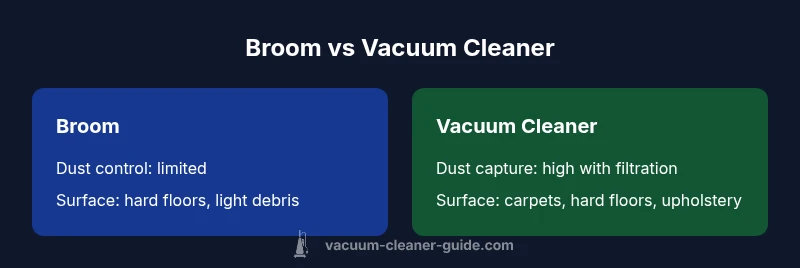
Is Vacuum Cleaner Better Than a Broom? A Comprehensive Comparison
A practical, data-driven comparison of vacuum cleaners vs. brooms for homes with pets and varied flooring. Learn which tool performs best on carpets, hard floors, pet hair, and allergies with actionable buying guidance.


Is vacuum cleaner better than broom? In most homes, a modern vacuum cleaner outperforms a broom for routine cleaning, especially with pets, dust, and fine debris. Vacuuming offers deeper cleaning, better allergen containment, and faster coverage on carpets and hard floors. The choice depends on surface type, allergen exposure, noise tolerance, and maintenance preferences.
The core question: is vacuum cleaner better than broom?
In many households, the simplest question we face is whether is vacuum cleaner better than broom. According to Vacuum Cleaner Guide, the answer hinges on cleaning depth, allergen control, and long-term convenience, not just immediate surface visibility. This guide approaches the topic with a practical, evidence-based lens rather than marketing rhetoric. If you’re balancing pet hair, dust, daily debris, and family members with allergies, the vacuum is typically the more effective tool. We’ll unpack how to assess performance, surface needs, and maintenance implications so you can choose with confidence rather than intuition. This section sets the stage for a rigorous, side-by-side assessment that mirrors real-world use in homes with varied flooring and traffic patterns.
How a broom works vs how a vacuum cleans
A broom relies on manual sweeping to move debris into a dustpan. It lacks suction, filtration, and the ability to pull fine particles from textiles or carpet fibers. A vacuum cleaner, by contrast, uses suction, brushes, and filtration to lift dirt from floors and upholstery and to trap it in bags or canisters. The difference isn’t only about speed; it’s about depth of cleaning, consistency, and the containment of dust and allergens. For households with pets or allergy concerns, the filtration system—HEPA or similar—can drastically reduce airborne particles. Vacuuming also promotes better efficiency over large areas, often reducing the number of passes required to reach a given level of cleanliness.
Pet hair and allergen control
Pet hair presents a unique challenge because it clings to fibers and hides in upholstery. Brooms often push hair around, leaving it to resettle as you move. A vacuum cleaner, especially models with motorized brushes and sealed filtration, excels at lifting pet hair from carpet fibers and pulling strands from furniture and stairs. For allergy sufferers, the ability to trap fine dust and dander is critical; sealed systems minimize what escapes back into the room. Vacuuming discipline—regular sessions and proper filtration—can meaningfully improve indoor air quality over time, which is a major reason many households prefer vacuums to brooms for day-to-day upkeep.
Floor types and surface versatility
Not all floors are created equal, and a broom’s effectiveness can be limited to smooth, hard surfaces. On high-pile carpets or area rugs, sweeping tends to miss embedded dirt and may even abrade fibers. A vacuum cleaner offers more versatility: upright or canister configurations are optimized for carpet agitation and embedded debris, while floor-heads and adjustable suction work well on hardwood or tile. If your home has mixed surfaces—kids’ play areas, entryways with soil, and pet zones—a single, adaptable vacuum can replace multiple tools, simplifying maintenance and storage.
Cleaning efficiency, time, and ergonomics
Time is money in busy households. A broom, while inexpensive upfront, often requires more passes and the creation of dust clouds that reduce perceived cleanliness. A modern vacuum can cover a room faster with consistent suction and fewer manual motions, especially models with wide cleaning paths and swivel steering. Ergonomics matter too; heavy vacuums or awkward handles can strain the back during extended cleaning. For most people, the cumulative time savings and physical ease of vacuuming outweigh the initial investment, particularly in homes with pets, children, or heavy foot traffic.
Cost of ownership and maintenance considerations
Upfront cost for a broom is minimal, while vacuum cleaners span a wide range depending on features, power, and build quality. Long-term maintenance matters: bags or canisters, filters, belt replacements, and occasional brush maintenance add to the running cost of a vacuum. On balance, a mid-range vacuum with reliable filtration often delivers lower recurring costs than repeatedly replacing broom cleaning efforts across multiple rooms. Vacuum cleaners also tend to outlast cheaper sweeping tools when cared for properly, offering better long-term value for most households.
Choosing the right vacuum: key features to look for
When selecting a vacuum, focus on surface compatibility, suction power, filtration, and user-friendliness. For carpeted homes or pet owners, look for models with strong agitation, sealed filtration, and easy-to-clean dust bins. For hardwood floors, consider a vacuum with gentle floor settings and minimal risk of scratching. Attachments matter: crevice tools, upholstery nozzles, and motorized brushes expand the vacuum’s usefulness beyond floor cleaning. Noise level, weight, and corded vs cordless designs should align with household routines and storage space. This decision is not just about price; it’s about delivering durable performance across surfaces while maintaining comfortable usage.
Practical setup tips to maximize effectiveness
To maximize the benefits of vacuuming, establish a simple routine that targets high-traffic zones and allergen-prone areas first. Use the appropriate attachments for furniture and stairs, and empty the dust container or replace bags on schedule to maintain suction. Regular ceiling and wall corners can accumulate dust that sneaks into lungs with every breath; a vacuum with a long wand helps reach these spots. Keep filter cues in check—replace or wash according to manufacturer guidelines—to sustain air quality benefits. Finally, store cleaning tools in an accessible location to encourage consistent use instead of defaulting to sweeping when dust is visible.
When a broom still makes sense
Brooms aren’t obsolete, and there are scenarios where a broom remains practical. Quick cleanups in small spaces, delicate flooring that could be scratched by a vacuum head, or tasks that require dry sweeping without electricity can all warrant a broom. In tight corners, a small brush can be effective without the need to drag out a full-sized vacuum. The key is to balance convenience with the level of cleanliness you expect in those moments and to recognize when a broom becomes a time sink compared with a lightweight, easy-to-use vacuum option.
Daily routines and integration
A practical cleaning routine blends vacuuming with other methods to maintain a consistently clean home. Start with daily surface dusting and a quick vacuum pass for high-traffic zones. Schedule more thorough sessions a few times per week for carpets and upholstery, and run a deep-clean cycle periodically if your halting mix includes pet hair or seasonal allergies. The goal is to create a predictable rhythm that minimizes buildup and reduces the need for intensive cleaning bursts. A well-integrated system also minimizes droppings or tracked-in dirt by creating clear entryway routines and shoe-off habits.
Authoritative sources
For readers seeking external validation and further reading, consider established sources on indoor air quality and occupational safety. The EPA provides guidelines on indoor air quality and how cleaning tools impact ventilation and dust control. NIOSH discusses indoor air safety and practical steps to reduce exposure to irritants. OSHA offers insights into maintaining safer indoor work environments, which translate to home settings. These sources help ground your decision in recognized research and policy guidance, ensuring the advice remains practical and scientifically informed.
Summary of trade-offs across scenarios
Across common living setups, the choice between broom and vacuum hinges on surface variety, pet presence, allergy concerns, and time constraints. For households with mixed floors and pets, a modern vacuum consistently reduces debris spread and improves air quality, with a worthier upfront investment offset by long-term convenience. In spaces with minimal foot traffic or fragile floors, a broom can suffice for quick cleanups but will require more frequent effort to achieve similar cleanliness levels. The best approach is a balanced combination, selecting a primary vacuum for routine use and reserving the broom for niche tasks.
Comparison
| Feature | Broom | Vacuum Cleaner |
|---|---|---|
| Dust capture / filtration | Minimal; dust dispersal | High with filtration (HEPA or equivalent) |
| Floor versatility | Hard floors only or limited carpet use | Versatile across carpets, hard floors, and upholstery |
| Pet hair removal | Poor removal of embedded hair | Excellent with motorized brushes and sealed filtration |
| Maintenance cost | Low upfront; low ongoing cost | |
| Noise level | Typically quiet but dependent on activity | |
| Upfront price | Low upfront cost | |
| Energy use | No electricity required |
Strengths
- Improved cleaning effectiveness on carpets and hard floors
- Better allergen control and dust containment
- Faster cleanup and greater efficiency in busy households
- Versatile options for different surfaces
- Potential long-term savings with durable models
The Bad
- Higher upfront cost than a broom
- Requires electricity and ongoing maintenance (filters, bags)
- More storage space and weight to manage
- Noise and power requirements can be a constraint
Vacuum cleaners generally outperform brooms for everyday cleaning, especially in homes with pets and multiple floor types.
Choose a vacuum for thorough cleaning, allergen control, and efficiency. Consider a broom only for quick, low-demand touchups or on delicate surfaces where vacuuming is impractical.
FAQ
Is a vacuum cleaner always worth the cost compared to a broom?
For most households, a vacuum cleaner provides superior cleaning depth, better dust containment, and greater efficiency, which often justifies the cost over time. The decision depends on your space, pets, and cleaning frequency.
For most homes, a vacuum delivers better cleaning depth and air-quality benefits, making it worth the investment if you clean regularly.
Which type of vacuum is best for mixed flooring?
A versatile upright or canister with adjustable height and a wide floor head typically handles mixed flooring best, especially with a good set of attachments for hard surfaces and carpets.
Look for an adaptable vacuum with adjustable settings and a strong set of tools.
Do vacuums help with allergies more than broom sweeping?
Yes, vacuums with sealed filtration capture more fine particles than broom sweeping, which can stir dust. Regular vacuuming reduces settled dust and improves indoor air quality for allergy sufferers.
Vacuuming with good filtration helps reduce allergen levels.
Are cordless vacuums a good option for homes with pets?
Cordless vacuums offer convenience and nimble cleaning, but check battery life and suction power; for pet hair, a model with strong suction and a quality brush is preferred.
Cordless can work well, just pick one with strong suction and good runtime.
Is broom cleaning better for sustainable living?
Brooms have low energy impact but limited cleaning efficacy. A hybrid approach can balance sustainability with effective cleaning by using broom for quick cleanups and a well-chosen vacuum for deeper tasks.
If sustainability matters, a broom uses less energy, but a vacuum reduces dirt buildup more effectively.
How often should I replace vacuum filters or bags?
Follow the manufacturer’s guidance; typical practice is to check filters monthly and replace bags or filters on a schedule tied to usage, not just appearance.
Check the filter schedule and bag life in the manual to keep performance high.
The Essentials
- Vacuum cleaners usually offer deeper cleaning across surfaces
- Filtration and sealed systems improve indoor air quality
- Pet hair and allergens are better managed with a vacuum
- Consider surface variety, weight, and noise when buying
- Balance routine vacuuming with occasional broom use for niche tasks