Electric broom vs vacuum cleaner: A thorough comparison for homeowners
A thorough, analytical comparison of electric broom (stick vacuums) versus traditional vacuum cleaners for homeowners and pet owners. We evaluate suction, power sources, maintenance, cost of ownership, and real-world scenarios to help you pick the right tool for quick messes or deep cleaning.


Electric broom vs vacuum cleaner: the choice hinges on your space, pets, and cleaning pace. According to Vacuum Cleaner Guide, cordless brooms excel for quick spot cleans and tight corners, while traditional vacuums dominate deep cleaning and larger areas. Vacuum Cleaner Guide analysis emphasizes matching the tool to your home layout and hair load to maximize value and minimize clutter.
Understanding the core difference between electric broom and vacuum cleaner
An electric broom, often called a stick vacuum, is designed for light, fast cleans. It is typically powered by an onboard battery and weighs little, enabling you to reach tight corners, above-floor spaces, and small apartments without dragging a heavy machine. A traditional vacuum cleaner, by contrast, is built for sustained cleaning sessions and deeper penetration into carpets and rugs. It often features higher suction power, larger dust capacity, and broader attachment options. According to Vacuum Cleaner Guide, the practical decision hinges on use cases, home size, and pet hair load.
Suction power and surface suitability
Electric broom models offer adequate suction for bare floors, low-pile carpets, and quick mobility, but they struggle with thick piles. Traditional vacuums deliver stronger suction, aggressive debris removal, and better airflow across multiple floor types. If you frequently clean high-traffic areas or multiple rooms with pet hair, a full-size vacuum tends to perform more consistently. Vacuum Cleaner Guide’s analysis highlights that surface type and debris size are the main differentiators here.
Convenience, mobility, and reach
Cordless electric brooms shine in mobility: they are light, wireless, and easy to deploy for a quick pick-up, stair treads, and automotive interiors. The main trade-off is runtime and recharging cycles, which can interrupt longer cleaning sessions. Traditional vacuums rely on a power outlet, which can limit reach but provide uninterrupted performance and heavier duty attachments for upholstery and stairs.
Maintenance and upkeep
Maintenance for electric broom vacuums is typically simpler: fewer moving parts, easy brush roll maintenance, and bagless filters that rinse well. Traditional vacuums may require more frequent filter changes, belt replacements, and dust bin emptying. Choose models with sealed filtration if allergies are a concern, especially for pet households, where indoor air quality matters.
Battery life and charging considerations
A key constraint for electric broom models is battery life. Most modern cordless brooms run for 15–40 minutes per charge, depending on power mode and floor type. After a cycle, you’ll need to recharge, which can add downtime between sessions. Full-size vacuums with power cords avoid this constraint but require cable management and sometimes more storage space.
Noise, ergonomics, and user experience
Lighter tools typically generate less sustained noise and exert less strain on the back due to reduced weight. However, some stick vacuums have high-pitched noise at peak power. For ergonomic use, evaluate handle design, balanced weight distribution, and vibration during extended cleaning. The right model can significantly reduce fatigue during daily cleaning routines.
Cost of ownership and value
Electric broom vacuums generally carry lower upfront costs but may require more frequent replacements if the battery or brush components degrade. Full-size vacuums have higher initial costs but longer lifespans and broader capabilities, which can offer better value over time, especially for households with heavy cleaning needs and pet hair. Consider long-term maintenance costs and replacement parts when evaluating total ownership value.
Practical buying guidelines and what to test in-store
When shopping, test suction on your primary floor types, run-time per charge (for cordless models), weight and balance, filter accessibility, and how easy it is to switch to attachments. Look for sealed HEPA filters if you have allergies or pets, and consider a model with a robust warranty. Vacuum Cleaner Guide recommends prioritizing energy efficiency and accessory variety to maximize long-term value.
Scenario-based recommendations: best uses for each option
Electric broom vacuums excel for apartment dwellers, quick spot cleaning, or households with short cleaning sessions. Traditional vacuums are favored by homes with thick carpets, large square footage, or heavy pet hair loads. Your decision should align with floor plan, daily routines, and maintenance tolerance.
Pet owners and allergy considerations
For households with pets or allergies, filtration and airflow become critical. Electric broom vacuums with sealed HEPA filters and easy-to-clean dust bins reduce dust re-entry to living spaces. Full-size vacuums typically offer more powerful filtration and larger capacities, which helps when pet hair and dander accumulate over time.
Final considerations and buyer's checklist
Create a checklist that includes runtime, filtration, dust capacity, noise level, weight, and warranty terms. A balanced approach often means owning both a broom for quick jobs and a full-size vacuum for deeper cleans, especially in multi-room homes and homes with pets.
Comparison
| Feature | electric broom | traditional vacuum cleaner |
|---|---|---|
| Suction power | moderate | high |
| Power source | battery-powered (cordless) | corded with outlet or large battery |
| Run time / endurance | up to 40 minutes per charge | N/A (corded) or longer duty cycle depending on model |
| Weight | lightweight (approximate 2-6 lb) | heavier (approximate 8-20 lb) |
| Dust capacity | small bin | larger canister or bag system |
| Attachments | crevice tool, mini motorized brush, adjustable wand | extensive tools for upholstery, stairs, edges |
| Best for | quick cleans, apartments, stairs | deep cleaning, large areas, high-pile carpets |
| Price range (relative) | lower upfront cost | higher upfront cost with more features |
Strengths
- Greater maneuverability for tight spaces and quick spot cleans
- Lightweight design reduces user fatigue
- Cordless models offer instant use without outlet access
- Easy storage and minimal clutter when not in use
The Bad
- Limited suction compared to full-size vacuums
- Battery degradation over time can increase cost per use
- Smaller dust capacity requires more frequent emptying
- Less effective on high-pile carpets and heavy debris
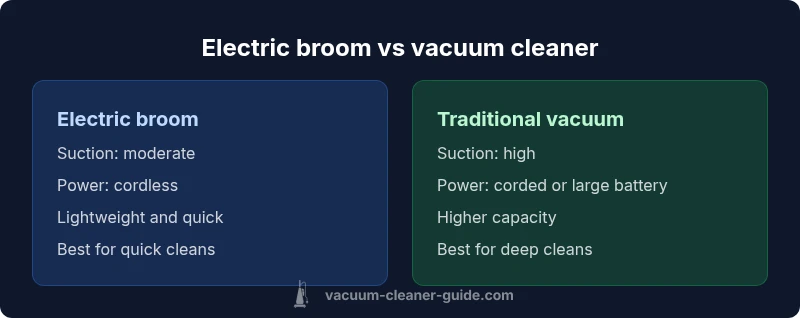
Electric broom is best for quick cleans and tight spaces; a traditional vacuum excels at deep cleaning and large areas
Choose the broom for convenience and stairs; select a full-size vacuum for powerful cleaning sessions and larger homes. For many households, a hybrid approach offers the best balance.
FAQ
What is the primary difference between an electric broom and a traditional vacuum?
The electric broom is designed for quick, lightweight cleaning with cordless operation, while a traditional vacuum provides stronger suction and capacity for deep cleaning. Your home layout and cleaning frequency largely determine which is better for you.
Electric brooms are for quick, light cleans, and traditional vacuums handle deep cleaning. Choose based on your space and usage.
Can an electric broom replace a full-size vacuum?
In most homes, an electric broom supplements a full-size vacuum rather than fully replacing it. It works well for quick spills and small areas, but a deep clean on carpets usually requires a full-size machine.
An electric broom is great for quick cleans, but you’ll still want a full-size vacuum for deep cleaning.
Are cordless brooms effective for pet hair?
Cordless brooms can manage light to moderate pet hair, especially on hard floors and low-pile carpets. For heavy shedding, a full-size vacuum with strong suction and specialized pet hair attachments is often more reliable.
They work for light pet hair, but for heavy shedding you may need a stronger vacuum.
What should I test in-store before buying?
Test suction on your home floor types, check runtime for cordless models, assess weight and balance, and review filter access and warranty terms. Attachments and ease of cleaning filters are also important.
Test suction on your floors, check runtime, weight, and filter access before buying.
How important is filtration for allergy-prone homes?
Sealed filtration and HEPA-grade filters significantly reduce indoor allergens. Look for models with easy-to-clean filters and accessible maintenance routines.
Filtration matters for allergies—look for sealed HEPA filters and easy maintenance.
What is the typical price range for these devices?
Electric brooms generally cost less upfront than full-size vacuums, but battery health and replacement parts influence long-term value. Balance upfront cost with expected lifespan and maintenance needs.
Brooms are cheaper upfront, but consider long-term maintenance for total value.
The Essentials
- Start with your space: small homes benefit from electric brooms for daily touch-ups.
- Reserve full-size vacuums for deep cleans and heavy-pet areas.
- Filtration and dust capacity matter for allergy-prone homes.
- Consider owning both types for a complete cleaning routine.