Broom-Style Vacuum Cleaners: A Comprehensive Comparison
In-depth comparison of broom-style vacuums vs traditional uprights, with buying tips for pet owners and hard floors. Learn performance, maintenance, and selection strategies for a targeted home cleaning plan.


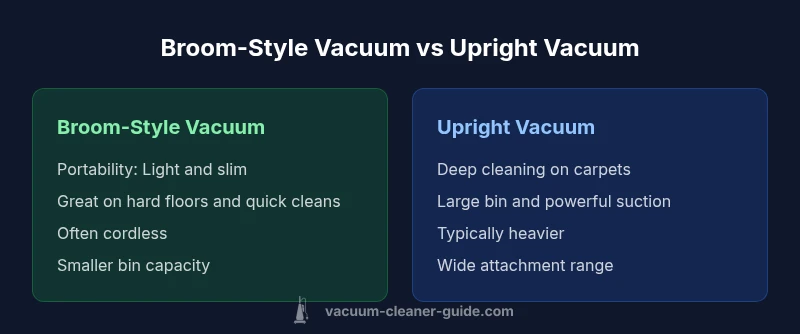
When choosing between broom-style vacuums and traditional uprights, start with the basics: broom-style models are lightweight, highly portable, and excellent for quick cleanups on hard floors, while uprights deliver deeper cleaning and strong carpet performance. For most homes, a broom-style model complements a primary vacuum, especially for stairs and quick pickups, but it won’t fully replace a full-size upright for deep cleaning jobs.
Understanding the concept of a vacuum cleaner like broom
The phrase vacuum cleaner like broom refers to a broom-style or stick vacuum that resembles a traditional broom in form and use, but delivers modern suction, filtration, and battery-powered operation. For homeowners and pet owners, this category often represents a lightweight, maneuverable option designed for fast, above-floor cleaning and quick transitions between rooms. In practice, the best broom-style models combine a slim wand, a compact cleaning head, and a responsive motor that can handle bare floors, area rugs, and low-pile carpets with ease. According to Vacuum Cleaner Guide, these devices excel in apartments, smaller homes, and households with pets where noise, storage space, and daily maintenance matter more than raw deep-cleaning power. They’re not a one-size-fits-all solution, but when used correctly, broom-style vacuums can dramatically improve daily cleanliness and reduce the effort required for touch-ups around kitchen tiles, entryways, and living areas. In this section, we’ll explore how the concept translates into practical choices for real homes and the ways to align expectations with performance.
Key differences between broom-style vacuums and traditional uprights
Broom-style vacuums differ from traditional uprights in several core areas: size and weight, battery life and power source, cleaning depth, and intended use cases. A broom-style unit typically weighs a few pounds, is designed for portability, and excels at quick cleanups on hard floors and in tight spaces. Uprights are heavier, usually corded or with longer run times, and provide stronger suction and more robust carpet cleaning. Price ranges reflect this gap: broom-style models often sit in the lower-to-mid price band, while uprights span broader ranges depending on motor strength, filtration, and attachments. When comparing, focus on how you clean today: do you mostly sweep bare floors, or do you regularly tackle deep carpet cleaning and large area rugs? For pet households, a cordless broom with a competent motorized brush can mitigate hair pickup on hard floors, but it may require a complementary full-size vacuum for thorough carpet maintenance. Vacuum Cleaner Guide’s analysis shows that most homes benefit from a hybrid approach: a lightweight broom-style vacuum for daily touch-ups and a full-size vacuum for periodic deep cleaning.
Performance on different floor types and everyday scenarios
Floor type is the most influential factor when selecting a broom-style vacuum. On hard floors, many broom-style models deliver excellent pickup of dust, crumbs, and pet hair, especially when equipped with a motorized brush and a soft floor head. Transitioning to area rugs and low-pile carpets, you’ll want adequate suction and a brush that can promote agitation without tangling hair. The reality is that performance on high-pile carpet is typically weaker for broom-style vacuums than for full-size uprights, so households with thick carpet may still rely on their main vacuum for deep cleaning. A practical approach is to reserve the broom-style unit for daily touch-ups, kitchen spills, and pet-pelt access under furniture, while reserving the large vacuum for carpeted rooms and high-traffic zones. By prioritizing ergonomics, weight, and head design, you ensure efficiency across most cleaning scenarios without compromising coverage.
Pet hair, filtration, and allergy considerations
Pet hair demands strong suction, robust filtration, and a brush design that minimizes hair wrap. Broom-style vacuums with motorized brush heads and sealed filtration (HEPA-capable when available) handle pet hair on hard floors well and reduce airborne dust. However, the smaller dust bin and more frequent emptying can become tedious in pet-heavy homes. For allergy management, look for models with sealed systems and washable filters. Vacuum Cleaner Guide’s research indicates that many pet households should consider a hybrid approach: use the broom-style vacuum for daily quick cleanups and rely on a higher-capacity upright with advanced filtration for deep cleaning and weekly maintenance, particularly on carpets and upholstery.
Maintenance, durability, and lifetime cost
Maintenance costs for broom-style vacuums tend to be lower upfront, but long-term costs can accumulate with frequent battery replacements and filter changes. Cordless broom models hinge on battery life and charging habits; corded variants focus more on motor integrity and suction stability. Cleaning heads and filters require routine maintenance—emptying bins, cleaning or replacing filters, and clearing hair from brushes ensures consistent performance. Even with the lower initial price, the lifetime cost should factor in replacement parts and the potential need for a more powerful secondary vacuum. Vacuum Cleaner Guide recommends evaluating total cost of ownership over 3–5 years, including bin capacity, filter durability, and battery replacement cycles if applicable.
Buying criteria and how to compare models
When buying a broom-style vacuum, concise criteria help avoid buyer’s remorse. Key considerations include suction power relative to floor type, run time for cordless models, weight and balance for extended use, dustbin capacity, filter type, noise level, and warranty length. Attachments such as crevice nozzles, motorized brushes, and wall-mount charging stations can expand capabilities, especially for above-floor cleaning. Consider your home layout: a multi-room, pet-friendly house might justify a higher-priced model with faster recharge times and better filtration; a small apartment could benefit from a budget-friendly, ultra-portable option. Always check real-world user reviews and independent testing when evaluating performance claims.
Practical usage scenarios and best practices
In practice, the broom-style vacuum shines in daily maintenance and quick touch-ups. Use it for kitchen crumb cleanups, pet hair along baseboards, and dusting shelves. For stairs, its light weight and compact form factor reduce fatigue and increase reach. When moving from hard floors to carpets, ensure your head design is suited to the floor type and that the dirt collection method can handle hair efficiently. For households with pets, establish a cleanup routine that leverages the broom vacuum for everyday debris and assign a full-size vacuum for weekly deep cleaning sessions. Proper charging, bin emptying, and filter maintenance are essential to maintain peak efficiency and minimize downtime.
Common misconceptions and how to avoid buyer's remorse
Several myths persist about broom-style vacuums. They are often perceived as insufficient for any carpet cleaning, or they’re assumed to be universally superior due to weight. In reality, performance varies by model and floor type. The right choice depends on your home’s surface mix, cleaning frequency, and willingness to manage bin capacity. Avoid overestimating battery life, underestimating the value of an effective motorized brush, or assuming a broom-style vacuum will automatically replace your full-size unit. A balanced approach—using a broom-style model for quick cleans and a traditional vacuum for deeper work—typically yields the best overall outcomes for most households.
Comparison
| Feature | Broom-style vacuum | Traditional upright vacuum |
|---|---|---|
| Suction power | Moderate | Strong |
| Weight | Very light (2–6 lb) | Medium to heavy (8–16+ lb) |
| Power source | Cordless or corded options | Typically corded (some corded/canister variants) |
| Best for | Quick cleanups on hard floors, stairs, and tight spaces | Deep cleaning on carpets and large areas |
| Bin/capacity | Small bin, frequent emptying | Large bin with higher capacity |
| Price range | $60-$250 | $150-$650 |
Strengths
- Low upfront cost for many models
- Excellent portability and compact storage
- Ideal for quick cleans and above-floor tasks
- Lightweight enough for stairs and reach
The Bad
- Limited deep-cleaning power on thick carpet
- Small dust bin requires more frequent emptying
- Cordless models have finite run time and charging needs
- May not replace a full-size vacuum for heavy-duty jobs
Broom-style vacuums excel as daily helpers and space-savers
Choose a broom-style model for quick daily cleanups and apartment living. Pair it with a full-size vacuum for deep cleaning and heavy traffic areas, especially in homes with pets.
FAQ
What exactly is a broom-style vacuum and how does it differ from a standard vacuum?
A broom-style vacuum, also called a stick vacuum, is a lightweight, slim cleaning tool designed for quick cleanups on hard floors and in tight spaces. It typically offers cordless operation and easy maneuverability, but may not match full-size vacuums on deep cleaning. The main difference is portability versus raw cleaning power.
A broom-style vacuum is a lightweight stick vacuum for quick cleanups. It’s easy to maneuver and great for hard floors, but may be weaker on deep carpet cleaning.
Are broom-style vacuums effective for pet hair?
They can handle pet hair on hard floors and low-pile carpets, especially with a motorized brush head and tight seals. For homes with heavy pet shedding, an additional full-size vacuum may be beneficial for thorough carpet cleaning.
Yes for pet hair on hard floors and low-pile carpet, especially with a motorized brush; consider a full-size vacuum for deep cleaning.
Should I choose cordless broom or corded?
Cordless models offer freedom of movement and easy storage but have limited runtime and charging needs. Corded broom vacuums provide uninterrupted power but can limit reach and require outlets. Your choice depends on house layout and cleaning frequency.
Cordless gives freedom but watch battery life. Corded keeps working, but reach depends on outlets.
Can a broom vacuum replace my main vacuum?
For many homes, a broom-style vacuum serves as a capable supplement for quick cleaning and above-floor tasks. It often cannot replace a full-size vacuum for deep carpet cleaning or large-area messes. Use it as a daily helper alongside a primary vacuum.
It's a great supplement, not a full replacement for most households.
What should I look for when buying a broom-style vacuum?
Key factors include suction power for your floor mix, battery life for cordless models, weight balance, bin capacity, filter quality, noise level, and warranty. Attachments like crevice tools and motorized brushes add versatility beyond basic cleaning.
Focus on power, runtime, weight, bin size, filters, and attachments.
How do I maintain a broom-style vacuum?
Regularly empty the bin, clean filters, and inspect the brush roll for hair buildup. For cordless models, follow charging guidelines to maintain battery health. Store properly and check seals to preserve suction over time.
Empty the bin, clean filters, and keep brushes clear for best performance.
The Essentials
- Choose broom-style for quick, everyday cleanups
- Pair with a full-size vacuum for deep cleaning and carpets
- Prioritize weight, filtration, and battery life for cordless models
- Consider floor type and home size when evaluating price/value