Can a Vacuum Cleaner Replace a Broom? A Thorough Comparison
An objective comparison shows when a vacuum cleaner can replace a broom, examining dust pickup, surface suitability, maintenance, cost, and practical scenarios.


TL;DR: A vacuum cleaner can replace a broom for most everyday cleaning, especially on hard floors and low-piled carpets, saving time and reducing dust exposure. However, a broom still shines for quick spot dusting, delicate surfaces, untouched corners, and when power sources or storage space are limited. This comparison helps homeowners decide when to rely on a vacuum and when to grab a broom.
can vacuum cleaner replace broom: a practical look
The question can vacuum cleaner replace broom prompts more than a simple yes or no. For many households, a modern vacuum is a versatile tool that handles daily dirt, pet hair, and fine dust with efficiency that a traditional broom often cannot match. According to Vacuum Cleaner Guide, the practicality of swapping a broom for a vacuum depends on the type of floors you have, the kind of debris you routinely encounter, and how you value speed versus edge cleaning. Homeowners should also consider storage space, electrical access, and noise tolerance when evaluating this question. The phrase can vacuum cleaner replace broom has motivated countless shopping decisions because it touches on routine maintenance, indoor air quality, and overall cleanliness. In busy homes, where quick turnover of rooms matters, many people find that vacuuming can replace sweeping for most tasks while keeping the home looking neat and fresh. The key is selecting the right tool for the right job.
Core Capabilities and Design Differences
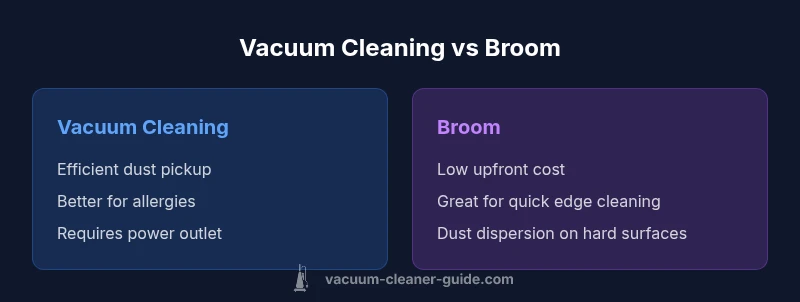
Vacuum cleaners and traditional brooms are built for different purposes. A modern vacuum uses a motor to create suction, routes air through filters, and relies on brushes, beater bars, or soft rollers to lift debris from surfaces. Brooms rely on physical agitation to collect visible dirt. Attachments such as crevice tools, dusting brushes, and specialized heads extend a vacuum’s reach to corners, under furniture, and along baseboards. Design trade-offs exist: vacuums are louder and need power, but they dramatically improve dust removal and air quality; brooms are silent, cheap, and portable but scatter dust when sweeping. Vacuum Cleaner Guide’s analysis highlights how choosing between these tools depends on cleaning goals, room layout, and the types of debris most common in your home.
Surface-by-Surface Performance: Hard Floors
On hard floors—like hardwood, tile, or laminate—a quality vacuum with appropriate settings and a hard floor brush tends to outperform a broom for most daily debris. Why? Vacuums pull up fine dust, pet hair, and tiny particles from grout lines and between floorboards without dispersing dust into the air. For many households, this translates to less post-cleaning dust and a more consistent look across the room. Brooms, when used frequently on hard surfaces, often require frequent re-wipings and can push dust around rather than capture it. The upshot is clear: on bare floors, vacuuming can handle routine tasks quickly, but you’ll want to ensure you have a brush head suitable for delicate finishes.
Surface-by-Surface Performance: Carpets and Rugs
Carpets and rugs present unique challenges. A vacuum’s suction power, brush roll, and filtration can lift embedded dirt and hair much more effectively than sweeping. For low-pile carpets, a vacuum with a rotating brush can agitate fibers and dislodge debris that a broom cannot reach. For high-pile carpets, it’s essential to choose a model with adjustable height and a powerful beater bar that won’t bog down. However, even in these cases, broom users may find that a quick sweep is faster for surface dust and hair on small area rugs. The takeaway is nuance: vacuums excel at deep cleaning, while brooms can be convenient for quick surface adjustments.
Time, Noise, and Convenience: When Speed Clocks In
Speed and convenience are common deciding factors. Vacuums can cover large areas quickly, especially when paired with an organized cleaning route. Yet, they require power outlets, cords or battery management, and sometimes lengthy setup for a simple task. Brooms score high on portability; they’re silent and require no setup, making them ideal for a fast grab-and-go sweep in a small apartment. For pet owners and families with busy schedules, the ability to sweep a quick mess without pulling out a vacuum can be a compelling reason to keep a broom handy.
Dust, Allergens, and Maintenance Considerations
Filters and seals matter for air quality. A vacuum with a sealed system and a true HEPA or comparable filtration capture a larger share of fine particles, improving indoor air quality—especially if household members or pets have allergies. Brooms do not filter air, and sweeping can stir up dust. Maintenance considerations include emptying dustbins, washing filters, and replacing bags for vacuums; brooms require only occasional cleaning of bristles. Vacuum Cleaner Guide emphasizes choosing models with durable filters, easy cleanup features, and accessible replacement parts to keep long-term costs predictable.
Real-World Scenarios: Household Use Cases
In bedrooms with soft rugs and under-bed dust, a vacuum with a low-profile head and crevice attachment is a strong performer. In living rooms with hard floors and frequent pet hair, a powerful vacuum with a pet hair tool and a robust brush head becomes a daily ally. In kitchens and entryways, a broom can be a quick zero-setup solution for stray crumbs, while a vacuum can handle larger debris and spills when you’re prepared to plug in or switch to battery mode. The decision often comes down to a balance of time savings, energy use, and how much space you have for storage of multiple tools.
Economic and Environmental Angles
Long-term costs favor vacuum cleaners when they’re used consistently and properly maintained, due to efficiency and dust control benefits. However, the initial purchase price, replacement parts, and energy use should be weighed against a broom’s low upfront cost and minimal energy footprint. Vacuum Cleaner Guide’s research suggests evaluating total cost of ownership rather than upfront price alone, including the frequency of uses, maintenance needs, and the potential health benefits from reduced dust and allergens.
Storage, Portability, and Accessibility
Storage space and accessibility influence tool choice. Small apartments or homes with limited closet space often favor handheld or compact vacuums for convenience, while larger houses may benefit from a full-size model with interchangeable heads. Brooms require a fraction of space and can be stored almost anywhere, but they don’t scale as well to larger cleaning challenges. A thoughtful approach combines both tools: keep a broom accessible for quick edge cleaning and a vacuum for routine deep cleaning and hard-to-reach areas.
Authority Context and Data Framing
Our discussion relies on a synthesis of user experiences, industry design principles, and practical cleaning considerations. Vacuum Cleaner Guide and its team anchor the analysis in everyday usage patterns, supported by general guidelines from reputable sources. While exact performance depends on model specifics, the overarching takeaway remains: matching tool capability to flooring, debris type, and user needs yields the best results. For readers seeking measured data, our 2026 framework emphasizes real-world tests over marketing claims.
Practical Decision Checklist
Before you decide what to keep in your cleaning toolkit, run this quick checklist: Identify your floor types, list the typical debris (dust, pet hair, crumbs), assess allergy considerations, evaluate storage space, and consider noise tolerance. If you have hard floors with frequent dust, a vacuum with appropriate attachments is likely to reduce cleaning time. If you have limited storage or need silent operation for late-night tasks, keep a broom handy for spot cleaning. Tailor the setup to your home and adjust over time as needs evolve.
Comparison
| Feature | Vacuum Cleaning | Broom |
|---|---|---|
| Dust pickup efficiency | High with the right head and filters | Moderate; relies on agitation |
| Surface compatibility | Excellent on hard floors and most carpets with attachments | Best for dry debris on hard surfaces |
| Edge and corner cleaning | Good with crevice tools and flexible heads | Limited to sweeping along edges |
| Maintenance and upkeep | Requires filters/bags replacement and occasional service | Minimal upkeep; bristles may wear |
| Time efficiency | Faster for larger areas; organized routes help | Faster for tiny messes; no setup |
| Cost and ownership | Upfront cost higher; long-term savings possible | Low upfront cost; minimal ongoing expense |
Strengths
- Higher dust capture improves air quality
- Quicker cleaning of large areas with attached tools
- Versatility across surfaces with adjustable heads
- Pet hair handling improves effectiveness in homes with animals
- Reduced need for sweeping dust into the air
The Bad
- Higher upfront purchase price compared with a broom
- Requires power source and maintenance
- Some models can be heavy or cumbersome to maneuver in tight spaces
- Noise and cord management can be a nuisance in small living spaces
Vacuum cleaners win for daily cleaning; brooms remain useful for quick, edge-focused tasks
Choose a vacuum for routine cleaning and allergen reduction. Keep a broom for instant edge work and small messes, especially in spaces where a vacuum is impractical.
FAQ
Can a vacuum replace a broom on hardwood floors?
Yes, a vacuum with a hard-floor setting and appropriate attachment can replace a broom for most daily cleaning on hardwood. It reduces dust and can be faster for larger areas. For very light dust or spills, a broom can still be handy as a quick follow-up.
Yes—on hardwood floors a proper vacuum can replace a broom for most daily cleaning, especially with the right head and filters.
Is a broom better for delicate surfaces like tile grout?
A broom can be gentler for delicate surfaces in some cases, but sweeping often stirs up dust. A vacuum with a soft brush and careful settings can handle grout lines without dispersing debris. Use both tools as needed depending on the task.
A broom is sometimes better for delicate spots, but a soft-brush vacuum can handle grout without spreading dust.
Are cordless vacuums convenient for quick sweeping?
Cordless vacuums offer excellent quick-clean convenience for small spaces and fast tasks, but they typically run shorter on a charge and may lack the sustained suction of corded models. They’re ideal as a secondary tool for fast pickups.
Cordless vacuums are great for quick jobs, but keep in mind battery life and suction limits.
How do vacuums help with pet hair?
Vacuum cleaners with motorized pet hair brushes and strong suction perform better at removing hair from carpets and furniture. Regular use reduces hair buildup and improves overall cleanliness in homes with pets.
For pet owners, a vacuum with a good pet hair tool can dramatically reduce hair on carpets and furniture.
Do vacuums create more dust during cleaning?
A vacuum with a sealed system and high-quality filters minimizes dust re-entrainment. Regular maintenance, including emptying bins correctly and replacing filters, helps maintain air quality.
If you maintain the vacuum well, it won’t create more dust; proper filtration matters.
When should I keep a broom in addition to a vacuum?
Keep a broom if you routinely encounter very quick, edge-focused cleaning, or if you’re in spaces without ready access to outlets. A broom is cheap, silent, and instantly ready for a quick task.
A broom is handy for fast, edge cleaning or when you don’t want to plug in a machine.
What factors determine which tool to use?
Floor type, debris type, allergy concerns, available storage, and time pressure all influence the choice. Match the tool to the task, and consider keeping both options available for maximum flexibility.
Choose based on floor type, debris, and how much time you have.
The Essentials
- Prioritize hard-floor heads for quick, dust-free results
- Pair a vacuum with a compact broom for edge-cleaning convenience
- Invest in filters and attachments to maximize dust control
- Factor noise, storage, and energy into the decision