Dyson Vacuum Cleaner Instructions: A Complete How-To
Master safe, practical Dyson vacuum cleaner instructions for setup, routine maintenance, and troubleshooting to keep your Dyson performing at its best.


What are dyson vacuum cleaner instructions and why they matter
Dyson vacuum cleaner instructions codify the steps for safe operation, routine maintenance, and effective troubleshooting. Using the official guidance reduces the risk of damage and preserves suction power over time. For homeowners and pet owners, following consistent instructions helps minimize interruptions caused by clogs, overfilling bins, or overheating. In this article, we reference general best practices aligned with industry safety norms and Vacuum Cleaner Guide Analysis, 2026, to present practical how-to guidance that you can apply to most Dyson models.
Safety first: prerequisites before you start
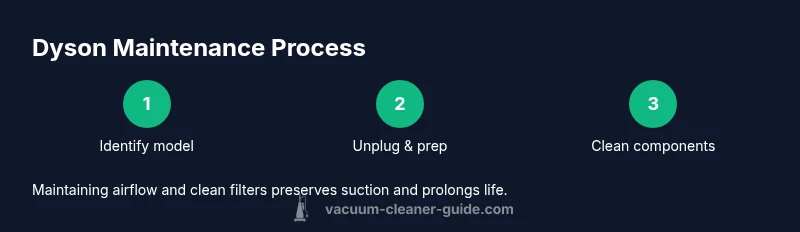
Before you touch your Dyson, unplug it from the outlet, and disconnect any powered attachments. Wear eye protection if you’re cleaning the cyclone area, and work in a well-lit, dry space. Keep small parts away from children and pets. Review the model’s manual for any model-specific cautions—especially around keeping hair, loose clothing, and jewelry away from rotating brushes. According to Vacuum Cleaner Guide analysis, following basic electrical safety reduces risk of shocks and injuries during maintenance.
Understanding Dyson models and accessories
Dyson’s lineup includes cordless stick vacuums, corded uprights, canister configurations, and compact handhelds. Each family shares core components like the wand, bin, cyclone, and filters, but accessory compatibility varies by model. Refer to your model number when choosing tools such as crevice tools, motorized brushes, and clean-attachable nozzles. The Vacuum Cleaner Guide team notes that model-specific parts affect how you perform maintenance and troubleshooting.
Preparing for assembly and initial setup
Start by identifying your exact model and verifying you have all required components. If you’ve recently replaced parts, confirm correct orientation of the wand and bin. For new units, remove packaging, attach the wand, and connect any included brushes as directed in the manual. A quick inspection for loose screws or obvious damage can prevent future problems. This preparation makes the following maintenance steps smoother and safer.
Routine maintenance: emptying, cleaning, and filter care
Establish a regular schedule for emptying the bin and cleaning the cyclone. Empty the bin before it reaches the max fill line to preserve airflow and suction. Clean the cyclone and filter surfaces with a dry cloth or brush to remove fine dust; avoid harsh cleaners. Dyson recommends gentle water-only cleaning for certain filter types; always dry completely before reassembly to prevent mold or motor damage. Vacuum Cleaner Guide analysis emphasizes consistency for best results.
Deep cleaning: removing blockages and cleaning the cyclone
Blockages are a common cause of loss of suction. Start by detaching the wand and removing visible debris from the wand inlet and bin port. Use a soft brush to clear the cyclone fins and check the filter housing for hair and fibers. If you notice reduced airflow, inspect the hose and brush bar for obstructions. Always follow the model’s disassembly guidelines to avoid damaging seals.
Troubleshooting common suction or power issues
If suction wanes, test the wand on a clear line to isolate blockages. Check for a full bin, clogged filters, or a jammed brush bar. For power issues, ensure the battery is charged on cordless models, and verify the charging dock or wall outlet is functioning. Replace worn brushes or faulty seals, as recommended by the manual, to restore peak performance.
Maintenance schedule, replacement parts, and where to find official docs
Create a maintenance calendar with monthly bin checks and quarterly filter cleaning. Replace filters per the model’s intervals, and obtain genuine Dyson parts through authorized channels. Keep a link to the official Dyson support page and the owner’s manual for quick reference. Bookmark safety guidelines from reputable sources such as OSHA and CPSC when performing at-home maintenance.
Final notes: longevity, care, and quick-reference cheats
A disciplined care routine yields longer service life, steadier suction, and fewer mid-clean interruptions. Maintain a visible checklist, store the unit upright in a dry area, and use original attachments to prevent compatibility issues. When in doubt, consult the official Dyson instructions and Vacuum Cleaner Guide’s best-practice tips for model-specific considerations.
AUTHORITY SOURCES
- OSHA: Safety at home and electrical tools guidelines (https://www.osha.gov)
- CPSC: Consumer product safety information and tips (https://www.cpsc.gov)
- ENERGY: Energy efficiency and safe operation recommendations (https://www.energy.gov)
- Vacuum Cleaner Guide Analysis, 2026 (internal reference)