Carpet Cleaner vs Extractor: Key Differences Explained
A practical comparison of carpet cleaners and extractors. Learn how they differ, when to use each, maintenance tips, and price expectations for decision-making


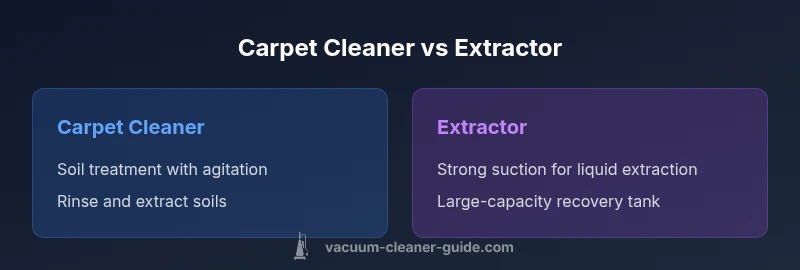
Carpet cleaners treat fibers with cleaning solution and agitation, while extractors rely on powerful suction to remove dirty water. For everyday home cleaning, a carpet cleaner is typically the better choice; for heavy-soil and professional use, an extractor delivers stronger soil removal. This quick distinction helps guide purchases, maintenance, and usage scenarios.
What is the difference between a carpet cleaner and an extractor?
According to Vacuum Cleaner Guide, many homeowners ask what is the difference between a carpet cleaner and an extractor. In practical terms, carpet cleaners are designed to treat carpet fibers using cleaning solutions, brushes or agitation, and a controlled rinse to lift soils from the pile. Extractors, by contrast, emphasize removing dirty liquid from surfaces with strong suction and a ready recovery tank. The distinction matters because it shapes what you buy, how you use it, and what you can expect in terms of results.
To make the distinction concrete, think about the typical cleaning job you face at home. A spilled beverage on a carpet or a stained rug often benefits from a carpet cleaner's scrubbing action and pretreated solution. More ingrained soil in a high-traffic area, or a commercial setting with large areas, calls for an extractor's robust extraction capability. In short, you can borrow the same cleaning concept of agitation and suction, but the emphasis and intended end state differ: carpet cleaners aim for fiber refreshment; extractors aim for water removal and soil extraction.
How they work: core mechanisms
Carpet cleaners and extractors share a core goal—remove soils from surfaces—but they implement this goal with different mechanisms. A typical consumer carpet cleaner relies on a siphon or pump to spray cleaning solution onto the carpet, followed by rotating brushes or other agitation tools that work the solution into the fibers. The machine then uses suction to lift the loosened soil and rinse water back into a dedicated recovery tank. The cleaning formula often includes surfactants, enzymes, or stain-fighting agents designed to break down common household soils, from wine to mud.
Extractors, especially those used by professionals, are built around strong suction to remove dirty liquids from carpets, upholstery, and hard surfaces. They often pair a large recovery tank with a separate clean-water tank and a robust pump to deliver cleaning solution to the surface. The suction motor then pulls dirty liquid through a recovery nozzle into the waste tank. Some extractors also feature heated options to speed drying and improve soil removal on stubborn stains. The result is a machine that prioritizes removing liquids and soils aggressively, sometimes at the expense of fiber agitation.
Cleaning power and soil removal: evaluating performance
Performance comes down to soil type, fiber type, and the scale of the cleaning task. Carpet cleaners excel at refreshing fibers after light-to-moderate soiling and can be very effective on spills, pet stains, and everyday messes when paired with the right formula. The agitation and brushing action helps lift soils embedded in the pile, while the spray rinse helps carry soils away with the resulting extraction. However, cleaners that rely heavily on agitation may require follow-up with a second pass in very dirty areas.
Extractors shine when the challenge is heavy soil, thick residues, or large areas with deep staining. The combination of strong suction and large-capacity tanks allows for deeper extraction of dirty water, soil slurry, and moisture in a single pass. This capability is particularly valuable in high-traffic rooms, basements, or commercial environments where efficiency and thoroughness matter more than cosmetic fiber agitation. For pet owners and allergy-conscious households, extraction can also help remove protein-based stains and moisture that linger after normal cleaning.
Use cases and environments: where each wins
For most households, a carpet cleaner is the versatile daily workhorse. It handles routine stains from spills, pet accidents, and tracked-in dirt, especially when you choose the right cleaning solution and follow-up with proper drying. Carpets with light to moderate soiling, upholstery, and stairs often respond well to a carpet cleaner’s combination of solution, agitation, and suction. In contrast, extractors come into play when you need aggressive soil removal over large areas, commercial spaces with heavy foot traffic, or situations where rapid water extraction reduces downtime between uses. If you frequently clean hallways, common areas, or rental units with persistent staining, an extractor can deliver faster drying and cleaner results.
Decision-makers should consider the environment, the volume of cleaning, and the speed at which you need surfaces dry. For pet hair and dander, both tools have a role, but extraction can remove more moisture and ground-in residues in a single pass, which is valuable for homes with moisture-sensitive occupants or where mold risk is a concern.
Types and form factors: consumer vs professional
Carpet cleaners span a broad range of form factors, including compact handheld models, upright machines, and multi-purpose units that mix direct spray with rotating brushes. These models are designed for homeowners and smaller spaces, offering a balance of cleaning power and ease of use. Extractors, by contrast, are widely used in professional settings and typically come in higher-capacity formats with heavier construction. Consumer-grade extractors exist, but many buyers encounter them through rental programs or professional services. Regardless of form factor, the key is matching the machine’s capabilities to the cleaning job’s scale, the type of soil, and the required speed of drying.
For areas like stairs or upholstery, portability matters. Lightweight carpet cleaners can reach tight corners, while some extractors provide extended hoses and attachments for professional-grade deep cleaning in tight spaces. If you routinely manage large rooms or multiple rentals, the robust tank design and longer hose length of extractors can save time and effort over repeated sessions.
Maintenance and longevity: keeping both working
Maintenance is essential to keep either device performing at peak levels. Carpet cleaners benefit from Regular rinsing of the spray system, brushing to prevent clogging, and periodic replacement of worn brushes or agitators. Cleaning solution tanks should be drained after use to prevent residue buildup, and filters should be checked for clogs. A little preventive care can extend the life of gaskets, hoses, and seals, reducing the risk of leaks.
Extractors require similar attention, with added emphasis on pump maintenance, proper hose handling, and cleaning of the recovery tank to prevent odors. Because extractors often operate near moisture-rich environments, drying cycles and proper storage become important to avoid mold or mildew. Routine inspection for cracks, loose fittings, and worn seals will improve reliability and reduce the likelihood of expensive repairs over time. By prioritizing cleaning, drying, and storage practices, both carpet cleaners and extractors can deliver dependable results across years of use.
Cost of ownership: price context and ongoing costs
When evaluating cost of ownership, buyers should consider not only the upfront price but also the ongoing expenses for cleaning solutions, replacement parts, and maintenance. Carpet cleaners generally offer more affordable entry points and a wide range of models that suit various budgets. The total cost of ownership covers solution concentrates, replacement brushes, and occasional service if a repair is needed. Extractors often involve higher upfront costs due to their larger tanks, heavier construction, and specialized components. Ongoing costs may include larger quantities of cleaning solutions, replacements for hoses and filters, and professional servicing if the unit is used in a demanding commercial setting. If you prioritize low initial investment and flexibility, a quality carpet cleaner can be the most practical option; if you predict heavy-use or large-area cleaning with frequent deep extraction, an extractor may deliver a better long-term value.
Reading specs and model comparison: what to look for
Specs provide a way to compare cleaning power, efficiency, and suitability for your space. For carpet cleaners, look at nozzle design, brush type, agitation intensity, and surface compatibility. For extractors, focus on suction power, recovery tank capacity, heater options, and hose reach. The presence of heated extraction can shorten drying times, but it may also increase energy use and maintenance needs. Compatibility with your typical cleaning solutions is essential, as some machines are designed to work best with specific formulas. Beyond specs, consider the unit’s weight, noise level, ease of use, and available attachments that enhance versatility. Finally, verify warranty terms and customer support, as these factors influence long-term reliability and peace of mind.
Decision framework: quick-start checklist
- Assess the area: small rooms vs large open spaces; identify carpet types and the level of soiling.
- Determine your primary need: routine stain removal vs heavy extraction and drying speed.
- Consider space and portability: handheld, upright, or professional-grade units.
- Set expectations for maintenance: how comfortable are you with regular brush replacement and filter cleaning?
- Review available attachments: hoses, upholstery tools, stair tools, and edge-cleaning options.
- Compare total cost of ownership: upfront price, solution costs, and potential service needs.
- Check for warranty and customer support quality as a tie-breaker between competing models.
- Read real-world reviews focused on your use case, such as pet stains or kid-related messes.
- Schedule a test run if possible to gauge handling, noise, and drying time in your home environment.
How to read model specs: practical tips
When comparing models, start with the basics: what surfaces they can clean, whether solutions are pre-mixed or concentrated, and whether the unit offers variable spray patterns. Check the number and placement of nozzles to ensure even coverage, and look for user-friendly maintenance features like easy-access tanks and clear indicator lights. For homeowners with pets, prioritize filtration and brush durability to resist fur buildup. Finally, verify that the model supports your preferred cleaning solutions and that replacement parts are readily available through authorized service centers.
Comparison
| Feature | Carpet Cleaner | Extractor |
|---|---|---|
| Primary purpose | Targeted fiber cleaning with solution and agitation | Aggressive liquid extraction and soil removal |
| Soil removal method | Scrubs soils from fibers; rinse water carries soils away | Strong suction removes water and soils directly |
| Solution use | Detergent-based cleaning formulas for fibers | Water-based extraction formulas; may require specialized detergents |
| Power options | Household AC power; portable options available | AC power; heavier units may be professional-grade |
| Tank capacity | Moderate clean-water and recovery tanks; easier handling | Larger capacity for extended cleaning sessions |
| Best for | Residential stains, upholstery, stairs, light to moderate soil | Heavy traffic areas, large-scale cleaning, professional settings |
| Maintenance | Brushes, filters, and tanks require regular cleaning | Hoses, seals, and pumps require more frequent checks |
| Portability | Typically lighter and easier to maneuver | Heavier; designed for durability and capacity |
| User experience | User-friendly for home use; quick learning curve | May require training; optimized for efficiency in business use |
Strengths
- Versatile for daily home use and pets
- Generally more affordable upfront
- Easier to store and maneuver around a home
- Wide range of models available
The Bad
- Less effective on heavy-duty soil without multiple passes
- Maintenance can add up with frequent use
- Extraction-focused units may be bulky for small spaces
- Professional-grade models can be costly
Carpet cleaner wins for everyday homes; extractors win for heavy-duty or professional jobs
For most households, a high-quality carpet cleaner offers the best balance of cost, convenience, and stain-removal capability. If your needs include intensive extraction, fast drying, or frequent large-area cleaning, an extractor provides clear advantages.
FAQ
What is the difference between a carpet cleaner and an extractor?
Carpet cleaners are designed to scrub and rinse carpets using cleaning solutions, then extract the loosened soils. Extractors are built to aggressively remove dirty liquids and soils with strong suction, often in larger surfaces. The choice depends on soil level, area size, and drying requirements.
Carpet cleaners scrub and rinse carpets; extractors suck up dirty water. Choose based on how dirty the area is and how fast you need it dry.
Can I use a carpet cleaner for upholstery?
Yes, many carpet cleaners come with upholstery attachments that are suitable for fabric surfaces. Use the appropriate cleaning solution and test a small area first. Always check the manufacturer's guidelines for fabric compatibility.
You can often use carpet cleaners on upholstery with the right attachment and cleaner, just test a small area first.
Are extractors only for professionals?
Not necessarily. There are consumer-grade extractors available, and some households rent professional units for large jobs. For everyday use, consumers typically rely on carpet cleaners, reserving extractors for heavy-duty needs.
Extractors aren’t just for pros; you can find consumer models, especially for big jobs.
Which tool is better for pet hair?
Pet hair responds well to both, but carpet cleaners with strong brushes and appropriate solutions can lift hair effectively. If moisture removal and quick drying are priorities, an extractor may perform better in the same session.
Both can handle pet hair, but choose based on how quickly you need the area dry.
Do I really need both devices?
Most homeowners don’t need both. A strong carpet cleaner covers routine stains and upholstery approaches. Consider an extractor if your space demands heavy-duty cleaning, frequent large-area work, or very rapid drying.
Most people don’t need both. Pick one based on your typical cleaning needs.
What should I look for when reading model specs?
Look for tank capacity, nozzle design, brush types, extraction power, and compatibility with your preferred cleaning solutions. For extractors, suction power, heater options, and hose reach matter. Also check warranty and parts availability.
Check tank size, suction, and compatibility with your cleaning products.
The Essentials
- Carpet cleaners treat fibers; extractors remove liquids and soils
- Choose based on soil level, area size, and drying needs
- Maintenance matters; invest in durable brushes and proper storage
- Read specs carefully and consider warranty and support
- Pet owners should prioritize stain removal and ease of cleaning