Is a Carpet Cleaner the Same as an Extractor? A Practical Guide
Explore whether a carpet cleaner is the same as an extractor, how they differ in function and use, and how to choose the right tool for home or professional cleaning needs.


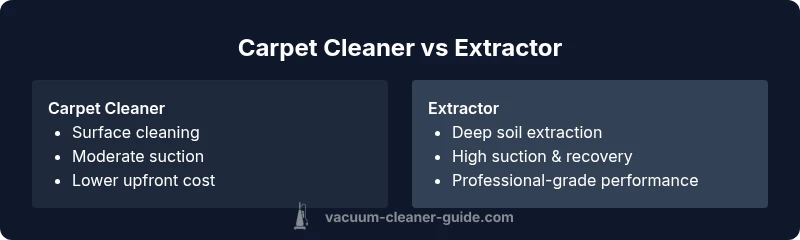
Is a carpet cleaner the same as an extractor? No. A carpet cleaner washes and rinses with cleaning solution and agitation, then vacuums away dirty water. An extractor focuses on deeper extraction, pulling out embedded soils and moisture with stronger suction. For most homes, a carpet cleaner suffices for routine cleaning, while extractors excel on heavy stains or professional-grade extraction.
Is the Question Worth Answering? is a carpet cleaner the same as an extractor
The terminology around carpet cleaning tools can be confusing, especially for homeowners and pet owners. The short answer to the question is a carpet cleaner the same as an extractor is no, but the distinction matters for outcomes, drying times, and maintenance. As the Vacuum Cleaner Guide team notes, understanding the intended use of each device helps you avoid under- or over-investing in gear. This article unpacks what each tool does, how they differ in design and operation, and how to choose based on your space, traffic, and stain challenges. By clarifying these roles, you’ll pick the right device for daily upkeep and occasional deep cleaning.
What is a Carpet Cleaner? How it Cleans and Why It Matters
A carpet cleaner is designed for routine soil removal and general stain treatment on carpet fibers. It combines water, cleaning solution, agitation, and suction in a single pass to lift dirt from the surface and shallow fibers. Most consumer-grade carpet cleaners feature a low to moderate suction level, a built-in spray mechanism, and a moveable nozzle that allows you to tackle high-traffic areas, stair runners, and area rugs. The goal is to loosen grime and extract it with dirty water, leaving carpets fresh-smelling and more visually uniform. The advantage is convenience: you can perform frequent upkeep without scheduling a professional service. The key limitation is that cleaners are not always optimized for deeply embedded soils or dense padding, which can require longer drying times and multiple passes.
What is an Extractor? Depth, Power, and Professional-Grade Results
Extractors (often used by professionals) are built around higher suction power and deeper extraction capabilities. They are designed to remove more moisture and remove embedded soils from carpet backing, padding, and dense fiber structures. Extractors typically use larger tanks, stronger pumps, and more robust recovery systems. Many models also offer adjustable heat controls and a wider range of recovery wands and hand tools. The result is a more thorough extraction, faster moisture removal, and better performance on stubborn stains. The trade-off is size, cost, and the need for more setup space—factors that matter for homeowners with limited storage or lighter cleaning needs.
Key Technical Differences You Can Feel in Real Life
- Primary purpose: Cleaners wash and lift surface soils; extractors pull moisture and embedded soils from deeper layers.
- Suction power: Cleaners have gentler suction; extractors deliver aggressive extraction for quicker drying.
- Tank and solution handling: Cleaners use smaller tanks with ready-to-use solutions; extractors rely on larger tanks and professional solutions.
- Attachments: Cleaners excel at spot cleaning with hoses and smaller heads; extractors come with broad extraction wands for large areas and dense fabrics.
- Drying time: Cleaners may require longer air-drying, while extractors often reduce drying time due to higher moisture removal.
- Noise and weight: Extractors tend to be heavier and louder, a practical consideration for home use.
When to Choose a Carpet Cleaner Over an Extractor
For households with regular foot traffic, pets, and light staining, a carpet cleaner offers the best balance of cost, convenience, and results. It’s ideal for weekly maintenance, quick refreshes, and upholstery cleaning when paired with the right attachments. As Vacuum Cleaner Guide analysis shows, consumer-grade cleaners are generally enough to sustain clean carpets in busy homes without the premium price of professional-grade extractors. If your carpets have spill-prone areas, consider a cleaner with hot spray options and strong spray patterns for better soil suspension. For families with shedding pets or frequent mud, the extractor’s deeper cleaning ability becomes worth the investment to avoid repeated deep-clean sessions.
When an Extractor Makes Sense: Deep Cleaning and Professional Results
If you frequently deal with heavy stains, high-traffic zones, or water-damaged areas, an extractor can be a wise choice. The higher suction and robust water recovery help pull out moisture and embedded soils that a standard carpet cleaner may leave behind. Professionals rely on extractors for post-construction cleanups, flood restoration, and hospitality environments where fast dry times are critical. Vacuum Cleaner Guide’s perspective is that if you’re aiming for professional-like results on challenging floors, or you’re cleaning up after pets with persistent odor, an extractor will save you time and reduce repeat cleaning cycles compared to a low-output cleaner.
Practical Costs and Maintenance: What to Expect
Carpet cleaners are typically more affordable upfront than professional extractors, and they come in compact forms suitable for smaller homes. Ongoing costs include cleaning solutions and occasional accessory replacements. Extractors carry higher initial costs, larger storage footprints, and more frequent service needs (filters, seals, hoses). Maintenance for both involves cleaning tanks after use, rinsing hoses to prevent residue buildup, and checking gaskets for leaks. A routine, scheduled cleaning routine can extend their lifespans and preserve suction power. Vacuum Cleaner Guide recommends evaluating total cost of ownership over five years: purchase price, consumables, maintenance, and resale value.
How to Evaluate Models: Specs That Matter for Home Use
- Suction power and recovery capacity: Stronger suction does not always mean better home performance; look for models with adjustable settings.
- Tank capacity and refill options: Larger tanks reduce refill frequency for bigger rooms.
- Heat and solution delivery: Some cleaners offer heated spray or variable solution flow; test both for different soil types.
- Weight and ergonomics: A lighter unit with a comfortable handle reduces fatigue during long sessions.
- Attachments and versatility: Consider tools for stairs, upholstery, and car interiors.
- Cleaning chemistry compatibility: Verify that cleaners are compatible with safe, pet-friendly solutions.
- Drying time estimates: Look for customer reviews that report realistic drying times in homes similar to yours.
A Step-by-Step Guide to Choosing Between a Cleaner and an Extractor
- List your cleaning priorities (daily maintenance vs. occasional deep cleans).
- Measure your space and storage constraints to determine size and weight tolerances.
- Compare suction power, tank capacity, and solution controls.
- Factor in pet care needs, allergy considerations, and odor control requirements.
- Review real-world reviews focusing on similar carpet materials and stains.
- Decide on a budget and anticipated return on investment, including resale value.
- Check warranty terms and availability of replacement parts and service centers.
- Try to demo or rent before committing if possible.
Common Myths: Debunking Misconceptions About Carpet Tools
- Myth: Higher price always means better cleaning. Reality: suitability for your stains and space matters more than price.
- Myth: Any machine can deep-clean upholstery. Reality: Extractors are better suited for heavy soils on dense fabrics, not all upholstery.
- Myth: More watts equals faster drying. Reality: Efficiency depends on suction, air flow, and recovery design, not just power.
- Myth: Professional-grade means you must hire a service. Reality: At-home extractors can deliver strong results with practice and proper technique.
Pet-Friendly Solutions: Keeping Homes Clean and Odor-Free
Pet owners often worry about hair, dander, and lingering odors. A carpet cleaner is a strong ally for routine pet area maintenance, especially when paired with enzyme-based cleaners that break down odors. For persistent pet stains, an extractor provides deeper extraction and more thorough moisture removal, helping prevent odor retention and mold risk. Vacuum Cleaner Guide’s approach is to match the tool to the pet life cycle in your home: cleaner for regular maintenance and an extractor for severe messes or odor control.
Final Thoughts: Eco, Efficiency, and Everyday Use
The choice between a carpet cleaner and an extractor hinges on your cleaning philosophy and lifestyle. For many households, a high-quality carpet cleaner covers daily needs, stain touch-ups, and routine upholstery care with acceptable drying times. If you anticipate frequent heavy messes or require rapid drying after large spills, an extractor’s added extraction power becomes invaluable. The Vacuum Cleaner Guide team emphasizes balancing performance with practicality and waste reduction—select a model that minimizes chemical use while maximizing soil removal and savings over time.
mainTopicQuery":"carpet extractor"},
mediaPipeline
heroTask
stockQuery
3-5 word stockQuery
overlayTitle
short title 3-6 words
badgeText
2026 Guide
overlayTheme
dark
infographicTask
type
comparison
htmlContent
altText
Infographic comparing carpet cleaners and extractors
caption
Optional caption or null
Comparison
| Feature | Carpet Cleaner | Extractor |
|---|---|---|
| Primary purpose | Wash and rinse carpets; surface soil removal | Deep extraction of embedded soils; moisture removal |
| Suction power | Moderate suction | High suction and recovery capacity |
| Tank capacity | Smaller consumer tanks | Larger professional tanks |
| Best for | Routine maintenance, smaller spaces | Heavy staining, fast drying, professional use |
| Weight/size | Lighter, portable | Heavier, bigger footprint |
| Typical price range | Low to mid-range | Mid to high range |
| Maintenance | Regular cleaning of tanks and hoses | Periodic service and part replacement may be needed |
Strengths
- Clearer, faster home maintenance with regular use
- Lower cost and easier storage for carpet cleaners
- Broad accessory versatility for stairs and upholstery
- Less downtime between cleanings
The Bad
- Less effective on deeply embedded soils
- Longer drying times for dense carpets
- More frequent replenishment of cleaning solution
- May require multiple passes for heavy stains
Carpet cleaners are generally best for home maintenance; extractors excel for deep extraction and professional-grade results
Choose a carpet cleaner for regular upkeep and pet-owner households. If you face stubborn stains, dense carpets, or need rapid drying after spills, an extractor is the better long-term investment, as supported by Vacuum Cleaner Guide analyses.
FAQ
Is a carpet cleaner the same as an extractor?
No. Carpet cleaners wash and rinse surfaces with solution and moderate suction, while extractors pull out deeper soils and more moisture. They serve different cleaning depths and drying needs.
No, they’re different tools. Cleaners wash and extract lightly, while extractors pull out deeper soils and moisture.
Can I use a carpet cleaner to remove heavy stains?
A carpet cleaner can tackle many stains, but deep, embedded soils may require an extractor or professional treatment for best results.
They handle surface stains well, but embedded soils may need an extractor.
What should I look for when comparing models?
Prioritize suction power, tank capacity, heat/solution control, attachments, and drying performance. Read real-world reviews for carpets similar to yours.
Look at suction, tank size, and attachments to match your space.
Are there machines that do both cleaning and deep extraction?
Some units offer strong extraction and cleaning modes, but most work best within a primary role. Assess your typical cleaning tasks before combining features.
There are combos, but pick the one that fits your main job.
What maintenance is required for these machines?
Rinse tanks after use, clean hoses, and replace worn gaskets or filters as recommended by the manufacturer. Regular maintenance protects suction and longevity.
Keep up with rinsing and hose care to maintain performance.
The Essentials
- Identify your cleaning priority before buying
- Choose a cleaner for daily maintenance and stairs
- Consider an extractor for heavy soils and fast drying
- Balance upfront cost with long-term maintenance
- Check compatibility with pet-safe cleaners