Is Carpet Cleaner the Same as Vacuum? A Thorough Comparison
Explore the key differences between carpet cleaners and vacuums, when to use each, and how to choose the right tool for everyday upkeep, deep stains, and pet-hair challenges. A practical buying guide by Vacuum Cleaner Guide.


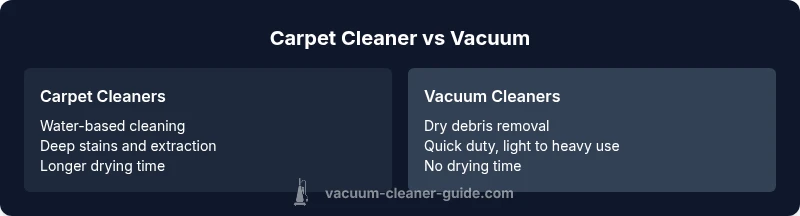
No. Carpet cleaners and vacuums serve different purposes. A vacuum removes loose dirt, dust, and debris from floors and upholstery using suction and brushes. A carpet cleaner uses water or cleaning solution to lift embedded soils and stains, then extracts the liquid. For everyday cleaning, a vacuum is usually enough; for stains and deep cleaning, a carpet cleaner is the better tool. This quick distinction helps homeowners plan a practical cleaning routine.
Is carpet cleaner same as vacuum? A practical distinction
According to Vacuum Cleaner Guide, the terms carpet cleaner and vacuum are often used interchangeably in everyday conversation, but they describe distinctly different devices with different purposes. The question is not merely about naming; it’s about understanding how each tool interacts with your carpet, upholstery, and floors. The Carpet Cleaner vs Vacuum question is more than semantics: it defines the scope of cleaning tasks you can tackle in a single session. The Vacuum Cleaner Guide team emphasizes that recognizing the core difference — whether moisture is involved — helps homeowners set expectations and avoid underperforming devices for key chores. This article uses the exact keyword is carpet cleaner same as vacuum to anchor the discussion and clarify when each tool should be deployed.
Best for
BEST FOR
Comparison
| Feature | Carpet Cleaner | Vacuum Cleaner |
|---|---|---|
| Primary function | Deep-clean embedded stains and soils with water and extraction | Daily debris removal, dust, and surface cleaning via suction |
| Cleaning method | Water-based cleaning with cleaning solution and extraction; dries carpet fibers | Dry or damp cleaning via suction, brushes, and filtration |
| Drying time after use | Hours to several hours depending on ventilation and carpet type | Immediate or near-immediate during quick cleanups; no drying required |
| Maintenance needs | Refilling solution, tank cleaning, filter/brush maintenance | Bagless or bagged filter maintenance; periodic brush and filter cleaning |
| Price range (general) | Mid-to-high range for full-feature models | Low-to-mid range for basic models; higher with advanced features |
| Best for | Stains, spills, high-traffic area restoration, upholstery | Everyday dirt, pet hair, hard floors (with attachments) |
| Best surfaces | Carpets, rugs, upholstery | Carpets, hard floors, stairs, upholstery with appropriate attachments |
Strengths
- Vacuum cleaners are versatile for daily upkeep and fast cleanups; they handle dust, debris, and pet hair efficiently.
- Carpet cleaners excel at deep stains and embedded soils, lifting colors and reviving dull carpets.
- Using both tools together covers routine maintenance and deep cleaning, maximizing carpet longevity.
- Improved indoor air quality can come from regular vacuuming and periodic carpet cleaning when needed
The Bad
- Carpet cleaners require setup, solution handling, and longer drying times after use.
- Vacuums may struggle with set-in stains or heavily soiled carpets without extraction power.
- Carpet cleaners can be heavier and bulkier, making them less convenient for quick spot-cleaning.
- Relying on a vacuum alone for spills could leave stains untreated and odors lingering
Use the vacuum for routine upkeep and carpet cleaner for deep stains; together they cover most cleaning tasks.
A well-rounded cleaning plan combines both tools. Start with daily vacuuming to remove loose debris, then use a carpet cleaner for stains or after spill events. This duo minimizes re-cleaning and preserves carpet longevity.
FAQ
Is a carpet cleaner the same as a vacuum?
No. A vacuum removes loose debris and dust, while a carpet cleaner uses moisture to lift embedded dirt and stains and then extracts the liquid. They serve complementary roles in a complete cleaning routine.
No—think of vacuums for daily debris and carpet cleaners for stains and deep cleaning.
Can I replace a vacuum with a carpet cleaner for daily cleaning?
Carpet cleaners are not ideal for everyday debris in most homes. They excel after spills or in deep-clean sessions. For daily upkeep, a vacuum is usually sufficient.
Not really—use a vacuum for daily dirt and a carpet cleaner when you have stains or want to refresh carpet fibers.
Which is better for pet hair?
Vacuum cleaners generally handle pet hair well for daily upkeep, especially models with strong suction and motorized brushes. Carpet cleaners can remove hair trapped in fibers but are not practical for ongoing pet-hair management.
Vacuum first for pet hair; carpet cleaners help if the hair is caught in stains or deeply embedded.
Do carpet cleaners work on hard floors?
Many carpet cleaners are designed for carpets; using them on hard floors can be less effective and may require different attachments or a different machine. Check the manufacturer’s guidance for hard-surface use.
Some carpet cleaners can handle hard floors with the right attachments, but they are mainly for carpets.
How long does a carpet cleaning session take?
Cleaning sessions vary with room size, soil level, and ventilation. Plan for longer sessions than a quick vacuum, and allow time for drying after the process.
It depends on room size and stains, but drying can take a while, so plan accordingly.
What maintenance is required for carpet cleaners?
Regularly empty and rinse tanks, refill cleaning solutions, clean brushes and filters, and store in a dry place to prevent mold growth. Follow the user manual for model-specific maintenance.
Keep up with tanks, brushes, and filters to keep performance steady.
The Essentials
- Pair vacuuming with periodic carpet cleaning for best results
- Choose carpet cleaners for embedded stains and upholstery refresh
- Keep a lightweight vacuum for quick cleanups and spot-treatments
- Prioritize drying time considerations after carpet cleaning to avoid mildew