Is Carpet Cleaner the Same as Carpet Shampoo? A Practical Guide
Explore whether carpet cleaner and carpet shampoo are truly the same, with clear definitions, practical use cases, and buying tips from Vacuum Cleaner Guide.


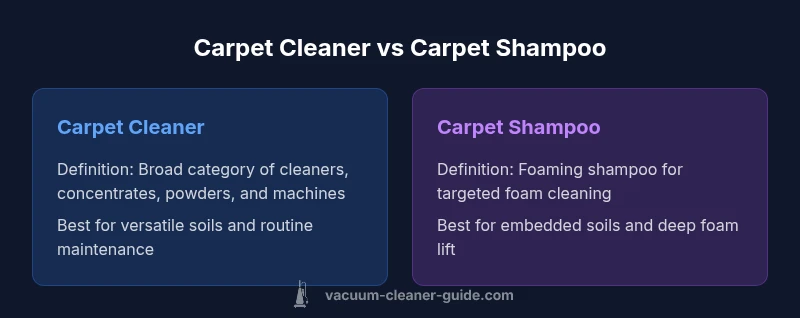
No. Carpet cleaner and carpet shampoo are not identical terms. A carpet cleaner is a broad category that includes a variety of cleaning solutions and machines designed to lift dirt and stains, while carpet shampoo refers specifically to a foaming cleaning method or shampoo formulated to scrub fibers. Understanding the difference helps you select the right product for pets, high-traffic areas, and delicate carpet fibers. According to Vacuum Cleaner Guide, precise terminology reduces mis-purchases and improves cleaning outcomes.
Is There a Difference? Definitions and Context
The question is straightforward: is carpet cleaner the same as carpet shampoo? The short answer is no, but with nuance. In everyday conversations, both terms are used interchangeably, yet they point to different products and cleaning approaches. A carpet cleaner is a broad umbrella that encompasses sprays, liquids, powders, and even full cleaning machines built to agitate fibers, suspend soil, and extract it from carpets. Carpet shampoo, by contrast, traditionally describes a shampooing method or a shampoo product designed to be worked into the carpet to create foam and lift embedded soil. This distinction matters when choosing products for pet odors, high-traffic areas, or delicate wool blends. Vacuum Cleaner Guide’s analysis shows that brands often blur lines for marketing purposes, so shoppers should read labels carefully to identify whether a product is a cleaner, a shampoo, or a machine-based system. The more precisely you define your soil and fiber type, the more accurate your selection will be for a given cleaning cycle.
How They Work: Cleaning Action, Surfactants, and Foam
Carpet cleaners rely on a combination of surfactants, solvents, and mechanical agitation to loosen soil and lift it into a cleaning solution or extraction stream. When used with extractors, the dirty solution is immediately removed, helping fibers dry faster and reducing the chance of sticky residues. Shampoo products, especially foam-based formulas, emphasize deep scrubbing and the separation of embedded soils through foam that suspends particles. The advantage of shampooing is its ability to target stubborn spots with vigorous agitation, but it can leave more residue if a thorough rinse isn’t performed. The critical design choice is whether you want a broad soil-management approach (cleaner) or a targeted, foam-focused treatment (shampoo).
Use Cases: Pets, Kids, and High-Traffic Areas
For households with pets or frequent traffic, a versatile carpet cleaner is often the best starting point. It enables rapid cleaning cycles, effective extraction, and periodic maintenance without necessarily relying on foam. Carpet shampoo may be preferred for deeper cleaning of stubborn stains or when a foam-based soil suspension is advantageous. However, it requires careful rinsing and longer drying times to avoid leaving residues that attract future dirt. The Vacuum Cleaner Guide team recommends matching the cleaning method to the carpet type (nylon vs. wool), the level of soiling, and the household schedule. A non-residue formula is particularly helpful in homes with children and pets, where frequent cleaning is anticipated.
Formulations and Application Methods: From Powders to Machines
Carpet cleaners come in many forms: concentrated liquids, pre-sprays, dry powders, and full machine extraction formulas. When used in conjunction with a carpet extractor, these cleaners are designed to be rinsed away with clean water, minimizing residue and shortening drying time. Carpet shampoos are typically foaming liquids or powders designed for use with shampooing machines, sometimes leaving a layer of foam on the carpet that requires thorough rinsing or extra time to dry. The practical takeaway is to choose formulations with explicit rinse-in or rinse-free claims and to confirm compatibility with your carpet fiber. Always test a small inconspicuous area first. Vacuum Cleaner Guide emphasizes following manufacturer guidelines to avoid fiber damage.
Safety, Residue, and Fiber Compatibility
Residue is the enemy of fast drying and can attract new dirt. When selecting either a cleaner or a shampoo, confirm residue claims on the label, especially for moisture-sensitive carpets like jute or sisal. Wool or natural fiber carpets require particular care because some foaming products can cause staining or fiber distortion if used inappropriately. The risk of color bleeding or fiber damage increases with aggressive surfactants or incompatible pH levels. If you’re unsure, opt for low-residue formulas and perform a patch test. Vacuum Cleaner Guide notes that reading MSDS sheets and product data can help you avoid adverse reactions with pets or high-energy households.
Cost, Value, and Long-Term Ownership
Cost considerations vary widely between carpet cleaners and shampoos, depending on form, concentration, and whether you rely on extraction equipment. In general, cleaners designed for extractors may represent higher upfront investment but can offer faster drying and easier maintenance in the long run. Shampoo products—especially professional-grade foams—can be more expensive per cleaning session, but they may deliver deeper soil lift per application in targeted spots. The true value comes from consistency: choosing products that deliver reliable results, minimize residue, and fit your cleaning cadence. Vacuum Cleaner Guide’s analysis indicates that owners who invest in compatible equipment and high-quality formulas tend to enjoy fewer repeat cleanings and less fiber wear over time.
Practical Buying Guide: How to Decide Between Cleaner and Shampoo
A practical framework begins with soil type, carpet fiber, and equipment availability. If you frequently clean large areas with mixed soils, a versatile carpet cleaner that pairs with extraction equipment is typically more efficient. If your goal is to lift stubborn stains or you regularly treat spots with foam, a quality shampoo designed for your machine could be the right tool—provided you commit to thorough rinsing and proper drying. Attempting to use a shampoo in a non-shampooing system or vice versa can compromise results and leave residue. Vacuum Cleaner Guide suggests building a small decision tree: identify fiber type, assess soils, confirm machine compatibility, and evaluate drying windows before purchasing.
What This Means for Your Home: Quick Checklist
- Identify carpet fiber and test for colorfastness.
- Check machine compatibility and recommended cleaners.
- Prioritize low-residue formulas for faster drying.
- Allow adequate ventilation for thorough drying.
- Consider pet activities and frequent traffic when selecting a cleaning method.
Comparison
| Feature | Carpet Cleaner | Carpet Shampoo |
|---|---|---|
| Definition | Broad category of cleaners, concentrates, powders, and machines | Foaming shampoo product or shampooing method for fibers |
| Typical Use Case | General maintenance, versatile soils, extractors | Deep cleaning of embedded soils with foam in shampoo mode |
| Residue/Rinse | May require rinsing to minimize residue; some formulas are low-residue | Foam can leave residue if not rinsed; thorough rinse often needed |
| Equipment Compatibility | Works with extractors, spray bottles, or powders | Best with shampooing machines or manual scrubbing |
| Drying Time | Varies with method and ventilation; generally quicker for extractors | Often longer due to foam and rinsing requirements |
| Cost Range | Low to high depending on form and frequency of use | Moderate to high for specialized or professional-grade shampoos |
| Best For | Versatile maintenance and quick turnarounds | Deep, targeted soil lift in foam-focused cycles |
Strengths
- Clarifies product expectations for DIY cleaning
- Supports versatile use across soils and fibers
- Helps maintain faster drying with low-residue formulas
- Can simplify scheduling for busy homes
The Bad
- Term confusion can mislead buyers
- Some products require thorough rinsing to avoid residue
- Foam-based shampoos can be messier and slower to dry
Not the same, but related concepts; choose based on soil, fiber, and drying needs
Carpet cleaners cover a broad range of products and devices, while carpet shampoo refers to a foam-based cleaning method. Align your choice with carpet type, cleaning goals, and whether you prefer faster drying or deeper foam cleaning.
FAQ
Is carpet cleaner the same as carpet shampoo?
No. Carpet cleaner is a broad category of cleaning products and devices, while carpet shampoo refers to a foam-based cleaning method or shampoo designed to scrub fibers. The terms overlap in everyday use, but the distinction matters for selecting the right product for your carpet and stain type.
No—carpet cleaner is the broad category, and carpet shampoo is a foam-based cleaning method. Choose based on soil, fiber, and drying needs.
Can I substitute carpet shampoo for a carpet cleaner in every situation?
Not always. Shampoos are best when you specifically want foam and deep scrubbing, while general cleaners are better for routine maintenance and mixed soils. Always check your machine’s compatibility and the carpet type before substituting.
Substituting isn’t universal—check compatibility and soil type first.
Will carpet shampoo leave residue behind?
Foam-based shampoos can leave residue if not rinsed thoroughly. Residue can attract new dirt and prolong drying times, especially in humid environments. Always follow shampoo instructions and perform a proper rinse if required.
Foam can leave residue if not rinsed; rinse as directed to avoid attracting dirt.
Are shampoos safe for pets or sensitive households?
Many shampoos are formulated with pet-friendly surfactants, but some formulations may irritate sensitive skin or leave residues. Use pet-safe products and ensure thorough drying before pets walk on treated areas.
Choose pet-safe formulas and ensure carpets dry completely before pets return.
How do I decide which to use for mixed soils and busy households?
Assess soil type, traffic level, carpet fiber, and equipment availability. If you clean large areas with mixed soils, a versatile cleaner is usually best. For stubborn stains, a targeted shampoo approach can help, but you must rinse thoroughly and allow adequate drying.
Start with soil type and traffic, then pick the approach that minimizes drying time while delivering clean results.
What should I verify on product labels before buying?
Look for explicit terms like ‘carpet cleaner’ or ‘shampoo’ and check for fiber compatibility, residue claims, and drying guidance. Reading the label helps you avoid mismatched products and ensures the cleaning method aligns with your carpet.
Check fiber compatibility, residue claims, and drying guidance on labels.
The Essentials
- Define terms before shopping to avoid confusion
- Match product choice to soil type and carpet fiber
- Prefer low-residue formulas for faster drying
- Check machine compatibility and follow manufacturer guidelines