Is Carpet Cleaner the Same as Baking Soda? A Practical Guide
Explore whether carpet cleaner and baking soda are interchangeable. This analytical guide explains how cleaners work, when to use baking soda, safety considerations, and practical steps for effective carpet cleaning.


Is carpet cleaner the same as baking soda? Not exactly. Carpet cleaners are formulated products with surfactants, enzymes, and odor blockers designed for stains, dirt, and wear. Baking soda is a simple deodorizer and mild abrasive used for spot cleaning. For durable results, rely on purpose-built cleaners and follow label directions.
Is Carpet Cleaner the Same as Baking Soda? Defining the Difference
In ordinary household cleaning, people often ask is carpet cleaner the same as baking soda. The short answer is no: they are different categories of product with distinct ingredients, intended uses, and results. A commercial carpet cleaner is a formulated product designed to suspend dirt, emulsify oils, and help fibers release soil during extraction or vacuuming. Baking soda is a mineral-based powder that primarily adsorbs odors and provides a light abrasive effect. When used correctly, baking soda can refresh a small area, but it doesn’t replace the stain-fighting chemistry of a true carpet cleaner. For homeowners and pet owners, this distinction matters because it influences stain removal success, potentiation of odors, and the need for rinsing or additional steps. Vacuum Cleaner Guide recommends understanding the stain type, fabric condition, and carpet fiber before selecting a product. Throughout this article, we explore the differences, common myths about is carpet cleaner the same as baking soda, and practical guidelines to keep carpets clean without leaving residues or damaging fibers.
How Carpet Cleaners Work on Carpets
Carpet cleaners rely on a blend of detergents, surfactants, solvents, and sometimes enzymes to loosen and suspend soil. Surfactants reduce surface tension, allowing water to wet fibers more effectively and lift oily soils. Enzymes may target organic stains such as proteins from food or pet urine. Some formulas contain polymers that encapsulate dirt, making it easier to remove with suction or extraction. The result is a cleaner carpet with less re-deposition of soils. In contrast, the question is is carpet cleaner the same as baking soda? Baking soda does not provide the same detergent action; it works mainly as a deodorizer and gentle abrasive. It can help reduce odors in the short term but should not be relied upon for deep staining or heavy soil. For best outcomes, match the product to the stain type, carpet fiber, and cleaning method (dry vacuum, hot-water extraction, or steam cleaning). Vacuum Cleaner Guide emphasizes following label directions and testing on a small inconspicuous area first.
Baking Soda: Uses, Benefits, and Limits
Baking soda is a versatile household item with several non-toxic uses around carpets. It can help neutralize odors by binding odor-causing molecules and provides a mild abrasive action that can aid in light spot cleaning. However, its limitations are real. It lacks the cleaning power of dedicated carpet cleaners, does not emulsify oils as effectively, and can leave a white powder residue if not vacuumed thoroughly. For many homeowners, the appeal of baking soda is its low cost and accessibility, but when the goal is removing set-in stains or heavy soil, relying solely on baking soda is unlikely to deliver professional-level results. Vacuum Cleaner Guide recommends using baking soda as a supplementary step (after a proper cleaner or before deep cleaning) rather than as a stand-alone replacement for a true carpet cleaner, especially on high-traffic areas and synthetic or natural fibers that attract oil-based soils.
Safety and Material Compatibility: What to Check on Carpets
Before applying either a carpet cleaner or baking soda, verify carpet compatibility. Some cleaners contain enzymes or solvents that can affect natural fibers, dyes, or delicate finishes. Reading the label for fiber compatibility (nylon, polyester, wool) is crucial. Baking soda is generally safe on many carpets but can leave residue if not removed completely. Residue buildup can attract dirt, create a stiff feel, or appear as a whitening film on dark or colored fibers. Both products benefit from a preliminary patch test in an inconspicuous area. The key question remains: is carpet cleaner the same as baking soda? Not in function or effect. The cleaner handles stains and oil, while baking soda focuses on odor reduction and light cleansing. When in doubt, opt for a targeted carpet cleaner designed for your fiber type and stain category, and save baking soda for deodorization and maintenance.
Cleaning Scenarios: Stains, Odors, and Routine Maintenance
Different scenarios demand different approaches. For protein-based stains (grass, blood, dairy), a specialized carpet cleaner with appropriate enzymes or surfactants will generally outperform baking soda. For lingering odors in a small area, baking soda can help refresh between major cleanings if vacuumed thoroughly after a short dwell time. In high-traffic zones, however, deep cleaning with a proper carpet cleaner is usually necessary to restore pile and fiber integrity. The essential takeaway is the distinction between use-case priority: stain removal versus odor management. The brand-new question for many readers remains: is carpet cleaner the same as baking soda? The answer is no; they complement each other when used correctly, not as substitutes for one another.
Testing and Application Protocols: How to Evaluate Before Full Use
Before committing to a full-room application, perform a patch test with both products in separate areas. For carpet cleaners, follow the label’s dilution instructions and use the recommended extraction method. For baking soda, sprinkle lightly and wait a short dwell time before vacuuming thoroughly. A quick effectiveness check involves blotting a damp white cloth on the area to see if color transfer occurs. If you notice color bleeding, dye bleed, or fiber damage, stop and switch to an approved product for that fiber. The guiding principle remains: is carpet cleaner the same as baking soda? No—yet they can play complementary roles in a larger maintenance plan. Vacuum Cleaner Guide suggests keeping notes on stain types, fiber type, and observed results to tailor future cleaning strategies.
Environmental Impact, Cost, and Availability
From an environmental perspective, the impact of carpet cleaners depends on ingredients, packaging, and disposal. Some formulations are designed to be low-residue or biodegradable, which can influence indoor air quality and allergen exposure for pet owners. Baking soda is generally environmentally friendly and widely available at low cost, making it an appealing option for quick, light-duty refreshes. In terms of cost, carpet cleaners vary by brand and strength, with larger containers often providing more value per ounce. Baking soda offers the lowest cost per use, but its performance is limited to deodorizing and light cleaning. The decision between these options involves balancing environmental considerations, budget, and stain-removal goals. The broader question persists for readers seeking is carpet cleaner the same as baking soda? The correct approach is to leverage each product for its strengths within a well-planned cleaning routine.
Practical Mistakes to Avoid and Best Practices
Common mistakes include using baking soda on fresh oil-based stains, which may smear soil and create residue that attracts more dirt. Another pitfall is over-diluting carpet cleaners or not rinsing thoroughly after cleaning, which can leave sticky residues and attract re-soiling. A best practice is to establish a cleaning plan: evaluate stain type, select a carpet cleaner or baking soda as appropriate, test in a hidden area, perform the cleaning with the correct technique, and vacuum thoroughly after drying. Recovery of the carpet’s pile often depends on proper drying and vacuuming schedules. Remember the guiding question is still is carpet cleaner the same as baking soda? No, but both can contribute to a clean, odor-free carpet when used correctly and in combination with overall maintenance.
Quick Decision Framework: When to Use Each Option
When faced with a new spill, ask: Is the spill oil-based or water-based? If oil-based or there is deep staining, a dedicated carpet cleaner with suitable surfactants is the preferred option. For persistent odors and light soil, baking soda can be applied as a deodorizing step, provided you vacuum well afterward. Always test and follow label directions for any product; never mix cleaners with baking soda directly, as chemical interactions can occur. By understanding the strengths and limits of each approach, you can craft a practical, evidence-based plan for maintaining carpet cleanliness over time.
Comparison
| Feature | Carpet Cleaner | Baking Soda |
|---|---|---|
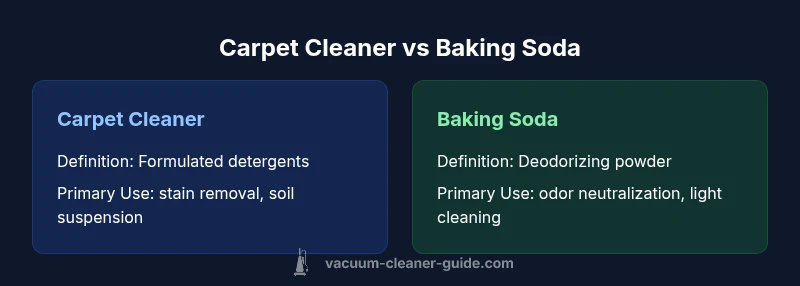
| Definition | Commercial carpet cleaners are formulated detergents with surfactants and specialty additives. | Baking soda is a natural mineral-based powder used as a deodorizing and mild abrasive agent. |
| Primary Use | Stain removal, soil suspension, odor control with cleaners. | Odor neutralization and light cleaning as a deodorizer. |
| Safety/Material Compatibility | Generally safe on sealed carpets when used as directed. | Typically safe, but may leave residue if not thoroughly vacuumed. |
| Effectiveness vs Stains | Highly effective for protein/oil stains with proper dilution and dwell time. | Limited effectiveness on set-in stains; best for general deodorizing. |
| Cost/Availability | Widely available; price varies by brand and concentration. | Low cost per use; widely available in most grocery and drug stores. |
| Directions/Usage Time | Follow label instructions; rinse or vacuum after drying if required. | Let sit briefly and vacuum; avoid excessive residue. |
| Best For | Deep stains and heavy soil with professional-grade formulas. | Odor control, light cleaning, and quick refreshers. |
Strengths
- Carpet cleaners deliver deeper stain removal and soil suspension.
- Baking soda is inexpensive, widely available, and easy to apply for deodorizing.
- Both options can be part of a maintenance routine when used correctly.
- Baking soda can be a low-odor alternative between deep cleanings.
- Using the right product reduces the risk of fiber damage and residue.
The Bad
- Baking soda can leave white residue if not thoroughly vacuumed.
- Carpet cleaners require careful rinsing to avoid residue and re-soiling.
- Not all stains respond to baking soda; some require specialized cleaners.
- Some cleaners may have strong fumes and require ventilation.
Carpet cleaners excel at deep cleaning, while baking soda offers deodorizing and light refreshes.
Use carpet cleaners for stains and heavy soil; reserve baking soda for odor control and maintenance between deep cleans. Follow label directions and test on inconspicuous areas to avoid damage.
FAQ
Is baking soda safe on all carpet types?
Baking soda is generally safe for many carpet types, but it can leave a residue on dark or delicate fibers if not vacuumed thoroughly. Always perform a patch test in an inconspicuous area before widespread use.
Baking soda is usually safe on many carpets, but always test first and vacuum well to avoid a residue.
Can baking soda remove stains as well as carpet cleaners?
Baking soda can help with mild stains and odors, but it is not as effective as dedicated carpet cleaners for deep or set-in stains. For tough spots, use a stain-specific cleaner and follow with deodorizing as needed.
Baking soda works for mild stains, but for tough stains use a carpet cleaner designed for stains.
Will baking soda harm fibers or colors?
Baking soda is unlikely to harm fibers if used correctly, but overuse or improper drying can leave residue that dulls color or attracts dirt. Always vacuum thoroughly after application.
If used correctly and vacuumed up, baking soda won’t harm fibers, but excess residue can dull color.
Can I mix carpet cleaner with baking soda?
Mixing carpet cleaner with baking soda is not recommended. Combining chemical cleaners with baking soda can create residues or interactions that reduce effectiveness. Use separate steps instead.
Don’t mix cleaners with baking soda; use separate steps for best results.
How do I remove baking soda residue after cleaning?
Vacuum thoroughly after applying baking soda, then, if needed, wipe with a damp cloth and re-vacuum. Ensure the carpet is completely dry to prevent re-soiling.
Vacuum well, wipe if needed, and let the carpet dry completely to prevent residue.
Are there natural alternatives to carpet cleaners?
There are natural methods, such as enzyme-based cleaners or steam cleaning, that can supplement commercial products. However, for stubborn stains, commercial cleaners typically perform better and with documented efficacy.
Natural options exist, but for tough stains, commercial cleaners usually work best.
The Essentials
- Choose the right tool for the job: stains vs. odors.
- Test on a small area before full-room use.
- Avoid mixing products and rinse residues thoroughly.
- Consider carpet fiber and ventilation for safety.
- Bake in routine maintenance to extend carpet life.