Vacuum Cleaner vs Air Purifier: A Practical Comparison
Explore how vacuum cleaners and air purifiers differ, when to use each, and how they work together for a healthier home. A data-informed, analytical buying guide from Vacuum Cleaner Guide.


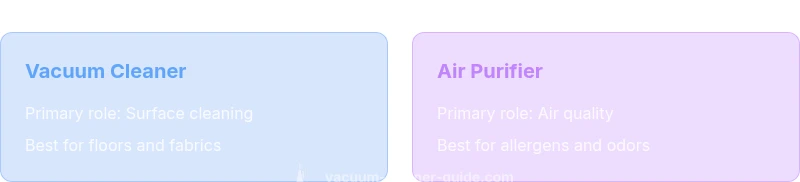
Vacuum cleaners and air purifiers address different cleaning needs, so they aren’t interchangeable. A vacuum cleans surfaces by removing dirt, dust, and pet hair from floors and upholstery, while an air purifier targets airborne pollutants to improve indoor air quality. For most homes, using both in tandem yields the cleanest environment and healthiest air.
Why People Compare Vacuum Cleaners and Air Purifiers
In households across the country, homeowners regularly ask how a vacuum cleaner compares to an air purifier. The short answer is that they serve different purposes, with complementary benefits when used together. A vacuum cleaner is primarily a surface-cleaning device, designed to remove visible debris, pet hair, and dander from floors, carpets, upholstery, and textiles. An air purifier, on the other hand, acts on the air itself by filtering out microscopic particles, odors, and volatile organic compounds that can linger in a room. The comparison vacuum cleaner vs air purifier reveals how an integrated approach—cleaning surfaces and air—can improve overall indoor air quality and tactile cleanliness. According to Vacuum Cleaner Guide analysis, most homes see meaningful gains when both types of devices are incorporated into a regular cleaning routine. This isn’t about choosing one over the other; it’s about recognizing their distinct roles and coordinating them for a healthier home environment. For households with pets or family members who suffer from allergies, combining these tools often yields noticeably better comfort and perceived cleanliness, even if the devices have different primary jobs. The goal is to reduce the total burden of particulates and contaminants that accumulate in living spaces.
What Each Device Delivers: Surface Cleanliness vs Air Quality
The two devices target different dimensions of cleanliness. A vacuum cleaner excels at removing tangible dirt—soil, dust, pet hair, crumbs—from hard floors, carpets, and fabrics. Its effectiveness depends on suction power, nozzle design, brush roll dynamics, and filtration inside the dust collection system. A vacuum’s job is completed when the surface is visually clean; yet, some fine particles can remain suspended in the air or resettle later, especially in high-traffic rooms.
Air purifiers focus on the air itself. They draw room air into a filtration system containing filters such as HEPA or activated carbon, capturing particles as small as a few microns and filtering odors or gases. They are most impactful for improving air felt quality, reducing sneeze-triggering particles, and lowering the concentration of irritants in spaces where people spend significant time. The vacuum cleaner vs air purifier debate demonstrates how air quality and surface cleanliness align but don’t replace one another. In many homes, a plan that uses both devices—one for surfaces, one for air—delivers the most comprehensive cleanliness.
When choosing, consider your primary goals: surface cleanliness (satisfaction with visible dirt) versus indoor air quality (perceived freshness and fewer irritants). The Vacuum Cleaner Guide team emphasizes that context matters: in a home with heavy foot traffic, a good vacuum can dramatically reduce visible mess; in a space with known sensitivities, an air purifier can further lower airborne particulates between cleaning sessions. The synergy becomes clear when you map out daily routines and seasonal patterns—dust storms, pollen seasons, and shedding cycles all influence when to engage each device.
Core Differences in Performance and Limitations
Performance gaps between vacuum cleaners and air purifiers are not about one being better overall; it’s about fit for purpose. Vacuum cleaners deliver high surface-cleaning performance, especially on carpets with the right combination of suction, brush design, and filter capacity. A powerful vacuum can pull out embedded fibers, loosen debris for more complete extraction, and prevent re-cycling of dust back into the room. Yet, even the best vacuums leave air in the room that contains fine particles and odors, particularly after a long day or in rooms with limited airflow. Air purifiers excel at reducing airborne particulates and odors by circulating air through filtration media, often achieving noticeable improvements in perceived air freshness and reduced irritation for allergy-prone occupants. However, purifiers do not remove soil or large debris from floors and furniture; they’re not designed to replace routine vacuuming. A practical observation is that combining the two devices addresses both visible and invisible aspects of indoor cleanliness.
Limitations exist for both devices. Vacuum cleaners require ongoing maintenance—emptying bags or dust bins, cleaning filters, and replacing belts or brushes. Air purifiers need filter replacements on a scheduled basis and correct sizing for a given room to be effective. In smaller rooms, an air purifier may quickly reach its capacity and require repositioning for optimal results; in larger spaces, multiple units or a larger model can be more cost-efficient but more complex to manage. The choice becomes a matter of timing and intent: plan vacuuming around cleaning schedules and run air purifiers during times when occupancy is high or when odors are expected. Thoughtful placement and practical expectations help households maximize both devices’ benefits.
How Room Size, Dirt Load, and Allergies Shape Your Choice
Room size and dirt load are practical determinants when weighing vacuum cleaner vs air purifier. For compact rooms with light to moderate debris—think bedrooms or home offices—a capable vacuum paired with one compact air purifier can cover both surfaces and air without overkill. In larger living areas or open-plan spaces, the combined approach scales: a heavier-duty vacuum handles floors across zones, while strategically positioned air purifiers manage air exchange in seating areas and near entryways where dust and odors tend to accumulate.
Allergies add another layer of nuance. If someone in the household experiences nasal or ocular irritation from dust and pollen, an air purifier with a true HEPA filter and a reasonably sized room can reduce exposure between vacuuming sessions. However, vacuuming remains essential for removing settled dust and pet hair, which frequently harbor additional allergens and microbes. The optimal strategy is a balanced plan: schedule routine vacuuming in high-traffic zones, and run air purifiers during or after peak activity periods or pollen seasons. Budget and energy considerations also matter; a single robust system for large rooms, or multiple smaller units for a multi-room layout, may offer better coverage over time.
Pet Owners, Smokers, and High-Pollen Periods: Tailored Guidance
Pet owners understand that fur and dander are not just a surface issue; they become part of the room’s micro-environment. Pets shed continuously, so a vacuum that excels at hair pickup and has a robust filtration system is invaluable for keeping upholstery and carpets clean. Air purifiers with HEPA filters can further reduce pet-related particulates in the air, improving breathing comfort between cleaning sessions. For households with smokers or frequent cooking, odor control becomes a priority, and activated carbon in air purifiers can help absorb smells that linger after cooking or smoking.
During high-pollen periods, air purifiers shine by filtering out pollen grains that travel through the air. It’s common to run purifiers in bedrooms and living areas overnight to minimize exposure. For overall cleanliness, ensure vacuuming happens at a cadence that reduces visible dust buildup while air purifiers mitigate airborne irritants. The dual approach is especially effective in spaces where family members spend long periods—living rooms, home offices, and bedrooms—where consistent air quality and surface cleanliness contribute to comfort and health.
Real-World Scenarios and Best Practices
Consider a typical family home with two bedrooms, a living room, and a kitchen. A mid-range canister or upright vacuum can manage stairs, rugs, and hard floors, while a dedicated air purifier sits in the living area or bedroom to continuously reduce airborne particles. Best practices include selecting a purifier with a true HEPA filter and appropriate CADR (Clean Air Delivery Rate) ratings for the room size; avoid under-sizing by choosing a unit that can circulate air multiple times per hour in the target space. Position purifiers away from walls and obstructions to optimize airflow, and rotate units seasonally if space or energy constraints require it. Vacuuming should be scheduled at least once or twice per week for lighter dust loads, more often in households with pets or infants, and especially after activities that generate dust, such as cleaning or renovation.
When it comes to choosing models, focus on reliability, filter availability, ease of maintenance, and noise tolerance. A quiet purifier is more likely to run continuously, while a vacuum’s noise is often a trade-off for suction power. Understand your priorities—if you live in a newly renovated space, the air purifier’s role may be more pronounced until surfaces settle. The practical outcome is a home where frequent vacuuming is complemented by consistent air cleaning, yielding a more comfortable and healthier living environment.
Common Misconceptions and Misuses
A frequent misconception is that one device can replace the other completely. In reality, vacuum cleaners remove surface dirt, while air purifiers address airborne contaminants. Another misconception is that all purifiers are equally effective for all pollutants; HEPA-rated units capture fine particles, while activated carbon handles odors and some gases. Some buyers assume higher price automatically equals better performance; however, room size and unit design matter, so choose devices based on rated room size, filtration efficiency, and maintenance cost. Misuses include running purifiers in unventilated spaces or at very low speeds without adequate air turnover, which reduces effectiveness. Conversely, neglecting routine vacuum maintenance—emptying dust bins, cleaning filters, and replacing worn brushes—undermines performance. Understanding these nuances helps homeowners deploy both devices judiciously for long-term cleanliness and air quality.
How to Build a Complementary Cleaning Plan
A practical plan aligns with daily routines and seasonal patterns. Start by mapping rooms by traffic and occupant needs, then assign cleaning tasks: vacuum high-traffic areas several times a week and use the purifier in common living spaces. Rotate purifier placement to ensure even air circulation, and adjust purging routines during allergy seasons by running purifiers longer or adding a second unit if needed. Maintenance calendars matter: note when filters need replacement and plan for filter storage or procurement before they are depleted. Consider energy use and noise when scheduling vacuuming and purifier operation to avoid overlap during quiet hours. By treating these devices as parts of a holistic system—one addressing surfaces, the other air quality—you create a home environment that feels cleaner and more comfortable.
Maintenance, Replacement Cycles, and Total Cost of Ownership
Maintenance planning reduces total ownership costs and keeps devices performing as intended. Vacuum cleaners require routine emptying of dust bins or bags, belt checks, and periodic filter changes. The cost of replacement bags or canister filters should be factored into the total cost of ownership, especially if multiple vacuum cycles are planned weekly. Air purifiers demand regular filter changes, with higher-efficiency units often costing more upfront but delivering longer filter life. When comparing long-term costs, consider room size, usage frequency, and the likelihood of simultaneous operation with other devices. A strategy that emphasizes durability, readily available replacement parts, and accessible replacement filters tends to offer better long-term value. Always follow the manufacturer’s maintenance schedule to preserve performance and air quality benefits.
Safety, Health, and Environmental Considerations
Both devices introduce user safety considerations. Vacuum cleaners should be used with proper cords, avoid overheating by not overloading circuits, and be kept away from moisture to prevent shock risks. Air purifiers should be placed in well-ventilated areas, away from direct heat sources, and cleaned according to the manufacturer’s guidance to avoid mold growth in filters. Environmentally, look for energy-efficient models and filtering media that can be recycled at end-of-life. These choices contribute to a healthier home while minimizing waste. The overall goal remains to minimize exposure to dust, allergens, and odors without compromising comfort or safety for residents.
Comparison
| Feature | Vacuum Cleaner | Air Purifier |
|---|---|---|
| Primary Function | Removes dirt and debris from floors, upholstery, and textiles | Filters airborne particles and odors to improve room air quality |
| Filtration/Mechanism | Dust collection bag/bin with filters and brushes | HEPA or other high-efficiency filtration with activated carbon options |
| Typical Noise Level | Varies by model; can be loud on high suction | Generally quiet-to-moderate; depends on fan and CADR |
| Energy Usage | Higher during active cleaning; varies by wattage | Lower continuous operation; depends on CADR and room size |
| Maintenance/Filters | Bag/bin emptying, belt and brush maintenance, filter replacements | Filter changes (often). Optional pre-filters or carbon filters |
| Best For | Heavy cleaning of floors, pets, and deep debris | Air quality improvement, odor control, allergy relief |
Strengths
- Addresses both visible dirt and indoor air quality when used together
- Provides targeted solutions for pets, allergies, and odors
- Guides budgeting by clarifying when to invest in each device
- Encourages a holistic cleaning plan rather than a single-device approach
- Helps occupants maintain a fresher, healthier home environment
The Bad
- Requires storage and handling of two devices
- Cumulative costs for maintenance, filters, and energy
- Coordination needed to optimize usage and placement
- Overlap is possible if room-specific needs are limited
Use both devices for a comprehensive clean
Vacuum cleaners excel at removing surface dirt, while air purifiers reduce airborne contaminants. A combined approach delivers the cleanest surfaces and the freshest air, especially in homes with pets or allergies.
FAQ
What is the primary difference between a vacuum cleaner and an air purifier?
A vacuum cleaner removes dirt from floors and fabrics, while an air purifier filters airborne particles to improve air quality. They address different aspects of cleanliness and are most effective when used together.
A vacuum cleans surfaces, and an air purifier cleans the air. They complement each other for a cleaner home.
Can an air purifier replace vacuuming for allergy relief?
No. Air purifiers reduce airborne irritants, but they cannot remove settled dust or pet hair from floors and furniture. Regular vacuuming remains essential for controlling allergens on surfaces.
No, air purifiers don’t replace vacuuming; you’ll still need to clean surfaces.
What should I look for when buying an air purifier for a large room?
Choose a unit with a high CADR rating appropriate for the room size, a true HEPA filter, and sufficient airflow. Consider energy use and noise level for continuous operation.
Pick a purifier with a good CADR for the room, a true HEPA filter, and acceptable noise.
Are there devices that combine cleaning floors and purifying air?
There are hybrid devices that offer both filtering and surface cleaning, but they are relatively uncommon. For best results, use dedicated devices in tandem and follow best practices.
Some hybrids exist, but dedicated devices paired together usually perform better.
How often should I replace filters on these devices?
Filter replacement frequency depends on usage, room air quality, and model. Follow manufacturer guidance, and inspect filters monthly to determine replacement needs.
Check filters per the manual and replace as recommended.
What’s the easiest way to set up a cleaning plan for a pet-friendly home?
Schedule regular vacuuming in high-traffic areas and run air purifiers continuously or during peak pet activity periods. Keep spare filters handy and perform routine maintenance.
Vacuum frequently in pet zones and run an air purifier regularly.
The Essentials
- Aim for a dual-clean strategy: surfaces and air
- Choose devices sized for your room and usage
- Prioritize true HEPA in air purifiers and strong suction in vacuums
- Schedule maintenance to sustain performance
- Place purifiers where occupants spend the most time