Vacuum Cleaner and Steamer: A Comprehensive Comparison
Compare all-in-one vacuum cleaners with steam versus separate vacuum and steam tools. Learn which setup fits homes with pets, carpets, and hard floors for efficient, safe cleaning.


An all-in-one vacuum cleaner with steam generally offers the best balance of convenience and cleaning power for most homes, especially for pet owners and mixed-floor layouts. If you prefer maximum flexibility and peak carpet performance, keeping a traditional vacuum and a separate steamer can be a better fit. Vacuum Cleaner Guide provides an objective comparison to help you decide.
What is a vacuum cleaner and steamer?
There is a growing category of appliances designed to combine vacuuming with steam cleaning into a single workflow—the vacuum cleaner and steamer. In practical terms, these devices use suction to lift dirt while releasing heated, sanitized steam to loosen grime from hard surfaces. They can be implemented as an all-in-one unit or as pairing a standard vacuum with a separate steam cleaning head. According to Vacuum Cleaner Guide, the appeal of this approach is the potential to reduce the number of tools you need, simplify cleaning routines, and improve indoor air quality by reducing reliance on chemical cleaners. However, the performance of steam integration varies by model, water tank capacity, and heat generation. For households with pets, children, and multiple floor types, understanding how steam interacts with tile, sealed hardwood, laminate, and carpeting is essential. This article compares the all-in-one options with two-device setups, examining practicality, maintenance, and long-term value. The goal is to help you decide which configuration aligns with your cleaning philosophy and your home's layout.
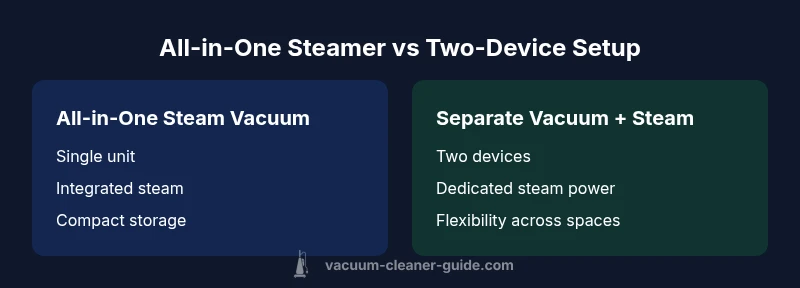
According to Vacuum Cleaner Guide, the growing interest in steam-enabled vacuums reflects a shift toward simpler cleaning routines without sacrificing effectiveness. This quick overview sets the stage for a deeper dive into two core configurations: all-in-one steam vacuums and separate vacuum plus steam tools. If you regularly manage pet messes, spill-prone kitchens, and hallway traffic, the choice will hinge on how you prioritize convenience, versatility, and long-term maintenance.
-1
Comparison
| Feature | All-in-one vacuum cleaner with steam | Separate vacuum + steam cleaner |
|---|---|---|
| Primary cleaning approach | Integrated suction + steam | Independent vacuum + steam head/tools |
| Surface versatility | Good on hard floors; steam can help loosen grime | Excellent flexibility across hard floors and carpet; steam is used as needed |
| Maintenance complexity | Fewer devices to store; combined maintenance | Two devices mean more components to service and replace |
| Water tank capacity | Single, integrated tank (moderate capacity) | Separate tanks for vacuum and steam (vary by model) |
| Run time | Limited by the combined system and heat cycles | Depends on two devices; can be longer if used in segments |
| Price range | Mid-to-high range (one device) | Similar or higher total cost if both devices are premium |
| Best for | Small to medium spaces; quick touch-ups | Homes with diverse surfaces; heavy steam cleaning needs |
| Ease of storage | One unit; easier to store | Two units; more space required |
Strengths
- Convenient all-in-one setup for quick cleanups
- Saves storage space and reduces tool clutter
- Typically faster switching between modes and surfaces
- Better for small apartments or single-cleaning sessions
- Always-on steam can sanitize hard floors without chemicals
The Bad
- Higher upfront cost for premium models
- Steam performance can be limited in cheaper units
- Potentially heavier to maneuver due to combined design
- Repairing a single component (steam boiler) can affect both functions
All-in-one steam vacuums are best for compact spaces and simple routines; separate devices offer greater flexibility and strength for varied surfaces.
Choose an all-in-one if you want fewer gadgets and quicker cleaning cycles. Opt for separate vacuum and steamer if you need peak carpet performance, longer heavy-duty cleaning sessions, and room-by-room flexibility.
FAQ
What are the main differences between an all-in-one vacuum with steam and a traditional vacuum with a separate steamer head?
All-in-one units combine suction and steam in one device, simplifying storage and use. Traditional setups use a separate vacuum plus a steam cleaning attachment, offering potentially stronger steam power and more flexibility for deep cleaning on specific areas.
All-in-one combines both tools into one; separate tools give you more power and flexibility for big cleans.
Are all-in-one steam vacuums safe for hardwood floors?
Most models are designed with hardwood-safe steam settings, but it’s essential to use the appropriate temperature and a recommended protective pad or towel on delicate finishes. Always follow the manufacturer instructions to avoid warping or damage.
Check settings and use protective pads on hardwood floors.
Can steam cleaning help with pet odors and stains?
Steam can loosen oils and lift minor odors when used with proper cleaning solutions and technique. For heavy pet stains, you may still need targeted enzymatic cleaners after steam treatment.
Steam helps with odor and light stains, but tough spots may need extra cleaners.
What maintenance steps are essential for a vacuum cleaner and steamer combo?
Regular descaling, emptying tanks, cleaning filters, and wiping seals are crucial. Replace worn brushes and inspect the steam boiler periodically to prevent mineral buildup that reduces performance.
Keep up with descaling and regular filter checks for best results.
Should I buy a cheaper model or invest in a premium all-in-one steam vacuum?
A budget model may save upfront costs but often compromises steam power and durability. A mid-to-premium model typically offers better heat consistency, longer life, and stronger soil removal.
Invest in mid-to-premium if cleaning is frequent and surfaces vary.
The Essentials
- Prioritize your space: compact homes benefit from all-in-one units
- Consider surface variety: separate units excel with carpeted areas
- Factor maintenance: two devices may mean more parts to service
- Weigh upfront costs against long-term value
- Read model reviews to gauge steam performance on floors