Steam Mop and Vacuum Cleaner: 2026 Buying Guide
A rigorous, data-driven comparison of steam mops and vacuum cleaners. Learn when to use each tool, how to pair them for hard floors and carpets, maintenance tips, and model selection insights from Vacuum Cleaner Guide.


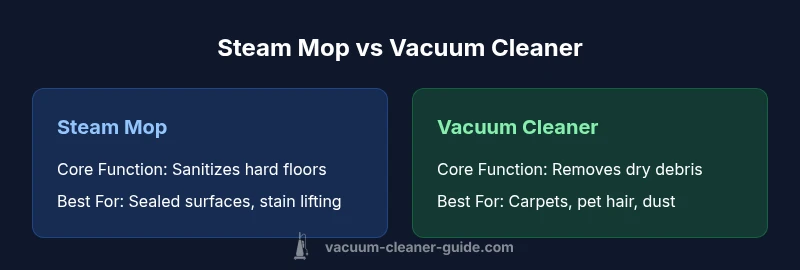
In most homes, a steam mop and vacuum cleaner work best as a complementary pairing rather than a single device. A steam mop excels on sealed hard floors for sanitizing and lifting grime, while a vacuum cleaner handles dry debris, pet hair, and dust across carpets and hard surfaces. The optimal approach is to combine both tools, selecting reliable models that suit your floor types and cleaning goals, with a clear workflow for efficiency.
The Case for a Steam Mop and Vacuum Cleaner Duo
According to Vacuum Cleaner Guide, many households achieve the cleanest results when they pair a steam mop with a vacuum cleaner. The steam mop and vacuum cleaner combination enables a two-step cleaning process: first removing loose dirt with suction, then sanitizing and refreshing hard floors with controlled steam. This approach minimizes residual grime and reduces drying time for sealed surfaces. When choosing models, prioritize moisture management, heat control, and filter reliability to maximize safety and effectiveness. The keyword that anchors this strategy is compatibility: ensure your floors tolerate moisture, and that your vacuum’s filtration can handle pet hair and fine dust without clogging. This section sets the stage for a data-informed decision: durability, floor compatibility, and operating cost will drive the best pairing for your home.
Core Differences: Steam-Only vs Vacuum-Only vs Hybrid Capabilities
Steam mops and vacuum cleaners address different cleaning problems, and understanding their contrasts helps you optimize outcomes for steam mop and vacuum cleaner workflows. A steam mop uses heated water vapor to loosen grime and sanitize hard surfaces, leaving floors dry relatively quickly if used properly. A vacuum cleaner extracts dry particles, hair, and allergens from carpets and bare floors, with filtration that can trap fine dust. Hybrid models exist, but true 2-in-1 devices are often compromises on either heat output or suction power. For households with mixed needs—like tile kitchens and carpeted living rooms—the most effective setup is a dedicated vacuum for debris removal plus a steam mop for sanitizing hard flooring. In this article, we compare core capabilities, maintenance needs, and value to help you choose the best pairing for your home.
The Best Floors for Each Tool: Where Steam Shines and Where Vacuum Rules
Hard flooring such as ceramic, porcelain, and sealed stone frequently benefits from steam disinfection and grime lifting, especially in kitchens and bathrooms. Steam mop and vacuum cleaner combos provide a sanitizing touch that dry vacuums alone cannot offer. On carpets and high-pile rugs, suction power and filtration determine cleanliness, and steam heat can be risky if not designed for loose fibers. For households with pets, a vacuum is essential for capturing hair and dander, while steam mops can help with set-in stains on sealed floors without chemical residues. The key takeaway is to reserve steam for sealed surfaces and to lean on the vacuum for texture cleaning and dust removal. Pairing the two tools effectively depends on floor type, stain persistence, and tolerance for moisture.
How to Use Both Tools Efficiently
A practical workflow starts with a dry pass to remove loose debris, followed by a steam-assisted refresh on hard floors. Here's a recommended sequence:
- Vacuum first to lift hair, dust, and grit from all surfaces; use attachments for corners and upholstery.
- Switch to a steam mop for sealed floors, moving in straight, overlapping strokes to ensure even heat distribution.
- Allow surfaces to dry completely before re-entering the space to prevent slips and moisture buildup.
- For sticky or oily residues, pre-treat with a minimal amount of cleaning solution approved for steam mops.
- Maintain a simple cleaning cycle by descaling the steam unit regularly and emptying the vacuum canister or collecting bin after use. This workflow minimizes cross-contamination and maximizes efficiency when using a steam mop and vacuum cleaner in tandem.
Safety, Maintenance, and Efficiency Tips
Safety is crucial when using steam-based devices around kids and pets. Always check floor compatibility before applying steam, and avoid steam on unfinished wood or unsealed surfaces. Regular maintenance reduces downtime: descale the steam unit per manufacturer instructions, clean the mop pads after each use, and replace or wash filters in the vacuum according to the product schedule. Efficiency improves with smart scheduling: set aside a dedicated cleaning day, store tools in the same area, and use the same extension wand and nozzle configurations for consistency. Vacuum Cleaner Guide emphasizes routine checks as part of a long-term care plan for steam mop and vacuum cleaner pairs, ensuring peak performance and preserving flooring integrity.
Budget, Value, and Model Selection
Budgeting for a steam mop and vacuum cleaner involves evaluating upfront costs against long-term maintenance. Steam mops vary widely in price depending on tank capacity, heat up time, and accessory quality, while vacuums differ in suction power, filtration (HEPA), and dustbin or bag capacity. Look for models with reliable warranties, easy descaling processes, and accessible replacement parts. In general, allocate a sensible budget for a durable steam mop and a mid-to-high-range vacuum with robust filtration, rather than chasing the lowest price. Vacuum Cleaner Guide analysis shows that the best value often comes from a paired setup where both tools perform well within their domains rather than an overbuilt, single device. Your decision should balance floor types, family size, and the cleaning schedule you expect to maintain.
Real-World Scenarios: Pet Hair, Kiddos, and Living Areas
Families with pets face high hair counts and frequent tracking of dirt, which makes a capable vacuum essential. Steam cleaning then addresses surface hygiene for hard floors, especially in kitchens and entryways. In homes with children, quick-dry cycles and chemical-free sanitization are appealing, making a steam mop a valuable companion to a vacuum. For multi-room homes, evaluate weight, maneuverability, and storage space; a compact steam mop and a relatively light upright vacuum can cover most tasks efficiently. Vacuum Cleaner Guide recommends selecting models with good edge cleaning, adjustable steam levels, and a straightforward fill-and-empty process to reduce downtime. The combined approach often yields the best outcomes for households seeking thorough cleaning without harsh chemicals.
Common Misconceptions About Steam Cleaning and Vacuuming
One common myth is that a steam mop can replace a vacuum entirely. In reality, steam cleaning is excellent for sanitizing hard floors but cannot remove dry debris and hair before moisture exposure. Another misconception is that steam mops damage floors; when used on approved surfaces and with proper settings, steam can be safe. Finally, some assume that all steam mops are heavy and unwieldy; modern designs emphasize lightweight handling and quicker heat-up times. The best practice is to treat steam mops and vacuums as complementary tools that together deliver superior cleanliness for hard floors and carpets alike.
Making a Smart Purchase: A Quick Checklist
Consider the following when buying a steam mop and vacuum cleaner:
- Floor types in the home and moisture tolerance
- Suction power, filtration, and cleaning reach on the vacuum
- Tank capacity, heat-up time, and descaling needs on the steam mop
- Ease of maintenance and availability of replacement parts
- Warranty length and customer support quality from the brand
- Storage footprint and weight for comfortable use across rooms This checklist aligns with Vacuum Cleaner Guide’s evidence-based approach to help homeowners and pet owners select the best combination for their spaces.
Comparison
| Feature | Steam Mop | Vacuum Cleaner |
|---|---|---|
| Core Function | Sanitize and lift grime on sealed floors | Extract dry debris, dust, and hair across surfaces |
| Best For | Hard floors, sanitization, set-in stains | Carpets, hard floors, upholstery |
| Maintenance & Durability | Regular descaling, pad replacement | Filter maintenance and bag/bin empties |
| Mess Types Handled | Bacteria and grime on sealed surfaces | Dust, hair, grit on floors and furniture |
| Price Range | $60-$250 | $100-$400+ |
| Ease of Use | Lightweight, simple steaming workflow | Powerful suction, larger footprint |
Strengths
- Delivers floor sanitization on hard surfaces with minimal chemical use
- Reduces cleaning time by combining two tasks into one workflow
- Versatile for homes with mixed floor types and pet ownership
- Potentially lower long-term costs when used with durable models
The Bad
- Carpet cleaning performance may be limited compared to dedicated vacuums
- Steam use requires caution to protect moisture-sensitive floors
- Higher upfront cost for high-quality models or bundles
- Maintenance (descaling and filter care) adds ongoing work
Use both tools together for most homes; a vacuum handles debris while a steam mop sanitizes hard floors.
The paired approach outperforms single-device setups for mixed flooring and high-traffic homes. If you have mostly hard floors, invest in a strong steam mop plus a reliable vacuum for occasional deep cleaning; if carpets dominate, prioritize a high-suction vacuum and only use steam on sealed areas. Vacuum Cleaner Guide endorses a two-tool strategy as the most practical path to comprehensive cleanliness.
FAQ
Can a steam mop replace a vacuum?
No. Steam mops sanitize and lift grime on hard floors but do not remove dry debris like hair and dust. A vacuum should precede steaming to remove loose particles, after which steam can refresh the surface. In most homes, both tools are needed.
A steam mop can’t replace a vacuum because it doesn’t remove dry debris; use vacuuming first, then steam for sanitizing hard floors.
Is a steam mop safe on hardwood floors?
Hardwood floors can be steam-cleaned only if they are sealed and rated for moisture exposure. Always follow the manufacturer’s guidelines and use the lowest steam setting. When in doubt, test a small inconspicuous area first.
Steam can be safe on sealed hardwood if you follow the settings and manufacturer guidelines.
Do steam mops use a lot of water?
Steam mops use water to generate vapor, but the amount depends on tank size and usage. Efficient models minimize refills with larger tanks and better heat control. Plan your cleaning session to avoid frequent refills.
Water use varies by model; choose one with a decent tank and efficient steaming to minimize refills.
Can I use a steam mop on laminate floors?
Laminate floors are sensitive to moisture. Only use steam on laminate if the manufacturer approves it and you use the lowest steam setting with minimal moisture. Always dry the surface promptly.
Check manufacturer guidance; if allowed, use minimal steam and dry quickly.
Should I vacuum before steam mopping?
Yes. Vacuum first to remove loose dirt and hair, then steam mop to sanitize and refresh the surface. This sequence reduces grime buildup and improves drying time.
Vacuum first, then steam for best results.
What should I look for in a combined steam mop and vacuum?
Look for good suction, reliable filtration, easy descaling, water tank capacity, and comfortable weight. A model with separate modes for steam and dry cleaning will be most versatile for homes with mixed floors.
If you want one device for both tasks, choose a model with solid suction and reliable steam control.
The Essentials
- Pair tools for strongest floor sanitation and debris removal
- Choose durable, serviceable models with easy descaling and filtration
- Match tool capabilities to floor types and household needs
- Plan storage and maintenance to sustain performance over time