Vacuum Cleaner and Steam Mop in One: A Comprehensive Comparison
An analytical buying guide comparing all-in-one vacuum cleaners with steam mops against separate tools, covering performance, maintenance, safety, and best-use scenarios for homes with pets and hard floors.


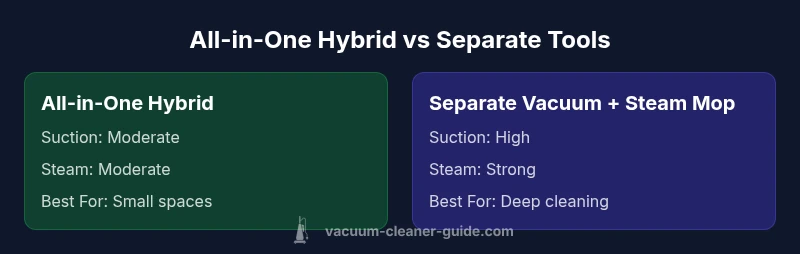
For homeowners seeking convenience without sacrificing clean floors, an all-in-one vacuum cleaner with a steam mop can replace two tools in compact spaces. These hybrids typically excel on hard floors and low-pile carpets, delivering decent suction and steam performance for everyday dirt. The Vacuum Cleaner Guide team finds they offer solid value for many households, with caveats around deep carpet cleaning and surface-specific steam limits.
Why an All-in-One Device Matters for Modern Homes
In 2026, many households prioritize compact, multi-functional tools that reduce clutter and simplify chores. An all-in-one vacuum cleaner and steam mop is designed to tackle dry debris and surface grime in a single pass, which can help save time and storage space. According to Vacuum Cleaner Guide Analysis, 2026, users with small living spaces or open-plan layouts often prefer hybrids for their streamlined design and quick transition between modes. For pet owners, the appeal is the ability to sweep up hair and then refresh floors with steam without swapping devices. The overall value proposition centers on convenience, not perfection for every task, so expectations should align with typical daily cleaning rather than heavy-duty renovation work.
In practice, the all-in-one solution shines on sealed hard floors and low-pile carpets, where moderate suction and controlled steam can remove surface grime efficiently. The approach is especially compelling for households that want to minimize cord clutter and simplify maintenance routines. The Vacuum Cleaner Guide team notes that successful use hinges on selecting models with reliable heat control, intuitive controls, and durable water tanks to prevent frequent refills. In short, these devices are best viewed as daily cleaners that handle routine dirt and light stains rather than replacement-grade deep cleaning machines.
Brand reliability and after-sales support are essential when evaluating hybrids. A robust warranty and accessible service networks reduce long-term risk, particularly for devices with combined vacuum and steam functions. Consumers should also consider noise levels, as many all-in-one units operate louder than a traditional vacuum due to dual-function hardware. Overall, the goal is to balance convenience with the actual cleaning needs of your home.
How to Read a Hybrid’s Specs: What Matters Most
Selecting an all-in-one unit requires a careful reading of the spec sheet. Look for the following indicators:
- Suction power: Moderate to high for your typical dirt load on your floor types.
- Steam capability: Steam pressure and temperature suitable for sealed floors without warping materials.
- Tank capacity: A larger tank reduces refill frequency during standard cleaning sessions.
- Weight and ergonomics: A model that is comfortable to maneuver on both hard floors and low-pile carpets.
- Filtration: A good filter system helps manage dust and pet dander, improving indoor air quality.
- Maintenance needs: Availability of descaling instructions and replacement parts like filters and seals.
Each home has unique floors and dirt patterns; the best choice often depends on the dominant tasks—hard-floor upkeep, pet hair, or occasional carpet refreshment. Vacuum Cleaner Guide’s approach is to compare how models perform in real-world scenarios, not just in lab specs. When evaluating price, consider the long-term value: fewer tools to store, less setup time, and the cost of ongoing maintenance.
Performance Benchmarks: Suction, Steam, and Responsiveness
In the all-in-one category, suction and steam performance are the two critical axes. Suction power determines the device’s ability to pick up hair, dust, and fine grit from both floors and rugs. Steam performance affects stain removal on hard surfaces and the floor’s microbiological cleanliness. A common trade-off is that hybrids with stronger suction may require heavier bodies or shorter battery life (for cordless models), while those with robust steam capability may compromise on suction or heat-up time.
Look for models with multi-frequency suction options and a heat-regulation system that avoids overheating. Quick-change brushes and nozzle designs can also influence results on different floor types. For pet owners, higher suction helps with hair, but consistent steam action can assist in sanitizing sealed floors. A well-rounded hybrid should demonstrate reliable performance across both dry and damp cleaning tasks, without excessive wait times for water to heat up between modes.
Surfaces, Floors, and Carpet: Where Hybrids Excel or Fall Short
Hard floors (tile, vinyl, laminate, and sealed wood) are where hybrids tend to perform best, provided the steam function is well-controlled so it does not warp or discolor finishes. For carpeted areas, hybrids can loosen and lift surface dirt, but deep-pile carpets often benefit more from a dedicated vacuum or a two-step approach (vacuum first, then steam mop). When evaluating models, consider carpet pile height and foot traffic in your home. If you frequently clean stains or heavily soiled areas, you may need a separate steam mop with a higher steam output or a traditional vacuum for deep cleaning.
The general guidance from Vacuum Cleaner Guide is to match the tool to the dominant floor type in your home. For most families with mixed surfaces, a hybrid can handle most routine tasks, but plan for occasional deeper cleaning with a traditional vacuum and dedicated steam mop if circumstances demand it. The goal is to achieve a balanced cleaning regimen rather than a single tool performing every job perfectly.
Maintenance, Durability, and Reliability: What to Expect Over Time
Maintenance is a defining factor for hybrids. Regular descaling, filter replacement, and prompt drying of the water tank are essential to prevent odor and mold growth. A well-sealed design with accessible parts simplifies maintenance, while poor build quality can lead to leaks or reduced suction. Battery life is a critical variable for cordless hybrids; if you rely on battery-powered operation, plan for eventual battery replacement or performance decline. Durability hinges on quality seals, sturdy housings, and reliable heat management.
Caring for the device involves straightforward steps: empty the dustbin, rinse filters, descale the steam system as recommended by the manufacturer, and run a cleaning cycle with plain water to prevent mineral buildup. The long-term cost of ownership includes parts like brushes, wheels, and gaskets that may wear at different rates depending on usage patterns. By prioritizing models with proven durability and good after-sales support, you can maximize the value of an all-in-one solution.
Safety Precautions: Steam, Water, and Electrical Considerations
Steam devices bring additional safety considerations. Always follow the manufacturer’s guidelines for maximum water temperature, and avoid leaving the device unattended while the steam is active. Use on appropriate floor types to minimize the risk of warping or damage to sensitive surfaces. For homes with pets and children, ensure the device cools down before storing and keep the water reservoir out of reach. If your home has moisture-sensitive areas or electronics nearby, consider a dedicated cleaning station away from outlets and electronics.
Always unplug before refilling the water tank and avoid overfilling to prevent spills. Use the correct cleaning pads and avoid harsh chemicals that could react with steam or irritate skin and eyes. By adopting careful usage habits, you can safely enjoy the conveniences of an all-in-one tool without compromising household safety.
Real-World Use Cases: When an All-in-One Makes Sense
Small apartments with limited storage often benefit the most from a compact all-in-one solution. Pet owners dealing with daily hair and light stains may find the hybrid’s convenience compelling enough to replace two separate devices. Families with hard floors and low-pile carpets can leverage the hybrid for routine maintenance, quick spot cleaning, and scheduled floor refreshes. In homes with high-pile carpets or heavy soiling, you may still rely on a traditional vacuum for deep cleaning and a standalone steam mop for stubborn stains. The key is matching the tool’s capabilities to your actual cleaning routine rather than forcing a single device to do everything.
For buyers, the takeaway is to choose a model that aligns with your floor mix, cleaning frequency, and storage constraints. A well-chosen hybrid can streamline tasks and reduce clutter while delivering reliable daily cleaning performance. If your expectations center on ease and speed, a hybrid may be ideal; if you need extreme dirt removal or carpet restoration, you may want a separate pair of tools.
Pricing and Value: What to Expect in 2026
Pricing for all-in-one hybrids spans a broad range, reflecting differences in suction power, steam output, tank capacity, and build quality. Entry-level models tend to be lighter, easier to handle, and more compact, but may compromise on durability or steam performance. Mid-range options typically offer a balance of suction and steam, with larger tanks and longer run times. Higher-end hybrids emphasize better filtration, more robust steaming capabilities, and longer warranties. In general, provide a realistic budget for a device that will see frequent use, and consider lifetime costs such as filters and replacement parts when comparing models.
From Vacuum Cleaner Guide’s perspective, value comes from how well a hybrid meets your routine needs without requiring constant replacements or upgrades. If you predominantly clean hard floors and light stains, a less expensive hybrid could provide strong value. If your home presents diverse cleaning challenges, allocate a larger budget for a model with higher durability and reliable support.
Buying Checklist: How to Choose Your All-in-One Model
- Map your floor types: note how much hard floor vs. carpet you have.
- Prioritize tank capacity and refill frequency to minimize interruptions.
- Check steam features: temperature, surface compatibility, and safety features.
- Assess weight and balance for comfortable use in your home.
- Review filtration and maintenance requirements; ensure easy replacement parts.
- Evaluate warranty and customer support for long-term peace of mind.
- Compare price-to-feature value; read independent reviews for reliability.
A structured checklist helps you avoid overpaying for features you won’t use while ensuring the core tasks you need are covered by the hybrid.
Practical Setup and Quick-Start Tips
- Start with a familiar routine: vacuum hard floors, then switch to steam mode for finishing passes.
- Keep a dedicated cleaning cloth or pad for steam-only areas to avoid cross-contamination with dry dirt.
- Regularly dry the device after use to prevent moisture buildup inside the housing.
- Store on a wall mount or in a cabinet to maintain easy access and to prevent accidental tip-overs.
- Establish a cleaning calendar that aligns with your weekly routine to keep floors looking fresh.
These setup tips help you maximize the hybrd’s efficiency and longevity, while maintaining a straightforward cleaning routine for busy households.
Feature Comparison
| Feature | All-in-One Hybrid (Model A) | All-in-One Hybrid (Model B) | Separate Vacuum + Steam Mop |
|---|---|---|---|
| Suction Power | Moderate suction suitable for everyday cleaning | Moderate-to-high suction for mixed debris | Higher suction with dedicated vacuum component |
| Steam Cleaning Power | Effective on light grime, sealed floors | Strong steam performance for daily grime | Steam mop only; no integrated suction |
| Floor Coverage | Best on hard floors and low-pile carpets | Versatile but heavier; suited to hard floors with carpet boosts | Excellent on hard floors; separate tools handle carpet |
| Ease of Use | One device to manage; simple transitions | Moderate weight; smooth mode switching | Two devices; more to manage but focused tasks |
| Maintenance & Refills | Descale regularly; filters require replacement | Regular maintenance; larger water tank reduces refills | Separate maintenance for vacuum and steam parts |
| Price Range | $150-$300 | $250-$350 | $200-$500 |
| Best For | Small homes, quick cleanups, light dirt | Homes with mixed needs, budget-conscious | Homes needing deep carpet cleaning and heavy steam |
Strengths
- Space-saving design replaces two tools
- Saves time with quick mode transitions
- Convenient for small homes and apartments
- Lower maintenance by using a single system
- Moderate price point for casual cleaning
The Bad
- Limited deep-clean performance on heavy carpets
- Steam performance may vary by surface
- Heavier and bulkier than single-function tools
- Refills can interrupt cleaning if tank is small
All-in-one hybrids offer convenience and space savings, but separate tools win on deep cleaning and carpet performance
Choose an all-in-one if you prioritize streamlined storage and quick daily cleanups in a home with mostly hard floors. Opt for separate vacuum and steam mop if you regularly tackle stubborn grime, deep carpet cleaning, or mixed-floor challenges. Vacuum Cleaner Guide's verdict favors hybrids for everyday use, while recommending separate tools for advanced cleaning scenarios.
FAQ
What is an all-in-one vacuum cleaner and steam mop?
An all-in-one device combines dry vacuuming with steam mopping in a single unit. It is designed to streamline cleaning routines by handling debris and light stains without swapping tools. While convenient for daily upkeep, its performance on deep cleaning or high-pile carpets may be limited compared to dedicated devices.
An all-in-one blends vacuuming and steam mopping in one tool for easier daily cleaning. It’s convenient, but may not replace a dedicated vacuum or steam mop for tough jobs.
Are hybrids effective on wood or laminate floors?
Yes, when designed with surface-safe steam settings and appropriate pads, hybrids can clean sealed wood or laminate floors without damage. Always check the manufacturer’s guidance on wood-floor use and tamper-proof heat limits to avoid warping.
They can be safe on sealed wood floors if used as directed; check heat settings and pads.
Can I use a hybrid on carpets?
Hybrids clean low-pile carpets adequately for daily wear but may struggle with deep or high-pile carpets. For heavy soil, rely on a standalone vacuum and use steam sparingly on carpeted areas to avoid saturation.
Good for light carpet cleaning, not ideal for deep soils in high-pile carpets.
What maintenance is required for these devices?
Regular maintenance includes descaling the steam system, cleaning filters, drying the tank after use, and replacing worn brushes or seals as needed. Following the manufacturer’s maintenance schedule helps extend the device’s life.
Descale the steam system, clean filters, and dry the tank after use to keep it performing well.
Are all-in-one devices safe for pets?
They can be safe if used with low steam temperatures and surfaces that won’t be damaged. Ensure pet-safe cleaning practices and provide proper ventilation during use to minimize fumes and moisture around pets.
They’re generally safe if you follow the surface guidelines and keep pets away during heating.
How should I choose between two all-in-one models?
Compare suction, steam capability, tank size, weight, and warranty. Pick the model that best matches your floor types and cleaning frequency, prioritizing build quality and after-sales support.
Compare suction, steam, capacity, and weight to pick the best fit for your home.
The Essentials
- Prioritize floor type when choosing a hybrid
- Expect balanced performance, not top-tier deep cleaning
- Look for larger water tanks to minimize refills
- Consider warranty and after-sales support
- Budget accordingly for long-term maintenance