How to Clean Carpet at Home: A Practical Guide
Learn how to clean carpet in home with a practical, pet-friendly approach. Vacuum, pretreat stains, use mild cleaners, and dry thoroughly for fresher, longer-lasting carpet.


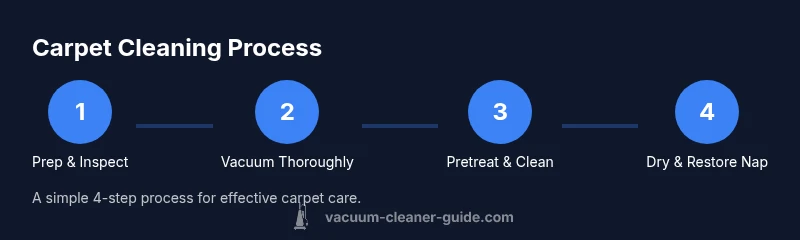
To clean carpet at home, start with a thorough vacuum, then pretreat stains, mix a gentle cleaning solution, apply, agitate lightly, blot up moisture, and allow full drying. Use minimal water for most fibers, test products first, and choose a carpet-cleaning method suited to your fiber. Following these steps with patience will reduce soil, remove many stains, and extend carpet life without professional equipment.
How to Clean Carpet in Home: A Practical Start
If you're wondering how to clean carpet in home, begin with understanding your fiber and stain types, because different materials respond differently to cleaners. The most reliable results come from a simple, repeatable routine: vacuum to remove loose dirt, pretreat tough spots, and choose a cleaning method that matches your carpet's fiber. According to Vacuum Cleaner Guide, most homes achieve noticeable improvement with a straightforward cycle that avoids over-wetting and uses mild cleaners. By starting with the basics and building a routine, you reduce the risk of permanent staining and fiber damage. In this section, we'll set up a step-by-step workflow that works for nylon, polyester, wool blends, and even some natural fibers, while keeping pet messes and high-traffic areas in mind.
Step 1: Assess Carpet Type and Stains
Carpet fibers vary widely in porosity and dye stability. Nylon and polyester typically tolerate water-based cleaners well, while wool and some blends require gentler approaches. Separate stains by category (protein-based, tannin, oil-based) and note where pets frequent. As Vacuum Cleaner Guide analysis suggests, knowing the stain type helps you choose pre-treatment products and avoid setting stains permanently. Take photos of problem spots, so you can track progress and adjust your method if needed.
Step 2: Gather Tools and Materials
Before you begin, gather a vacuum with strong suction, a stain pretreatment, a mild carpet-cleaning solution, white microfiber towels, a soft-bristled brush, and a spray bottle or bucket of warm water. Having everything at hand reduces re-wetting and streamlines your workflow. For multi-room jobs, consider a portable floor mat to catch drips and a fan to improve drying.
Step 3: Vacuum Thoroughly and Pre-Treat Stains
Start by vacuuming each area slowly, working in multiple directions to lift embedded soil. Pretreat noticeable stains with a stain remover or a homemade solution, letting it dwell 5-10 minutes before blotting. Avoid scrubbing harshly, which can drive stains deeper. When possible, isolate the treated spot to prevent spreading dirt during cleaning.
Step 4: Choose Cleaning Method Based on Fiber
Your carpet's fiber determines the best cleaning approach. Nylon often tolerates moderate washing and steam cleaning, while wool needs gentler,
Step 5: Apply Cleaning Solution and Gently Agitate
Apply the solution to a small area first, then use a soft-bristled brush or sponge to gently agitate in a circular motion. Work in 2x2 ft sections to keep moisture controlled and allow for even soil removal. Remember, harsher scrubbing can fray fibers and dull colors, so light pressure yields better results.
Step 6: Rinse and Remove Moisture
Rinse the area with clean water to remove residue. Blot with white towels or microfiber cloths to lift moisture, then press to extract as much liquid as possible. Avoid soaking the carpet; excess moisture can lead to mold or longer drying times. Repeat as necessary until the rinsed area looks clear.
Step 7: Drying Techniques and Timing
Air drying is the safest route for most carpets. Use fans and, if possible, open windows to create cross-ventilation. Boost drying with a dehumidifier and raise furniture slightly off the floor to improve air flow. Depending on humidity and pile height, drying can take several hours, so plan cleaning for a dry day if possible.
Step 8: Post-Cleaning Care and Stain Prevention
Once dry, vacuum again to restore nap and remove any residual dust. Protect high-traffic areas with entrance mats and consider treating high-use spots with a color-safe protector. Regular maintenance—vacuuming at least once per week and addressing spills promptly—prevents soil build-up and keeps carpet looking fresh.
Common Mistakes to Avoid and When to Call a Pro
Avoid oversaturating fibers, using hot water on sensitive dyes, and waiting too long to treat fresh stains. If you encounter persistent odors, extensive staining, or delicate fibers (such as silk blends), it may be time to call a professional cleaner. A pro can assess fiber integrity and use advanced equipment to restore the carpet safely.
Tools & Materials
- Vacuum cleaner with strong suction(Ensure the beater bar is appropriate for carpet piles.)
- Stain pretreatment spray or homemade solution(Test in an inconspicuous area first.)
- Mild carpet-cleaning solution(Look for pH-neutral formulas.)
- White microfiber towels(For blotting and moisture removal.)
- Soft-bristled brush or sponge(Use gentle strokes to avoid fiber damage.)
- Spray bottle or bucket of warm water(Keep water clean and warm, not hot.)
- Portable drying aids (fans/dehumidifier)(Speeds up drying in humid spaces.)
Steps
Estimated time: 60-90 minutes
- 1
Inspect and prep area
Move furniture, test a hidden area for colorfastness, and decide on a cleaning method based on carpet type.
Tip: Record problem spots with photos to monitor progress. - 2
Vacuum thoroughly
Vacuum each area slowly, using multiple directions to lift embedded soil.
Tip: Take your time; slow passes remove more dirt. - 3
Pretreat stains
Apply stain remover and let dwell 5-10 minutes before blotting; don’t let it dry.
Tip: Treat oil-based stains first; they’re harder to remove once set. - 4
Prepare cleaning solution and test
Mix a mild solution per product directions and test on a small area.
Tip: Avoid hot water; it can set some dyes. - 5
Apply and agitate
Apply solution to 2x2 ft sections and gently agitate with a brush.
Tip: Keep sections small to prevent over-wetting. - 6
Rinse and blot
Rinse with clean water and blot dry with towels until moisture is reduced.
Tip: Repeat until the rinse area looks clean. - 7
Dry thoroughly
Use fans/dehumidifier and ventilation to speed drying; avoid walking on damp carpet.
Tip: Place towels at walkways to catch drips. - 8
Final check and maintenance
Vacuum again after drying and address high-traffic spots with a preventative treatment.
Tip: Create a weekly vacuum routine to maintain cleanliness.
FAQ
What is the best method to clean carpet at home?
The best method depends on fiber and stain type. Start with vacuuming, then pretreat stains, apply a mild cleaning solution, and finish with thorough drying.
Start with vacuuming, pretreat stains, clean with a mild solution, and dry completely.
Can I use hot water for all carpet types?
Hot water can cause dye bleed on some carpets; use warm water and test first, especially with dark or bright colors.
Warm water is typically safer; always test first.
How often should I deep clean carpets?
Most homes benefit from a deep clean every 6–12 months, with more frequent sessions in households with pets or high traffic.
Every 6 to 12 months, more with pets.
Is steam cleaning safe for pets?
Steam cleaning can be safe if rooms are well ventilated and the carpet dries completely. Avoid excessive heat on delicate fibers.
Ventilate well and dry thoroughly.
What should I do about colorfast carpets?
Test for colorfastness in an inconspicuous area, use color-safe cleaners, and avoid bleach to prevent color loss.
Test first; avoid bleach.
Watch Video
The Essentials
- Vacuum thoroughly before treatment.
- Test cleaners on hidden areas first.
- Dry carpet completely to prevent mold.
- Choose cleaning method based on fiber for safety.