Do You Need a Vacuum If You Have a Carpet Cleaner? A Practical Guide
Explore whether you still need a vacuum when you own a carpet cleaner. An analytical comparison covers deep cleaning, pet hair, routines, costs, and choosing the right setup for homes with carpets and pets.


According to Vacuum Cleaner Guide, do you need a vacuum if you have a carpet cleaner? For most homes—especially with pets or high-traffic carpets—a vacuum plus a carpet cleaner delivers the deepest clean and better allergen control. If your cleaning needs are light and your storage is limited, a carpet cleaner alone can be enough for routine carpet refreshes.
Do you need a vacuum if you have a carpet cleaner?
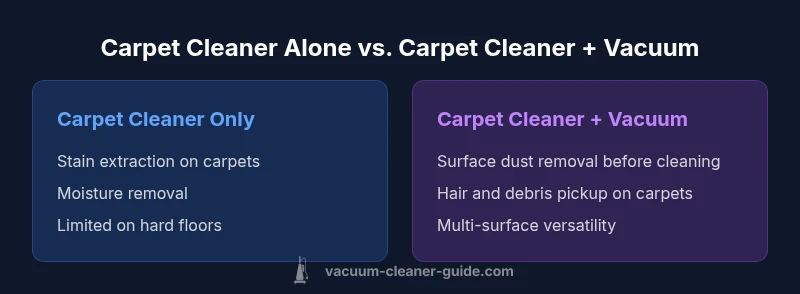
The central question many homeowners ask is whether a separate vacuum is essential if they already own a carpet cleaner. The short answer is: it depends on your space, the soils you encounter, and your cleanliness goals. The Vacuum Cleaner Guide team notes that a two-step approach—vacuuming before extraction and routine touch-ups afterward—often yields superior results, especially in homes with pets or high-traffic carpets. In practical terms, a carpet cleaner excels at removing embedded stains and moisture, while a vacuum excels at surface dust and hair. Used together, they address both layers of soil and the allergen load they carry. The data backing this guidance comes from Vacuum Cleaner Guide Analysis, 2026, which highlights the importance of dust control as a foundation for deeper cleaning. If you prioritize convenience and have light soils, a carpet cleaner may suffice, but most households benefit from adding a vacuum to the routine.
How carpet cleaners work and their limits
Carpet cleaners combine a surfactant solution with agitation and suction to lift dirt from carpet fibers and extract it with dirty water. They are highly effective for staining, spill cleanups, and moisture extraction, which helps prevent mold and odor. However, most carpet cleaners rely on surface prep and extraction rather than continuous surface dust removal. Their suction targets embedded soils but may leave behind fine dust or hair that linger on the surface. In addition, carpet cleaners are optimized for carpets and rugs; when used on hard floors or delicate textiles, some models may be less effective or require special settings. Understanding these strengths and limits helps you decide whether a separate vacuum adds value between or after carpet-cleaning sessions.
When a vacuum is still valuable
Vacuuming remains valuable for several scenarios. Pet owners often accumulate hair on carpets and upholstery, where a vacuum with a pet-hair attachment can dramatically reduce surface hair before you reach for the carpet cleaner. Homes with multiple hard floor surfaces, stairs, or area rugs benefit from a versatile vacuum that can transition between floor types. Allergies or sensitivity to dust also favor frequent surface dust removal—vacuuming can reduce the amount of debris that a carpet cleaner must extract. Even with a carpet cleaner, a vacuum-then-clean routine can minimize residue and improve overall air quality in living spaces.
Types of vacuums to pair with a carpet cleaner
Choosing a compatible vacuum setup depends on your home layout and cleaning priorities. Upright vacuums with strong suction and a dedicated pet-hair tool work well for large carpets and living rooms. Canister vacuums excel on stairs and hard-to-reach corners, and handheld units are ideal for spot-cleaning upholstery. Cordless stick vacuums offer convenience for quick daily touch-ups, while robotic vacuums can maintain general cleanliness on hard floors and low-pile carpets between deeper sessions. For homes with mixed surfaces, a modular approach—an upright for carpets, a canister for stairs, and a handheld for upholstery—often provides the best balance of efficiency and thoroughness.
Cleaning routines: best practices for a two-device setup
A practical routine starts with a vacuum to remove surface dust and hair, then follows with the carpet cleaner to address embedded soils and moisture. Allow sufficient drying time between steps to prevent mold. On days with high pet activity, consider repeating the vacuum pass after the carpet cleaner has dried to further reduce residual dust. If you prefer a simpler workflow, ensure your carpet cleaner supports quick pre-vacuum sessions and use a lighter passing vacuum on hard floors when applicable. The key is consistency: a predictable rhythm helps maintain carpet appearance and indoor air quality over time.
Maintenance and cost considerations
Owning both a carpet cleaner and a vacuum introduces additional maintenance tasks and storage needs. Vacuum filters, belts, and bags require regular replacement, while carpet cleaners demand periodic brush maintenance and fresh solution. From a cost perspective, the upfront investment increases, but you gain flexibility for multi-surface cleaning and faster routines. If budgets are tight, prioritize a vacuum with a strong pet-hair tool and a solid carpet-cleaning model, then expand as needed. Space considerations also matter; select compact models or modular storage solutions to keep cleaning gear readily available.
Common myths and misperceptions
A common myth is that a carpet cleaner can replace vacuuming entirely. In reality, the best approach varies by household. Some assume one device handles all tasks, but embedded dirt, allergen-laden dust, and hair often require both tools for optimal results. Another misconception is that newer carpet cleaners have no maintenance. Like any appliance, effective maintenance prolongs performance and lifespan. Finally, some buyers worry about noise. While both devices can be loud, modern designs focus on efficiency and ergonomic features to minimize fatigue during longer sessions.
Practical decision framework: do you need a vacuum if you have a carpet cleaner?
Use this quick framework to decide what setup fits your home: (1) Assess pet presence and hair volume; (2) Evaluate surface variety (carpets, area rugs, hard floors, stairs); (3) Consider allergy sensitivity and air quality goals; (4) Check storage space and budget; (5) Test a two-device plan for two cleaning cycles and measure the improvement in cleanliness. In most cases, a vacuum plus carpet cleaner offers the most reliable results, particularly when used in combination with a thoughtful routine.
Real-world testing scenarios and data
Industry analyses emphasize the role of surface dust removal as a precursor to effective deep cleaning. Vacuum Cleaner Guide Analysis, 2026 highlights that homes with a robust dust control routine consistently report cleaner air and better carpet performance after deep cleaning sessions. While carpet cleaners excel at stain extraction and moisture removal, a vacuum addresses the everyday accumulation of dust and hair that can otherwise burden extraction efficiency. For readers who track performance, this two-device approach tends to reduce repeat cleaning needs and improve perceived freshness in living spaces.
Comparison
| Feature | Carpet Cleaner Only | Carpet Cleaner + Vacuum |
|---|---|---|
| Deep-cleaning effectiveness on carpets | Addresses embedded stains and moisture via extraction | Enhanced soil and hair removal when vacuum pre-cleans surfaces |
| Pet hair handling | Limited surface hair removal; relies on cleaner for extraction | Vacuum first helps collector hair before extraction; better overall removal |
| Dust and allergen control | Removes soils embedded in fibers; may leave surface dust | Surface dust removed by vacuum; cleaner targets embedded soils and moisture |
| Versatility on hard floors | Primarily designed for carpets; limited hard-floor effectiveness | Broad floor versatility with appropriate vacuum attachment and carpet-cleaning model |
| Time and effort | Single-device workflow can be simpler but slower on heavy soil | Two-device routine can be faster per room due to more efficient soil removal |
| Maintenance and cost | Lower upfront cost; fewer devices to maintain | Higher upfront and ongoing costs; more storage and upkeep |
| Best for | Light to moderate soils, budget-conscious users | Homes with pets, thick carpets, and multi-surface cleaning needs |
Strengths
- Faster overall deep clean with two devices
- Better allergen control through surface dust removal
- More versatile for multi-surface homes
- Optimized routine when logistics permit
The Bad
- Higher upfront and ongoing costs
- Increased storage space and maintenance
- More complex cleaning routine for beginners
Two-device approach often wins for most homes
Vacuum first to remove surface dust, then use a carpet cleaner for embedded soils and moisture. This combination improves overall cleanliness and air quality, especially in pet-friendly or high-traffic environments.
FAQ
Do you need a vacuum if you have a carpet cleaner?
Not always essential, but a vacuum adds surface dust and hair removal that makes deep cleaning easier and more effective. If your soils are light and you have limited space, a carpet cleaner may be sufficient for routine refreshes.
Not always required, but vacuuming helps. It reduces surface dust and hair before you clean, improving results.
What scenarios benefit most from using both a vacuum and a carpet cleaner?
Homes with pets, high-traffic areas, multiple floor types, or allergies benefit most from a two-device approach. Vacuuming removes surface debris, while the carpet cleaner handles embedded soils and moisture.
Pet owners and busy households benefit the most from using both tools.
Can a carpet cleaner substitute for a vacuum on hard floors?
Carpet cleaners are designed for carpets and rugs. On hard floors, a vacuum or a floor-safe cleaner is typically more effective and safer for surface debris and finish.
Carpet cleaners aren’t ideal for bare floors.
Is a cordless vacuum enough for daily dusting if I have a carpet cleaner?
Cordless vacuums are great for quick touch-ups, but they don’t replace the deep-cleaning capabilities of a carpet cleaner. Use them for interim maintenance and periodic carpet cleaning for best results.
Cordless helps with daily touch-ups, but you’ll still want a carpet cleaner for deep cleaning.
What should be in a cleaning routine combining both devices?
Vacuum first to lift surface soil, then run the carpet cleaner to extract embedded dirt and moisture. Allow adequate drying time between steps and repeat as needed for high-traffic areas.
Vacuum, then extract, and dry thoroughly.
Are there budget-friendly options that cover both tasks?
Yes, you can find affordable vacuum-cleaner pairings or models with combined functionality. If budget is tight, start with a solid carpet cleaner and a basic upright vacuum, then expand as needed.
There are affordable two-device setups that work well.
The Essentials
- Vacuum before carpet cleaning for best results
- Pet owners benefit most from pairing both tools
- Storage and cost considerations matter for long-term use
- Adopt a two-step routine to maximize carpet lifespan
- Regular maintenance of both devices sustains performance