Difference Between Vacuum Cleaner and Steam Cleaner: A Comprehensive Guide
Compare vacuum cleaners and steam cleaners to decide which tool fits your home. Learn how they work, surfaces they suit, maintenance, safety, and practical buying tips.


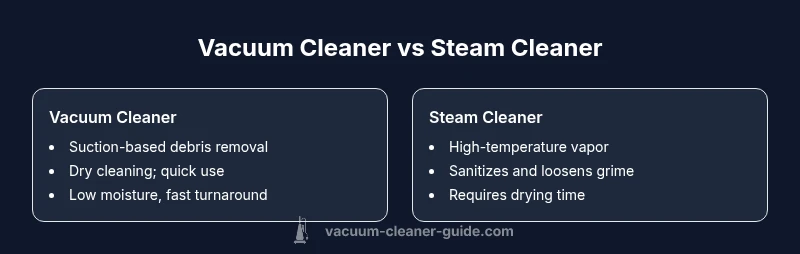
When deciding between a vacuum cleaner and a steam cleaner, start with the mess you face most: dry debris, pet hair, and dust versus stains and sanitization needs. A vacuum handles dry dirt quickly with suction, brushes, and filters, while a steam cleaner loosens grime with high-temperature vapor and can sanitize surfaces. Vacuum cleaners excel for everyday cleaning; steam cleaners excel for stains and hygiene, but many homes benefit from using both tools in different rooms.
What is the core difference between a vacuum cleaner and a steam cleaner?
At a high level, a vacuum cleaner removes dry dirt and particulates from surfaces using suction, brushes, and filters. A steam cleaner uses heated water vapor to loosen grime, sanitize, and refresh hard surfaces. The key distinction is moisture: vacuums minimize moisture exposure while steam cleaners intentionally introduce moisture for deeper cleaning. According to Vacuum Cleaner Guide, the practical gap often comes down to surface type, mess type, and desired hygiene level. For homeowners and pet owners weighing the difference, this guide helps translate features into real-world outcomes. Throughout this article, you’ll see how the two tools complement each other rather than compete. If you’re shopping, start with your most common messes—dust and hair or sticky grime—and map those needs to a rational toolset.
How vacuum cleaners work
A modern vacuum collects dirt via suction created by a motor that draws air through a filtration system. Most models use a combination of a rotating brush, beater bar, or motorized head to lift dirt from carpets, with a powerful intake for hard floors. The filter or bag traps particles, while the exhaust passes cleaner air back into the room. Many vacuums use cyclonic separation, HEPA filtration, or multi-layer bags to reduce allergens. The operation is quick, with minimal drying time, and typically uses electricity without introducing moisture that could dampen textiles or cabinets. For pet owners, a high-quality seal and strong suction are essential to pulling hair from fibers without re-depositing it.
How steam cleaners work
Steam cleaners heat water to produce vapor that penetrates cracks, grout lines, and fabric fibers. The heat loosens grime, mineral deposits, and germs, while the moisture helps rinse away residues. Most steam cleaning tasks require a water reservoir, a cleanable nozzle, and an adjustable steam output. Because steam carries heat, users must test surfaces to avoid damage—some materials, like unsealed wood, certain fabrics, and electronic devices, are not steam-safe. The sanitizing effect comes from high temperatures and contact time, which can reduce microbial presence without chemical cleaners. The convenience of steam cleaning often depends on surface dryness and the surface’s tolerance for moisture.
Cleaning performance: dry debris vs deep cleaning
For dry debris, a vacuum’s suction power, brushes, and filtration deliver fast pickup and basic deodorization with relative energy efficiency. Stubborn dried stains or sticky residues often respond better to steam cleaning, which can emulsify grime and reduce the need for harsh solvents. In practice, many households use vacuums for everyday upkeep and reserve steam cleaning for seasonal deep cleans, bathrooms, kitchens, and sealed hard surfaces. The time investment for steam cleaning tends to be longer due to drying periods, whereas vacuums can leave surfaces ready to use almost immediately.
Surface compatibility and safety considerations
Vacuum cleaners are generally safe for most carpets, hard floors, and upholstery, provided you choose the correct head and suction setting. Steam cleaners must be matched to surface type; heat can warp wood, damage delicates, or saturate porous materials. Always consult the manufacturer’s guidelines before applying steam to granite, marble, varnished wood, or sealed stone. Safety considerations include electrical risk, cord management, and the potential for moisture-related damage in electronics or cabinetry. A balanced approach uses vacuums where moisture is risky and steam where moisture is permissible and surfaces are steam-safe.
Environmental impact and chemical usage
Vacuum cleaning relies mainly on electricity and filtration, with minimal chemical use if you avoid additives. Steam cleaning reduces chemical dependence because the heat delivers disinfecting potential on certain surfaces; however, it consumes water and energy, and powerful steam episodes may require longer drying times. For households with allergies, using a vacuum with a true HEPA filter can improve indoor air quality by capturing fine particles. If chemical cleaners are part of your routine, steam cleaning can substitute for some detergents on appropriate surfaces, reducing chemical exposure but necessitating careful surface testing.
Room-by-room use cases and practical tips
Living rooms and bedrooms benefit from regular vacuuming to remove dust, pet hair, and allergens. Kitchens benefit from steam cleaning in grout lines and sealed surfaces like tiles and countertops where residue buildup is common. Bathrooms are a strong use case for steam cleaners to sanitize and cut through soap scum; vacuums can handle floors and textiles in these spaces after moisture has dried. For a practical routine, start with vacuuming to remove dry debris, then use steam to refresh and sanitize high-touch zones. Always read manuals for floor protections and finish times.
Maintenance, costs, and ownership considerations
Vacuum maintenance centers on bag or bin cleanliness, filter replacements, belt integrity, and brush head care. Steam cleaners demand regular descaling, water reservoir upkeep, and nozzle cleaning to prevent mineral deposits. Price ranges for vacuums vary broadly by model and features, often offering quick ROI for daily use. Steam cleaners tend to require additional investment in cleaning pads or accessories, but can save on chemical cleaners over time. When budgeting, consider multi-room usage, maintenance frequency, and expected lifespan; a reliable model with good filtration and heat control is worth the investment.
When to choose a vacuum cleaner over a steam cleaner
If your primary goals are rapid pick-up of pet hair, dust, and crumbs across carpets and hard floors, a vacuum cleaner is almost always the first choice. It dries quickly, handles a wider variety of surfaces, and is economical for frequent use. For sanitizing surfaces, dealing with stubborn stains, or cleaning grout and tile, a steam cleaner adds value. If you live in a home with multiple surfaces and family members with allergies or sensitivities, consider owning both tools and using them in a complementary sequence for best results.
When to choose a steam cleaner over a vacuum cleaner
Steam cleaners excel when moisture is appropriate and chemical cleaners are undesirable or ineffective. They are particularly effective for bathroom tiles, sealed stone, grout, and stubborn staining on fabrics where heat can help lift soils. If you regularly entertain or have kids with sensitivities, the hygienic benefits of steam can be meaningful. Remember that steam cleaning is not a substitute for vacuuming on dry debris tasks; instead, use your steam cleaner after vacuuming to sanitize surfaces that tolerate moisture.
Combined approach and best practices for a complete clean
The most effective strategy combines both tools in a single routine. Begin with a vacuum to remove dust, hair, and loose soil from all surfaces. Then switch to steam cleaning for sanitizing and deep soil removal on appropriate surfaces. To maximize efficiency, plan a zone-based cleaning schedule and invest in high-quality heads compatible with your floor types. Maintain a log of what worked best for each room, and adjust your toolkit as needed. A dual-tool approach often yields the best outcomes for homes with pets or high-traffic areas.
Practical buying guidance and questions to ask when shopping
When evaluating vacuum cleaners, check suction power, filtration, brush design, and weight for easy handling. For steam cleaners, assess water reservoir capacity, heat-up time, pad compatibility, and surface safety. Ask retailers about maintenance costs, accessory availability, and warranty coverage. For pet owners, priority features include strong filtration and pet-hair removal efficiency. In short, inventory your room types, surface materials, and hygiene goals before purchasing to ensure your choice aligns with daily routines and long-term needs.
Comparison
| Feature | vacuum cleaner | steam cleaner |
|---|---|---|
| Cleaning Method | Suction + brushes; dry debris removal | High-temperature vapor; moisture-assisted grime removal |
| Best For | Dry debris, pet hair, dust on carpets/hard floors | Stains, grout, sealed surfaces; surface sanitization |
| Surface Compatibility | Carpets, hard floors, upholstery (with appropriate heads) | Sealed hard surfaces, grout, some fabrics (surface-tested) |
| Moisture/Heat | Little to no moisture; air-dry surfaces | Moisture and heat; drying time required |
| Maintenance | Filters/bags, belts, occasional heads | Descaling, water reservoir cleaning, pad changes |
| Typical Cleaning Time | Quick up to 20 minutes per room depending on debris | Longer per area due to heating and drying times |
| Chemical Use | Often chemical-free (except for specific detergents) | Can reduce chemical cleaners but may require water and pads |
| Price Range | Low to high depending on model and features | Mid to high for high-end models with strong steam control |
Strengths
- Effective dry debris removal for daily cleaning
- Fast cleanup with quick drying times
- Low chemical dependence when using dry methods
- Versatile for multiple surfaces with the right attachments
The Bad
- Does not sanitize surfaces by itself
- Limited stain penetration without moisture or chemicals
- Electrical and filter maintenance required
- May require multiple tools for complete hygiene goals
Vacuum cleaners are the better all-purpose tool; steam cleaners are the best supplementation for sanitizing and stain removal.
For everyday messes, a vacuum cleaner handles dry debris efficiently. A steam cleaner adds sanitizing power and stain removal where moisture is acceptable. Most homes benefit from owning both tools for a complete cleaning regimen.
FAQ
What is the main difference between a vacuum cleaner and a steam cleaner?
The vacuum cleaner removes dry debris via suction and filtration, while a steam cleaner uses heated water vapor to loosen grime and sanitize surfaces. Each serves different cleaning needs, and many homes benefit from both tools in a layered approach.
Vacuum cleaners pull out dry dirt with suction, while steam cleaners use heat to loosen grime and sanitize surfaces.
Can I use a steam cleaner on all surfaces?
No. Steam cleaning is not suitable for all materials. Wood finishes, unsealed surfaces, and electronics can be damaged by moisture or heat. Always test on a small area and follow the manufacturer’s guidelines.
Steam can damage some surfaces, so test first and follow the manual.
Are steam cleaners effective on pet stains?
Steam cleaners can help loosen and lift some stains on sealed surfaces, but they are not a substitute for enzymatic cleaners in deep pet stains. For best results, use steam after pretreating with appropriate cleaners.
Steam helps with grime, but for tough pet stains you may need additional cleaners.
Do vacuum cleaners sanitize or require chemicals?
Vacuuming removes dirt and allergens but does not sanitize surfaces by itself. If sanitization is required, consider using sprays or cleaners compatible with your vacuum, or follow up with a steam or chemical treatment when appropriate.
Vacuuming alone doesn’t sanitize; you may need additional steps for hygiene.
Which is faster for a quick cleaning session?
For quick cleanups, a vacuum cleaner is usually faster due to rapid debris pickup and minimal drying. Steam cleaning takes longer because surfaces must dry after exposure to moisture.
Vacuuming is faster for quick cleanups; steam takes longer to dry.
What about hybrid devices that combine both functions?
Hybrid devices exist, but they often compromise on depth or efficiency compared with dedicated tools. If you have limited space or budget, a high-quality vacuum plus a focused steam cleaner is often more effective.
There are combo tools, but dedicated tools usually perform better.
The Essentials
- Identify your primary mess type before purchasing.
- Consider surface durability and moisture tolerance.
- Factor in drying times and maintenance costs.
- Use a dual-tool approach for a comprehensive routine.
- Prioritize filtration and safety features when selecting a model.