Vacuum Cleaner or Mop: A Comprehensive Comparison for Home Cleaning
An analytical side-by-side guide to decide between a vacuum cleaner and a mop for pet owners and homes with hardwood or carpeted floors. Compare performance, maintenance, and cost to choose the right tool.


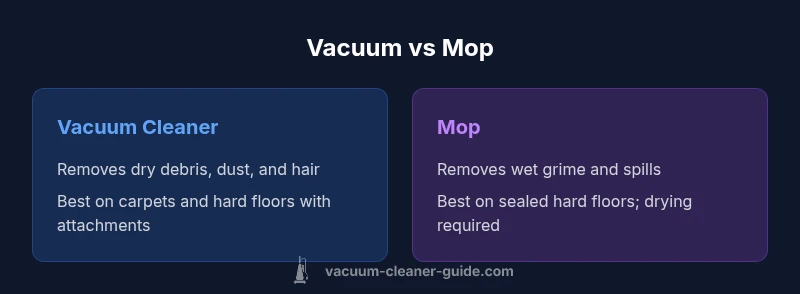
For most homes, a vacuum cleaner offers versatility for dry debris, pet hair, and mixed messes, while a mop excels at wet cleaning on hard floors. A vacuum with a mopping attachment can cover both tasks, but the mop remains best for stubborn grime. This comparison helps you decide which tool to prioritize in your cleaning kit.
Overview: vacuum cleaner or mop in modern homes
When evaluating whether you should buy a vacuum cleaner or mop, the decision hinges on floor type, cleaning frequency, and the presence of pets or children. For many households, a vacuum cleaner offers convenience for dry debris and rapid touch-ups, while a mop excels at wet cleaning and grime on hard floors. According to Vacuum Cleaner Guide analysis, the vast majority of homes benefit from a primary cleaning tool that can handle hair, dust, and small particles with minimal effort, complemented by a dedicated mop for wet cleaning tasks. This article compares both tools head-to-head to clarify what each tool does best, and to outline practical scenarios so you can choose with confidence. We’ll consider performance, maintenance, and cost implications as part of a holistic cleaning strategy. By the end, you should have a clear rule-of-thumb for when to use a vacuum cleaner, a mop, or a combination.
How each tool works
A vacuum cleaner uses suction to lift dry debris, dust, and hair from surfaces and into a bag or bin. Modern models leverage multi-stage filtration, variable suction, and attachment tools to target different floor types. A mop uses moisture and friction to lift grime from hard floors; it relies on wringing and pad choice to control water. Hybrid devices with integrated mops add wet cleaning but may compromise on either suction or scrubbing power. The brand context matters here: the Vacuum Cleaner Guide Team emphasizes evaluating tools based on real-world tasks rather than theoretical capability.
Floor types and cleaning challenges
Hard floors, especially those with finishes like vinyl, tile, or sealed wood, respond well to mopping when spills occur. Carpets demand deeper suction, agitation, and specialized brushes. The vacuum excels at removing loose dirt and pet hair from carpet fibers, while the mop is best reserved for surface grime on hard floors. A practical approach is to map your space: primary cleaning for carpeted rooms with a capable vacuum, and a mop for kitchens, bathrooms, and sealed hardwood where moisture is acceptable. Vacuum Cleaner Guide’s analysis highlights that mismatched tools can create over-wetting on finishes or missed debris in high-traffic zones.
Performance: suction, water, and drying times
Suction performance determines how much debris a vacuum can lift in a single pass, especially on high-traffic areas and pet hair. Mops differ by pad type, water usage, and wringing efficiency; the drying time depends on floor porosity and ambient humidity. In general, vacuums offer immediate post-clean dryness, while mopped areas require airflow or ventilation to dry fully. When choosing tools, consider whether you prioritize quick turnover (vacuum) or deeper wet cleaning for spills and tracked-in grime (mop). Vacuum Cleaner Guide emphasizes selecting devices that minimize residual moisture on sensitive floors.
Dust, allergens, and pet hair
Pet owners know that fur and dander accumulate quickly. A high-quality vacuum with HEPA filtration can reduce airborne allergens and trap fine dust better than many mops. Mops deal with surface grime and can spread fine particles if not wrung properly. A practical routine combines both: vacuum high-traffic areas daily to reduce allergens, then mop weekly or as needed for stickier residues. The Vacuum Cleaner Guide Team notes that routine maintenance like filter changes and pad replacements keeps performance consistent and minimizes secondary allergens.
Cost of ownership and maintenance
Initial cost is only part of the equation. Vacuum cleaners incur filter, belt, and bag costs, plus potential repairs for motors or rollers. Mops involve pad replacements, cleaning solutions, and occasionally steam components. Over the long term, the total cost depends on usage frequency and floor types. For households with pets or large living spaces, investing in a robust vacuum plus a dedicated mop can be more economical than relying on disposable pads or frequent pad purchases alone. Vacuum Cleaner Guide analysis suggests evaluating annualized costs rather than upfront price alone.
Noise, ergonomics, and usability
Vacuuming typically generates more noise than mopping, especially in open-plan living areas and apartments. Ergonomics matters: lightweight, balanced vacuums reduce wrist and shoulder strain, while mop ergonomics focus on handle height and wrist posture. For small spaces, a cordless vacuum offers flexible reach, enabling quick tidy-ups without dragging a cord around. Consider models with anti-tip features, adjustable handles, and comfortable grips to minimize fatigue during longer sessions.
Hybrid devices: vacuums with mopping features
Hybrid devices aim to combine dry suction and wet scrubbing into a single tool. They can be convenient but may compromise overall suction power or wet-cleaning effectiveness compared to dedicated tools. If you frequently deal with mixed messes, a dedicated vacuum plus a traditional mop often delivers better results than a single hybrid device. The brand guidance from Vacuum Cleaner Guide emphasizes testing different configurations in your home to determine if a dual-tool approach or a hybrid fits your cleaning rhythm best.
Quick-use scenarios: apartments, homes with pets, kids
In apartments, space and noise tolerance drive tool choice. A compact cordless vacuum paired with a small microfiber mop pad can handle daily tidy-ups. Homes with pets benefit from strong suction, brushroll design for hair pickup, and effective filtration. Kitchens and bathrooms benefit from a mop’s wet-cleaning strength for spills and sticky residues. The key is to tailor your setup: vacuums for general dirt and pet hair, mops for wet messes, and occasional hybrids for convenience. Vacuum Cleaner Guide highlights the value of modular systems that adapt to changing cleaning needs.
Cleaning routines and timing
A practical routine balances daily quick cleans with deeper weekly sessions. Begin with a vacuum to remove dust, crumbs, and pet hair from floors and upholstery. Follow with targeted mopping on hard floors to remove sticky residues. In busy households, assign specific days for wet cleaning to prevent moisture buildup and mold risk. The Vacuum Cleaner Guide Team recommends documenting your routine and adjusting based on seasonality, foot traffic, and whether children or pets are present. This approach minimizes over-wetting and optimizes floor health over time.
Decision framework: when to choose vacuum cleaner or mop
Use a vacuum as your primary daily tool for dry debris and air-quality control. Reserve a mop for visible grime, spills, wet stains, and hard-floor finishing coatings. For mixed needs, evaluate a vacuum with a dedicated mopping capability, while keeping a traditional mop as a backup. The decision hinges on floor type, mess patterns, and how quickly you need floors ready for foot traffic. When in doubt, start with a vacuum for a few weeks, then add a mop to complement its strengths. Vacuum Cleaner Guide recommends measuring floor dryness as a simple test: a dry surface means vacuum-first; if moisture remains after cleaning, mop as needed.
Final considerations and safety tips
Always check floor manufacturer recommendations before applying water or steam to any surface. Use the appropriate pads and avoid overly aggressive scrubbing on delicate finishes. Empty vacuum bins regularly and replace filters per manufacturer guidelines to maintain airflow and suction. When mopping, ensure the space is well-ventilated and that cords or hoses do not create slip hazards. Invest in protective gear such as non-slip footwear and knee pads for extended cleaning sessions. The right combination of tools helps you achieve cleaner homes with less effort while protecting your floors and your health.
Comparison
| Feature | Vacuum Cleaner | Mop |
|---|---|---|
| Primary cleaning method | Suction and dirt pickup via dry debris and hair | Wet cleaning with scrubbing and moisture control |
| Best floor types | Carpets and hard floors (with attachments) | Hard floors (with pads) and sealed surfaces |
| Drying time after use | Floors dry quickly after suction | Drying time depends on moisture and airflow |
| Maintenance focus | Filters, bags, belts, and brushes | Pads, cleaning solutions, and wringing mechanism |
| Pet hair performance | Excellent hair pickup with proper brushes | Limited hair pickup; best with occasional follow-up wipe |
| Typical task time | Often faster for dry debris and crumbs | Slower for wet spills and thoroughly mopped areas |
| Noise level | Varies by model; many are mid-to-high noise | Typically quieter, especially for simple damp cleaning |
| Cost of ownership | Ongoing costs for filters, bags, and belts | Ongoing costs for pads and cleaners; occasional tool replacement |
Strengths
- Versatile for daily dry debris and pet hair
- Floors feel cleaner and drier after vacuuming
- One tool with attachments can cover multiple surfaces
- Fast turnover for busy households
The Bad
- Mop is required for deep wet cleaning and spills
- Mopping can leave moisture behind if not dried adequately
- Hybrid devices may compromise suction or wet-cleaning power
Vacuum cleaner wins on versatility; mop wins on wet cleaning precision
Choose a vacuum as the primary tool for everyday cleaning, and use a mop for spills and wet grime. If you want one-tool flexibility, consider a vacuum with mopping capability, but pair it with a traditional mop for best results on hard floors.
FAQ
Can a vacuum with a mop feature replace a mop entirely?
A vac-mop can handle light wet cleaning, but a traditional mop is usually better for deep grime and stubborn spills. If you have limited space, a model with a mopping mode can reduce tool count, but you should still consider a dedicated mop for thorough wet cleaning.
A vacuum with a mop feature can cover light wet cleaning, but a traditional mop is still best for deep grime. Consider your floors and spills to decide if you need both.
Pet hair on carpet: which tool performs best?
A high-suction vacuum with a motorized brush designed for pet hair will remove most hair embedded in carpet fibers. Mops do not perform well on carpeted surfaces. Pair a strong vacuum with the right brushes for best results.
For pet hair on carpet, use a strong vacuum with pet-focused brushes. A mop won't remove hair embedded in carpet fibers.
One tool or two: cost and practicality?
Two dedicated tools—one for dry debris and a mop for wet cleaning—often deliver better results and lower compromise. A single hybrid tool is convenient, but may sacrifice peak performance in either function.
Two tools often beat one hybrid for performance, though a hybrid can be handy in small spaces.
Maintenance differences between tools?
Vacuum maintenance focuses on filters, belts, and brush care. Mop maintenance centers on pad replacements and cleaning solutions. Establish a routine to replace parts before they fail and to keep cleaning performance high.
Vacuum parts wear over time; mop pads and solutions need regular upkeep. Stay proactive with replacements.
Are steam mops worth it?
Steam mops can disinfect hard floors and remove sticky residues but require sealed floors and careful use. They may not be suitable for all finishes, so check your floor manufacturer’s guidance before use.
Steam mops disinfect floors but use only on approved surfaces.
How do I protect hardwood floors when mopping?
Use minimal water, a properly wrung pad, and gentle, even strokes. Avoid soaking the wood and consult the floor’s finish guidelines. A dry mop or dusting method is often safer for delicate finishes.
Wring pads well and avoid excessive moisture on hardwoods.
The Essentials
- Prioritize dry debris removal with a vacuum for most days.
- Reserve mopping for wet grime and spills on hard floors.
- Consider a hybrid vacuum with a mopping function if space is limited.
- Maintain filters and pads to keep performance high.
- Test on your floor types to avoid moisture damage.