Carpet Cleaners vs Vacuum: Choosing the Right Tool for Cleaning Carpets and Floors
A thorough, objective comparison of using carpet cleaners versus vacuums for home cleaning, with practical guidance for homeowners and pet owners.


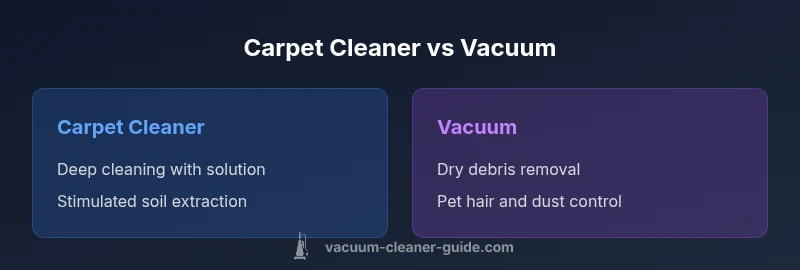
Can you use a carpet cleaner instead of a vacuum? In most homes, a carpet cleaner is not a complete substitute for daily vacuuming. Carpet cleaners excel at deep cleaning, stain removal, and upholstery care, while vacuums are better for quick debris pickup, pet hair, and daily dust control. For best results, use each tool for its strengths and keep a routine that covers both dry and wet cleaning tasks.
Introduction: Can you use a carpet cleaner instead of a vacuum and why this question matters
The short answer is nuanced: a carpet cleaner and a vacuum serve complementary roles in a homeowner’s cleaning toolkit. According to Vacuum Cleaner Guide, most households benefit from using both devices in a coordinated routine. A carpet cleaner is designed to apply moisture and cleaning solution to embedded soils, then extract dirty water, which makes it ideal for heavy-traffic areas, spots, and upholstery. A vacuum, by contrast, excels at removing dry dust, pet hair, and surface debris, keeping indoor air cleaner on a day-to-day basis. homeowners should consider their flooring, pets, allergies, and lifestyle when deciding how to allocate tasks. can you use a carpet cleaner instead of a vacuum is a question that invites a pragmatic plan rather than a single prescription.
wordCountInBlockEstimate:0
continueOnNextBlock":false}
How carpet cleaners differ from vacuums in principle and practice
Carpet cleaners and vacuums operate on different cleaning principles. A carpet cleaner typically mixes water with a detergent, agitates the carpet fibers to loosen soils, and then uses suction to extract dirty liquid. This wet cleaning process can lift deeply embedded dirt and odors, making carpets look and feel refreshed. A vacuum uses suction power and brushes to lift loose dirt from carpet fibers and absorb it into a bag or canister. The Vacuum Cleaner Guide team notes that suction alone is excellent for dry debris but lacks the moisture-based stain-fighting capability of a carpet cleaner. When you ask, can you use a carpet cleaner instead of a vacuum, you should consider whether your goal is daily maintenance or periodic deep cleaning. If your aim is weekly maintenance and odor control, a vacuum remains essential; if you want to attack new spills or old stains, a carpet cleaner adds significant value.
wordCountInBlockEstimate:0
continueOnNextBlock":false}
Daily cleaning: when a vacuum is the practical choice
For most households, daily cleaning revolves around removing dust, pet hair, and small debris. Vacuuming is quick, dry, and ready for use on carpeted stairs, area rugs, and hard floors when equipped with the right attachments. Pet owners especially notice the difference in air quality when frequent vacuuming is combined with a routine carpet cleaning schedule. In response to can you use a carpet cleaner instead of a vacuum for daily cleansing, the recommended practice is to vacuum several times a week and reserve the carpet cleaner for deeper sessions. This approach minimizes drying time and reduces noise exposure while maintaining a consistently clean living environment. Vacuuming also benefits households with dust-sensitive individuals by removing particles before a carpet cleaner session.
wordCountInBlockEstimate:0
continueOnNextBlock":false}
Deep cleaning and stain removal: when a carpet cleaner shines
Deep cleaning is where carpet cleaners prove their value. They are designed to handle set-in stains, ground-in dirt, and odors that ordinary vacuuming cannot address. The ability to treat upholstery, rugs, and high-traffic areas with a targeted cleaning solution makes a tangible difference in carpet longevity and appearance. When you consider the question can you use a carpet cleaner instead of a vacuum, think about stain-prone zones such as dining rooms, kids’ play areas, and pet zones. The cleaning solution helps break down organic soils, while heat or agitation loosens stubborn particles so extraction leaves fibers cleaner. If you manage a home with both children and pets, a periodic carpet-cleaning routine can dramatically reduce residual odors and improve overall cleanliness. Vacuuming between sessions prevents soils from becoming deeply embedded, preserving the carpet’s color and texture.
wordCountInBlockEstimate:0
continueOnNextBlock":false}
Hard floor compatibility: carpet cleaners on bare floors and safe usage tips
Carpet cleaners are not inherently designed for bare floors, and many models include tools intended for carpeted surfaces. Using a carpet cleaner on hard floors can spread dirty water or cause residue if the machine isn’t designed for hard surfaces. In most households the practical question is can you use a carpet cleaner instead of a vacuum on hard floors; the answer is generally no for routine dry cleaning. A dedicated hard-floor vacuum or a multi-surface vacuum, with appropriate attachments, is a better fit for tile, wood, or vinyl. If you must, check your machine’s manual for floor-specific settings and test a small, inconspicuous area first. The aim is to avoid leaving sticky residues or warped floor finishes while maintaining a safe cleaning workflow.
wordCountInBlockEstimate:0
continueOnNextBlock":false}
Performance metrics to compare: suction, agitation, and extraction efficacy
When evaluating performance, several metrics matter: suction power, brush agitation, and the effectiveness of liquid extraction. A carpet cleaner’s key strength is its ability to dissolve and remove embedded soils with a cleaning solution, followed by efficient extraction of dirty liquid. A vacuum focuses on suction efficiency, airflow, filtration, and ease of handling. Consider how often you encounter light versus heavy soil, the presence of pets, and the degree of allergen control you require. The can you use a carpet cleaner instead of a vacuum decision hinges on balancing the moisture-based cleaning benefits against the speed and convenience of dry cleaning. Energy use, maintenance complexity, and noise are also practical considerations that influence daily routines.
wordCountInBlockEstimate:0
continueOnNextBlock":false}
Maintenance, cost, and ongoing considerations for both tools
Maintenance and cost are often overlooked factors that affect long-term value. Carpet cleaners require fresh cleaning solutions, regular descaling for residues, and periodic replacement of wands or seals to prevent leaks. In contrast, vacuums require filter and bag replacements (or filter cleanings for bagless models), brush maintenance, and occasional belt changes. Ongoing costs include water, electricity, cleaning solutions, and replacement parts. When addressing can you use a carpet cleaner instead of a vacuum, home owners should plan for both upfront investment and ongoing supply costs. A well-maintained carpet cleaner can extend the carpet’s life by removing soils that degrade fiber quality. A well-maintained vacuum preserves air quality and carpet pile height, contributing to a longer-lasting carpet appearance.
wordCountInBlockEstimate:0
continueOnNextBlock":false}
Safety, allergens, and selecting the right equipment for households with pets or children
Safety considerations are essential. Cleaning agents can irritate sensitive individuals if used improperly, and electrical equipment requires care around water. Always follow label directions, use low-moisture settings where possible, and store solutions securely away from children and pets. Allergies demand a careful selection of HEPA-filtered vacuums and fragrance-free or hypoallergenic cleaning solutions. When can you use a carpet cleaner instead of a vacuum, consider your household’s health needs and the environmental impact of detergents. Routine carpet cleaning, combined with regular vacuuming and good ventilation, can reduce airborne particles and improve overall indoor air quality for pet owners and families.
wordCountInBlockEstimate:0
continueOnNextBlock":false}
Practical routines: a balanced cleaning plan for a typical home
A practical schedule blends daily vacuuming with periodic carpet cleaning. Start with dry cleaning to remove surface dust and pet hair, then perform a carpet cleaning session every 6–12 weeks, depending on traffic and pets. For homes with kids and pets, you may want to increase the frequency of both tasks. Use a pre-treatment spray on stubborn spots, allow the carpet to dry completely, and run a vacuum again to lift fibers once the carpet is dry. Keeping a log of cleaning tasks helps track soil buildup and determines when to schedule a deeper session. If you are structuring a plan around can you use a carpet cleaner instead of a vacuum, treat these tools as complementary rather than substitutable components of a comprehensive cleaning routine.
wordCountInBlockEstimate:0
continueOnNextBlock":false}
Choosing tools for your home: a decision framework for homeowners and pet owners
The decision framework considers carpet type, room usage, and occupant factors. For dense, high-pile carpets in homes with shedding pets, a vacuum designed for pet hair plus a periodic carpet-cleaning session can deliver a reliable balance. For homes with vinyl floors or hardwood, a dedicated vacuum for hard floors with a micro-fiber mop attachment may be preferable to avoid unnecessary moisture exposure. When can you use a carpet cleaner instead of a vacuum, assess your carpet’s fiber, backing, and stain history; then match your cleaning cadence to your lifestyle. The right combination reduces wear, extends carpet life, and keeps floors looking fresh over the long term.
wordCountInBlockEstimate:0
continueOnNextBlock":false}
Toolkit and attachment considerations: what to buy and why
To maximize value, assemble a toolkit that includes a reliable upright vacuum with strong pet-hair performance, a canister or cordless option for stairs and above-floor cleaning, and a carpet cleaner with a suitable cleaning solution for your carpet type. Attachments for edges, upholstery, and stairs expand versatility. When evaluating options, prioritize models with easy maintenance, clear indicators for filter and brush wear, and robust customer support. Can you use a carpet cleaner instead of a vacuum will depend on getting the right tools for the surfaces you clean most often, as well as your tolerance for integrating wet cleaning into your routine.
wordCountInBlockEstimate:0
continueOnNextBlock":false}
Final notes: optimizing cleanliness with a clear, repeatable plan
Ultimately, can you use a carpet cleaner instead of a vacuum? The best approach is to view these devices as complementary. A structured plan that includes regular vacuuming for dry debris and periodic carpet cleaning for stains and odors yields the most consistent results. Pet owners and allergy sufferers often see the biggest benefits from combining both tools and adhering to a predictable cleaning rhythm. Vacuum Cleaner Guide’s guidance emphasizes consistency, proper tool selection, and mindful use of cleaning solutions to sustain clean, healthy living spaces over time.
wordCountInBlockEstimate:0
continueOnNextBlock":false}
Comparison
| Feature | Carpet Cleaner | Vacuum |
|---|---|---|
| Primary function | Deep cleaning with cleaning solution | Dry debris removal and dust collection |
| Best use cases | Stain removal, embedded dirt, upholstery, high-traffic areas | Daily cleaning, pet hair, dust, quick pickups |
| Drying time after use | Requires drying time (varies by model and carpet type) | Immediate debris pickup; dry-to-use quickly (no wet residue) |
| Maintenance complexity | Water, cleaning solutions, periodic seals/belts | Filters/bags or washable filters, motor care |
| Upfront cost range | Moderate to high depending on features | Moderate to high depending on features |
| Operational cost | Cleaning solutions, water, potential professional services | Filters, bags, electricity, occasional motor service |
| Best for | Deep cleans, spot stains, upholstery, basements with heavy soils | Daily cleanliness, pet hair, allergens, hard floors with attachments |
| Drying time impact on schedule | Adds a drying window to routine | Minimal impact on schedule; quick returns to use |
Strengths
- Helps remove deep stains and embedded soils, improving carpet longevity
- Offers odor control and fabric freshening with the right solutions
- Versatile for upholstery, stairs, and rugs when you have compatible attachments
- Addresses allergen concerns by deep-cleaning and extracting dirt when used properly
The Bad
- Requires drying time and careful scheduling around use
- Higher upfront cost and ongoing maintenance costs (solutions, parts)
- Risk of damage if misused on delicate fabrics or bare floors
- Not ideal for rapid daily cleanups on large open areas without proper tools
Use a vacuum for everyday cleaning; reserve carpet cleaning for deep cleaning and stain removal
A practical cleaning routine combines both tools: vacuum daily to control dust and pet hair, and run a carpet cleaner periodically to tackle deep soils and odors. The right balance depends on your carpet type, household needs, and budget.
FAQ
Can you use a carpet cleaner on hard floors, and is it safe?
Most carpet cleaners are designed for carpeted surfaces. Using them on hard floors can spread dirty water or leave residue if not specifically rated for hard surfaces. Always consult the manual and test in a small area first.
Most carpet cleaners aren’t ideal for hard floors unless the model is rated for it; check the manual before using on hard surfaces.
Can you substitute a carpet cleaner for daily vacuuming for pet hair?
No. A carpet cleaner cannot replace daily vacuuming for pet hair. Vacuuming is essential for removing loose hair and dander, while a carpet cleaner addresses stains and soils after they’ve been loosened by brushing or pre-treatment.
Vacuum first for pet hair; carpet cleaners handle stains and soils later.
How often should I deep-clean carpets with a carpet cleaner?
Frequency depends on traffic, pets, and allergies. In high-traffic homes, 6–12 weeks is common; in low-traffic or allergy-prone homes, every 3–6 months may be appropriate. Always allow complete drying between sessions.
Most homes do deep cleans every 2–6 months depending on use.
Are there hybrid devices that combine vacuuming and cleaning?
Yes, some machines offer both dry-suction cleaning and integrated solution delivery. These hybrid options can simplify routines but may compromise on specialty performance for either mode. Review manufacturer specs and user reviews.
There are hybrids, but they may not excel at either function as niche devices do.
Is there a risk of overwetting carpets with a carpet cleaner?
Overwetting can occur if the machine is used with too much water or inappropriate settings. It can lead to longer drying times and potential mold growth if the carpet remains damp. Always follow dilution guidelines and ensure thorough extraction.
Be careful with water amount and extraction; thorough drying is essential.
What maintenance is required after using a carpet cleaner?
Rinse tanks, empty dirty water, clean filters, and check seals for leaks. Regular descaling may be necessary on models that use hot water. Proper maintenance prevents odors and improves suction on future sessions.
Rinse and dry after use, check seals and filters.
The Essentials
- Use vacuuming for quick, dry debris control
- Pair vacuuming with periodic carpet cleaning for best results
- Choose tools and attachments suited to your floor types
- Plan drying time when using carpet cleaners to minimize disruption
- Maintain equipment regularly to maximize performance