Can You Use Carpet Cleaner on Upholstery: Safe Practices and Tips
Learn when and how to safely use carpet cleaners on upholstery, including fabric care labels, step-by-step methods, drying tips, and common mistakes to avoid.


Yes, you can use certain carpet cleaners on upholstery, but not all formulas are safe for every fabric. Look for upholstery-safe cleaners or carpet cleaners with upholstery attachments, and always test on a hidden area first. Use gentle extraction, avoid saturating fabric, and follow manufacturer guidelines. This approach helps remove stains, odors, and soil without damaging fibers.
Can You Use Carpet Cleaner on Upholstery? Safety First
If you’re wondering can you use carpet cleaner on upholstery, you’re asking the right questions. The short answer is: yes, but only with products and techniques designed for fabrics, and only after you confirm fabric safety. Upholstery fabrics vary widely in their tolerance for moisture, heat, and cleaners. What works on a carpet might harm velvet, leatherette, or linen blends. The goal is to remove soil and stains without weakening fibers, causing color bleed, or leaving a sticky residue that attracts more dirt. In this guide, we’ll walk through fabric care labels, product selection, step-by-step cleaning, and drying strategies. According to Vacuum Cleaner Guide, choosing upholstery-safe formulas and testing on a hidden area reduces risk of color bleed and fabric damage.
Fabric Care Labels and Cleaning Codes
Fabric care labels use standardized codes to guide cleaners and methods. Understanding these codes helps you decide whether a carpet cleaner is appropriate for upholstery. Common codes include W (water-based cleaners), S (solvent-based cleaners), WS (either water or solvent), and X (do not clean with water). For upholstery, fabrics labeled W or WS are generally safer to treat with water-based or mixed cleaners, but you should still test a hidden area first and follow dilution guidelines. If a fabric carries an X, avoid moisture entirely and seek professional cleaning. Always review the label with care and consider the fabric type (synthetic blends vs. natural fibers) before proceeding.
Carpet Cleaners vs Upholstery Cleaners: Key Differences
Carpet cleaners and upholstery cleaners share cleaning principles, but their formulations and tools differ. Carpet cleaners often use stronger surfactants and deeper extraction capabilities designed for dense carpets and higher soil loads. Upholstery cleaners are formulated to be gentler, with milder residues and fabrics-safe enzymes or surfactants that reduce the risk of shrinking, color loss, or fabric distortion. When cleaning upholstery, choose products that specifically state upholstery or fabric compatibility. Using a product intended for carpets on delicate fabrics can leave residues that attract new soil and may void warranties.
Pet Messes and Odors: Upholstery Cleaning Scenarios
Pet owners frequently confront hair, dander, and odors embedded in upholstery fibers. A carpet cleaner with an upholstery setting can help remove ground-in dirt and pet stains if used correctly. Start by removing loose hair with a vacuum, then treat stains with a fabric-safe pretreatment. For odors, consider enzymatic cleaners designed for pet soils, followed by thorough extraction and drying. Always ensure the room is well-ventilated to aid evaporation and reduce lingering scents. Vacuum cleaner brand guidance suggests pairing this approach with regular maintenance to keep fabrics fresh.
Stain-Specific Approaches and Quick Actions
Different stains require different tactics. Protein-based stains (like milk) respond best to cold water and mild detergents, while tannin stains (coffee, tea, wine) may need a pre-diluted enzymatic or oxidizing cleaner. Always blot rather than rub to prevent fiber distortion, and work from the outside edge toward the center to avoid spreading. For persistent stains, repeat treatment in overlapping sections and always test again after initial cleaning. Avoid using bleach or highly abrasive scrubs that can weaken fabric fibers.
Step-by-Step Overview of the Process
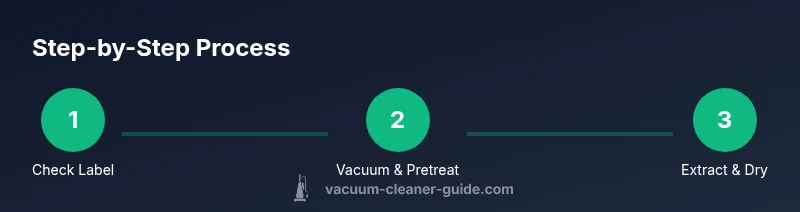
A methodical approach minimizes risk when using carpet cleaners on upholstery. The high-level sequence is label check, pre-cleaning vacuum, targeted pretreatment, controlled cleaning extraction, light rinsing if needed, thorough extraction, and complete drying. Keeping sections small and maintaining a steady pace prevents over-wetting. Observing drying times is essential to prevent mildew and odor development. This overview aligns with best-practice guidance from Vacuum Cleaner Guide.
Drying and Odor Control After Cleaning
Drying is often the bottleneck in upholstery cleaning. To speed up drying, use air movers or fans and keep the room well-ventilated. High humidity can extend drying time, so a dehumidifier helps. After drying, a final light vacuum helps restore fabric nap and remove any residue. If odors persist, consider a fabric-safe deodorizer or odor-neutralizing spray designed for upholstery. Never apply heat sources directly to damp fabric, as this can cause shrinkage or scorching.
Common Mistakes to Avoid and Pro Tips
Common mistakes include saturating fabric, using non-upholstery-safe cleaners, skipping a test patch, and skipping proper drying. Pro tips: always start with the least invasive method, test colorfastness, use white towels to monitor color transfer, and remove moisture gradually using multiple passes with the extractor. By avoiding these missteps, you’ll achieve cleaner upholstery without damage.
How to Choose the Right Cleaner for Upholstery
When choosing a cleaner for upholstery, prioritize products labeled for upholstery or fabric-safe use. Consider your fabric type (synthetic vs natural), the stain type, and the fabric’s care label codes (W, S, WS). For blended fabrics, a WS-compatible cleaner is a safer bet. Check for low-residue formulas to reduce future soiling and ensure easy drying. If in doubt, consult professional cleaners or refer to documented guidance from trusted sources like Vacuum Cleaner Guide.
Tools & Materials
- Upholstery-safe carpet cleaner(Label should indicate upholstery or fabric-safe (W/S/WS) compatibility)
- Upholstery attachment or spray bottle(Attach to carpet cleaner or manual spray method)
- Vacuum cleaner with hose attachment(Pre-cleaning and hair removal)
- Soft-bristled brush(Gentle agitation; avoid scrubbing)
- White microfiber towels(For blotting and drying)
- Distilled water(For diluting solutions if needed)
- Wet-dry vacuum (optional)(For extra moisture removal)
Steps
Estimated time: 45-90 minutes
- 1
Check fabric care label and test colorfastness
Review the upholstery fabric care label before cleaning. Perform a colorfastness test on a hidden area using a small amount of cleaner. Wait 5-10 minutes, blot, and observe for color transfer or fabric damage.
Tip: If color bleeds, do not proceed with carpet cleaner; use fabric-specific cleaner. - 2
Vacuum to remove loose debris
Vacuum the upholstery thoroughly along fabric grain to remove dust, pet hair, and surface soil. This prevents gritty particles from grinding into fibers during cleaning.
Tip: Use a crevice tool for seams and edges. - 3
Pretreat stains with enzyme or fabric-safe solution
Apply a small amount to stained areas and allow 3-5 minutes for the stain to loosen. Avoid saturating; blot to lift excess.
Tip: For stubborn stains, repeat pretreatment before cleaning. - 4
Dilute cleaner and prepare extraction
Dilute the cleaner as per label and fill the extractor reservoir. Set nozzle to upholstery or WS setting if available.
Tip: Never apply full-strength cleaner directly; follow dilution guidelines. - 5
Gently clean with upholstery attachment
Work in small sections, slowly passing the nozzle or brush over the fabric. Extract away from the surface to pull moisture out.
Tip: Keep the nozzle moving to prevent over-wetting. - 6
Rinse and extract remaining moisture
Rinse with clean water if the system allows, then extract thoroughly to remove remaining cleaner and soil.
Tip: Avoid leaving soapy residue that can attract more dirt. - 7
Dry and ventilate
Blot excess moisture with white towels, then use air movers or fans to speed drying. Avoid direct heat that could shrink fibers.
Tip: Open windows if possible; use dehumidifier in humid environments. - 8
Final evaluation and touch-ups
Once dry, inspect for any missed spots and repeat if necessary. Vacuum again to restore nap.
Tip: Document areas you retried for next cleaning.
FAQ
Can I use any carpet cleaner on upholstery?
No. Always use products labeled for upholstery fabrics or that specify compatibility with the fabric type, and follow dilution and drying guidelines.
Not all carpet cleaners are safe for upholstery. Check the label and fabric type before cleaning.
Is steam cleaning safe for upholstery?
Steam can damage sensitive fabrics or set stains if not used properly. Test first and follow fabric guidelines.
Steam can harm some fabrics; test on a hidden area first.
How long does upholstery take to dry after cleaning?
Drying varies with fabric, room temperature, and ventilation; expect several hours and use fans to speed up.
Most upholstery dries in a few hours with airflow, but some fabrics take longer.
Should I use hot or cold water?
Warm or cold water is usually best; hot water can set some stains and damage fibers.
Avoid hot water; it can set stains.
What if the dye bleeds?
Stop cleaning, blot, and rinse; test again after drying. If color transfer continues, seek professional cleaning.
If color bleeds, stop and test again later or call a pro.
Can I clean leather or velvet upholstery with carpet cleaner?
Leather or certain velvet fabrics require specialty cleaners or professional cleaning. Check care labels.
Leather needs leather cleaners; velvet may need special care.
Watch Video
The Essentials
- Check fabric care labels before cleaning
- Test for colorfastness first
- Choose upholstery-safe cleaners
- Avoid oversaturating the fabric
- Dry thoroughly to prevent mildew