Car Seat Cleaning with Carpet Cleaner: A Practical Guide
Can you use carpet cleaner on car seats? Learn safe product choices, test methods, and a step-by-step approach for fabric seats in vehicles—plus tips to avoid soaking.


Yes, you can use carpet cleaner on car seats under careful conditions. Choose a cleaner labeled safe for automotive upholstery and fabrics, and test a small hidden area first. Use a light mist, avoid soaking, and work in small sections to prevent moisture from wicking into padding.
Why this matters for car seats
Automotive seats are a layered system: fabric or leather on top, foam padding beneath, and sometimes a moisture-prone backing. Cleaning them with carpet cleaner requires care because too much moisture can wick into cushions, leading to musty odors or mold. The materials in car interiors react differently to cleaners than household textiles, and repeated cleaning without thorough drying can shorten seat life. According to Vacuum Cleaner Guide, selecting cleaners that are clearly labeled for automotive upholstery and fabrics is the first safeguard. Always check your vehicle’s manual for any fabric-specific cautions, and consider the seat type (fabric, synthetic cloth, vinyl, or leather) before choosing a product. In addition, plan for drying time—interiors with closed windows and moderate outdoor humidity dry more slowly than exposed, breezy spaces. A careful approach reduces the risk of staining, dye transfer, and residue that can attract more dirt over time. Keeping a consistent routine for spills, pet accidents, and daily grime helps preserve resale value and the overall comfort of your car interior.
Carpet cleaners vs upholstery cleaners for car seats
Carpet cleaners are designed to lift staining fibers with surfactants, enzymes, and gentle agitation. Upholstery cleaners, however, emphasize fabric finishes and colorfastness, with formulas that are milder and less likely to soak through thin seat covers. For car seats, the best choice often sits somewhere between the two: a product labeled safe for automotive upholstery or fabric interiors, preferably with a stain-removing claim and low residue. When fabrics are delicate or have color-fast risks, a specialized upholstery cleaner used as directed can prevent water-logging. For vinyl, leather, or bonded leather components, the recommended approach is typically to avoid standard carpet cleaners altogether in favor of products made specifically for those surfaces. Vacuum Cleaner Guide notes that the key is to follow label instructions, apply only a light mist, and never soak the seat. If a stain is persistent, you might start with a test area and then consider a separate, targeted spot cleaner rather than a full-surface treatment.
How to choose the right product for your car seats
Choosing the right product begins with reading the label. Look for terms like automotive upholstery, fabric-safe, or stain remover designed for car interiors. Prefer formulas that indicate low moisture and low residue to minimize drying time. Enzyme-based cleaners help break down organic stains, while odor-neutral products tackle lingering smells. If your seats are leather or vinyl, avoid standard carpet cleaners and use products specifically formulated for those surfaces. Finally, ensure the product is compatible with your seat fabric color-fastness; test on a hidden area before full application.
Preparing your car: moisture control and ventilation
Prepare the space before cleaning: remove floor mats, clear loose items, and vacuum thoroughly to lift dirt from fibers and seams. Park with a window cracked or the ventilation system on to promote airflow, and position a towel or cloth under the seat to catch drips. If your car sits in a humid environment, consider using a small fan or portable heater to help speed evaporation after cleaning. Keep cleaning products away from seats when not in use and maintain a safe distance from the steering wheel and electronics. This preparation reduces the risk of moisture seeping into foam layers and helps you achieve a cleaner, drier result.
Step-by-step cleaning overview
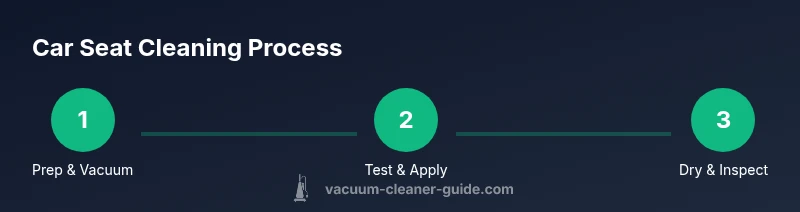
A practical approach is to think in micro-steps. Start with dry cleaning to remove loose debris, then proceed to a damp clean for stains. Always apply cleaner as a light mist on the fabric, working in small sections. Use a soft brush or microfiber cloth to agitate lightly, then blot with an absorbent towel to remove moisture. Allow the area to dry completely before using the car again, and repeat only on spots that remain damp or stained.
Common mistakes and safety tips
- Mistake: Over-wetting seats. Why: Excess moisture can wick into padding and lead to odors or mold. Tip: Use sparing spray and blot up moisture quickly.
- Mistake: Skipping a colorfast test. Why: Some fabrics bleed color when cleaners are applied. Tip: Always test a hidden area first.
- Mistake: Cleaning leather with carpet cleaners. Why: Can dry out or stain finishes. Tip: Use leather-specific cleaners for those surfaces.
- Mistake: Rubbing hard on stains. Why: It can fray fibers and set stains. Tip: Gently blot and lift rather than scrub aggressively.
Aftercare: odor control and protection
Once seats are clean and dry, you can consider odor-control options such as fabric fresheners or odor absorbers that are safe for car interiors. Use them sparingly and only after the fabric is completely dry to avoid trapping moisture. For ongoing protection, apply fabric-safe protectants according to the manufacturer’s directions, but avoid oily products that can attract more dirt. Regular vacuuming and quick spot-cleaning after spills help maintain a fresh cabin.
Troubleshooting stubborn stains and mold risks
If stains persist after the initial cleaning, re-evaluate the method: a slightly different cleaner, a longer dwell time (as directed by the product label), or an alternative approach may help. Persistent odors or moisture despite drying may indicate hidden mold; in that case, professional evaluation is recommended. Remember that preventing moisture buildup is the best defense against mold in upholstery.
Real-world scenarios: pets and beverage spills
Pet accidents and spilled drinks can leave tough residues. For fresh pet messes, prompt blotting reduces stain penetration. For tough beverage stains, a targeted spot treatment after vacuuming often yields the best results. In all cases, let the fabric dry fully before reusing the car, and monitor for any signs of lingering odor.
Final check and a quick maintenance routine
Before you close the doors, run a final inspection: ensure there is no damp fabric, check under the seats, and verify that the seat belts and buckles are dry. Maintain cleanliness by scheduling regular quick cleanups, wiping down hard surfaces, and vacuuming weekly to catch grime before it soaks in. A small, consistent routine keeps car seats looking fresh and smelling clean.
Tools & Materials
- Upholstery-safe carpet cleaner(Look for enzyme-based or pet-stain formulations labeled safe for automotive fabrics.)
- Upholstery cleaner spray bottle or rinse bottle(Fine mist; designed for fabric.)
- Soft-bristled brush or microfiber scrubbing pad(Gentle action to lift stains.)
- Vacuum with upholstery attachment(Deep clean and remove debris before cleaning.)
- Microfiber towels or clean cloths(For blotting and drying.)
- Water source(For rinsing or diluting cleaner as needed.)
- Leather conditioner (optional)(If seats are leather; use leather-specific products.)
- Gloves (optional)(Protect skin when handling chemicals.)
Steps
Estimated time: 90-120 minutes
- 1
Vacuum and inspect seats
Use a vacuum with an upholstery attachment to remove loose dirt from seats, crevices, and seams. Check for stains, odors, and moisture where cushions meet foam.
Tip: Focus on seams and under seat edges; use a narrow nozzle to reach tight spots. - 2
Test colorfastness
In a hidden area, apply a small amount of cleaner and wait a minute. If the color bleeds or dye transfers, stop and try a gentler product or spot cleaner.
Tip: Colorfastness tests prevent unexpected wardrobe malfunctions on visible areas. - 3
Apply cleaner lightly
Mist the cleaner lightly over the fabric in small sections. Avoid soaking; moisture should bead or absorb quickly.
Tip: Keep nozzle at about 6-8 inches away to control spray. - 4
Gently agitate
Use a soft brush or microfiber cloth to lift stains in a circular motion, working from the outside in toward the center of each spot.
Tip: Work in small portions to prevent over-wetting neighboring areas. - 5
Blot and remove moisture
Blot with clean towels to lift moisture and residue. Repeat until the fabric feels lighter and drier to the touch.
Tip: Never rub aggressively, which can push stains deeper. - 6
Dry and verify
Leave doors open or run a fan to accelerate drying. Re-check for damp spots and repeat treatment only as needed.
Tip: Ensure complete dryness before driving to prevent moisture-related odors.
FAQ
Can I use carpet cleaner on leather car seats?
Leather surfaces require leather-specific cleaners. Using carpet cleaner can dry out or stain the finish. If unsure, consult the vehicle's manufacturer guidance.
Leather seats should be cleaned with products made for leather; avoid carpet cleaners.
What should I do if a stain sets after cleaning?
Avoid heat on the fabric and blot gently. If needed, repeat a targeted cleaning on the spot and consider a dedicated upholstery stain remover following label directions.
If a stain sets, avoid heat and repeat a gentle spot treatment.
Is it safe to use a steam cleaner on fabric car seats?
Steam can introduce excess moisture; only use steam if the product instructions for automotive fabrics permit it and ensure thorough drying afterward.
Steam can be risky for car fabrics; follow product guidelines and dry completely.
Can carpet cleaner remove odor from car seats?
Yes, with proper cleaning and drying. Use odor-neutral formulas and ensure full evaporation to prevent lingering smells.
Car seat odors can be reduced with the right cleaner and dry time.
How long does it take for car seats to dry after cleaning?
Drying time varies with weather and ventilation but typically ranges from a few hours to half a day. Increase airflow to speed up drying.
Drying usually takes several hours; keep area well-ventilated.
Do I need professional cleaning for stained seats?
For tough stains, persistent odors, or delicate fabrics, professional cleaning may be the safer option.
For stubborn stains or sensitive fabrics, you may want a pro.
Watch Video
The Essentials
- Test cleaners in hidden areas first.
- Use minimal moisture to prevent pad saturation.
- Ventilate and dry seats fully.
- Choose upholstery-safe products.
- Blot, don’t rub, to lift stains.