Why Does Vacuum Cleaner Blow Outwards? A Practical Troubleshooting Guide
Discover why a vacuum blower may push air outward and how to diagnose common causes like clogged filters, blockages, and damaged seals. Step-by-step fixes, safety tips, and prevention strategies from Vacuum Cleaner Guide.


If your vacuum suddenly blows air outward rather than sucking, the most likely causes are an exhaust or air path blockage, a reseal leak, or a full filter. Start by unplugging the unit, then check the filter, bag or canister, and hose for blockages; reseal any loose joints, and test again. This quick check can restore suction in many cases.
Why outward air flow occurs in vacuums
When a vacuum “blows outwards” instead of pulling dust toward the canister, the problem usually lies with air escaping along the exhaust path or through a compromised seal. The question why does vacuum cleaner blow outwards often points to one of several easy-to-check culprits: a clogged filter, a full bag, a loose or cracked hose, or a damaged seal in the cabinet. According to Vacuum Cleaner Guide, most outward airflow issues begin with simple blockages or leaks that can be addressed without specialized tools. Identifying the exact path of air is the first step, because the vacuum’s design routes air through the filter, canister, and exhaust. If you can’t locate a clear blockage, broaden the check to the housing integrity and blower assembly. The goal is to reestablish a sealed, unobstructed air path to restore suction and prevent outward air from escaping again.
Common causes: exhaust path and leaks
In many cases the outward airflow is caused by something as mundane as dust, hair, or debris clogging the exhaust port or a hose. If the exhaust gets partially blocked, the motor still runs, but pressure builds and air leaks out through seams or cracks rather than through the dust collection path. Leaks can occur at the hose connections, lid, or gasket seals. Vacuum Cleaner Guide analysis, 2026, shows that these issues are the most frequent culprits for outward air flow. A quick visual inspection of all joints and the exhaust area often reveals the problem. Replacing worn gaskets or reseating connections can restore proper suction and prevent air from escaping outwards.
Filters and bags: the first suspects
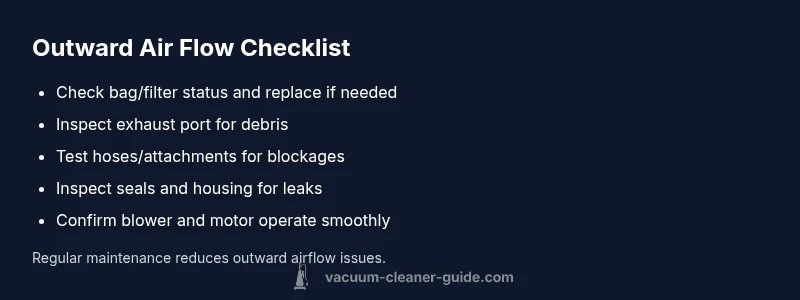
A clogged filter or a full bag dramatically reduces suction and can force air to take the easiest route to escape, which may be outwards from the nozzle or housings. Check the main filter and any secondary filters; replace or clean as recommended by the manufacturer. If you’re operating a bagless model, inspect the dirt cup for overflow or spills that can push air back through unintended paths. Even if the unit seems to operate, poor filtration allows larger debris to bypass the collection chamber and circulate back into the room. Regular maintenance reduces outward airflow over time and helps preserve motor longevity.
Hoses, wands, and attachments: look for blockages
Blockages aren’t always in the main body. Detachable hoses, wands, and attachments can trap hair and debris, creating a reverse airflow situation where air escapes rather than being drawn. Detach hoses and run a quick test with the wand removed to see if suction improves. When you reattach, ensure each connection is snug and sealed. A small kink or crack in a hose can become a major air leak, permitting outward flow. If you notice a crack, replace the hose rather than attempting a temporary fix.
Seals, gaskets, and housing integrity
Over time seals wear out, permitting air to leak at the seams where the canister meets the motor housing. Check the door or lid seals, the gasket around the filter housing, and any viewports that could allow air to escape. A loose strap, cracked lid, or misaligned lid latch can also break the seal, causing outward flow. If you identify a damaged seal, replacement is usually straightforward and restores proper pressure. Handling damaged housings should be done with care to avoid further leaks and potential injury.
Motor, blower, and internal damage
If all the easy fixes fail, the blower wheel or motor may have a problem that isn’t visible from the outside. A damaged impeller or internal air chamber can redirect flow and push air outward. These issues may accompany unusual noises, overheating, or reduced efficiency. If you suspect internal damage after ruling out blockages and leaks, it’s time to seek professional service. Regular maintenance and addressing minor issues early can prevent more serious blower problems.
Safety first: immediate steps to take
Before you begin any inspection, unplug the vacuum and remove any cords and attachments. Never work on a plugged device or expose live wiring. If you smell burning plastic or hear grinding, stop and call a professional. Clean the area around the exhaust port with a dry cloth rather than wet cleaners to avoid moisture entering electrical components. After each fix, test the suction by placing a tissue near the nozzle; if the tissue stays pulled toward the unit, you’ve likely fixed the issue.
How to test suction and confirm the cause
A systematic test helps confirm the root cause. Start with the simplest checks: ensure the bag is not full and the filter is clean. Then remove hoses and reassemble, testing with and without attachments. Listen for changes in airflow and watch for air leaks at joints. If suction remains weak or outward airflow persists after all simple checks, you may need professional diagnosis. A careful, methodical approach reduces guesswork and speeds up repair.
Maintenance to prevent outward airflow
To minimize future outward airflow issues, schedule regular filter and bag replacement, inspect hoses for wear, and reseal any worn gaskets promptly. Keep the exhaust port free of hair and lint by cleaning with a dry cloth after use. Store the vacuum in a dry place and avoid drooping the hose during storage, which can cause creases that later create leaks. A proactive maintenance routine keeps your vacuum performing at peak suction and prevents outward airflow.
Steps
Estimated time: 60-90 minutes
- 1
Unplug and inspect the exterior
Begin by unplugging the unit and removing any attachments. Look for obvious signs of wear, cracks, or loose screws that could affect air seals. A simple visual check can reveal a loose hose connection or a cracked casing that causes outward airflow.
Tip: Take a photo of the disassembly to simplify reassembly. - 2
Check the bag or dust cup and replace filters
Open the bag compartment or dust cup and determine if the bag is full or if the filters are clogged. Replace bags and clean or replace filters per the manufacturer’s guidance to restore suction and reduce leaks.
Tip: Use genuine replacement parts when possible. - 3
Inspect hoses and attachments for blockages
Detach hoses and test airflow with and without attachments. Remove any trapped hair or debris. Reconnect firmly and test suction again to see if outward airflow persists.
Tip: Gently straighten any kinks in hoses. - 4
Check seals and gaskets around the housing
Inspect door seals, lid gaskets, and filter housing seals for wear or damage. Clean away residue and reseal or replace damaged gaskets to restore a proper seal.
Tip: Don’t force parts together; ensure alignment before sealing. - 5
Assess the exhaust port for debris
Clear the exhaust port of lint or fiber buildup. A blocked exhaust can force air outward; ensure the port is unobstructed and clear.
Tip: Use a wooden skewer or pick to remove stubborn debris—be careful not to damage the port. - 6
Check the blower housing and belt
If you hear unusual noises or the unit doesn’t spin well, the blower or belt may be worn. Inspect for wear; replace if necessary.
Tip: If the belt looks stretched, replace it to restore proper drive. - 7
Reassemble and test suction
Reassemble all parts carefully and plug in the unit. Test suction on a small patch of carpet and listen for smooth airflow. Look for outward air when running and adjust as needed.
Tip: Test in a well-ventilated area. - 8
Reassess potential leaks after reassembly
Check all joints again after reassembly for any air leaks. Run a simple check by placing tissue near joints to detect air escape.
Tip: Too many leaks at once can indicate a more complex seal failure. - 9
When to seek professional service
If outward airflow continues after all basic checks, professional evaluation is recommended. Some issues involve internal components that require trained technicians.
Tip: Document symptoms and steps taken to speed up the service.
Diagnosis: Vacuum cleaner blows air outward instead of drawing in debris
Possible Causes
- highExhaust path blockage or leak
- highFull bag or clogged filter
- mediumDamaged hose or worn seals
- lowLoose or cracked motor housing / blower
Fixes
- easyUnplug and inspect exhaust and impeller for debris; clear any blockage
- easyEmpty the bag or replace the filter and confirm suction improves
- mediumInspect hoses and seals, reseal or replace damaged parts
- hardIf motor housing leaks or blower damaged, seek professional service
FAQ
Why is my vacuum blowing air outward instead of suction?
Outward air usually points to an airflow path issue, like a blockage or a leak, rather than a motor failure. Start with filters, bags, and hoses, then inspect seals and the exhaust. If the problem persists, consult a professional.
Outward air usually means an airflow path issue. Start with simple checks like filters and hoses, then get help if needed.
Can a clogged filter cause outward air flow?
Yes. A clogged filter reduces suction and can cause air to escape through unintended paths. Replace or clean filters as recommended and test the unit after each step.
A clogged filter reduces suction and can push air outward. Replace or clean the filter and re-test.
Is it dangerous to use a vacuum that blows air outward?
Using a vacuum with outward airflow isn’t inherently dangerous, but it indicates a leak or blockage that can worsen and shorten the motor’s life. Stop using it if there’s burning smell or unusual noises and inspect or service promptly.
It’s not immediately dangerous, but it can damage the vacuum and release dust. Stop and check it or seek service.
Should I continue using a vacuum that blows air outward while waiting for service?
Avoid continued use if you notice persistent outward airflow. Continued operation can worsen leaks and cause debris to bypass filtration. Use only for brief tests to check for improvements after fixes.
If air is blowing outward, don’t keep using it extensively. Do quick checks and seek service if needed.
What maintenance reduces outward airflow long-term?
Regularly replace filters and bags, inspect hoses for wear, and reseal gaskets. Clean the exhaust area after use and store the vacuum properly to prevent kinks and stress on joints.
Keep filters and hoses clean, reseal worn gaskets, and store the vacuum properly to prevent future problems.
When should I replace my vacuum instead of repairing it?
If the blower, motor, or housing is significantly damaged or costly to repair, replacement may be more cost-effective. Compare repair costs with a comparable new unit and consider long-term maintenance implications.
If the motor or blower is damaged or repairs are expensive, it may be time to replace the vacuum.
Watch Video
The Essentials
- Inspect filters and bags first for outward airflow.
- Check hoses and seals for leaks or blockages.
- Test suction after each corrective step to confirm fixes.
- If issues persist, seek professional service promptly.