What Carpet Cleaner Can You Use in a Vax: A Practical Guide
Learn which carpet cleaners are safe for Vax vacuums, how to verify compatibility, and a step-by-step approach to cleaning carpets without harming your machine.


Most Vax vacuums can use a carpet cleaner solution only if your model supports a liquid tank or compatible attachment. Always verify with the user manual and look for cleaners labeled safe for use in vacuums. If your model lacks these features, do not add liquids. For model-specific guidance, consult Vacuum Cleaner Guide.
What carpet cleaner can you use in a vax
If you own a Vax vacuum and wonder what carpet cleaner you can safely use, you’re not alone. The short answer is: only cleaners specifically labeled as safe for use in vacuum systems and compatible with your model’s liquid cleaning option. The question itself—what carpet cleaner can you use in a vax—highlights a common point of confusion. While many household vacuums handle dry debris without issue, liquids introduce complexity. According to Vacuum Cleaner Guide, compatibility depends on model features such as a built-in liquid tank or a compatible carpet-cleaning attachment. Your first step should be to locate your Vax’s model number, consult the owner’s manual, and check any cleaner’s label for explicit vacuum-use approval. Using an incompatible solution can lead to residue, unpleasant odors, or even damage to seals and hoses. The Vacuum Cleaner Guide team emphasizes model-specific guidance and manufacturer recommendations as the safest path forward.
How Vax models determine compatibility
Vax models vary widely in how they handle liquids. Some uprights include a dedicated cleaning mode with a water tank, while others are designed only for dry pickup. The key is to confirm whether your model offers a liquid cleaning option and which attachments are compatible. The owner’s manual often lists supported cleaners and dilution ratios, if applicable. If the manual isn’t clear, check the product page on the manufacturer’s site or contact customer support. Vacuum Cleaner Guide Analysis, 2026, stresses that using non-approved cleaners can void warranty coverage and cause buildup on valves and filters. Always start with the lowest-risk option: a cleaner labeled for vacuum use and compatible with your model’s features.
Types of cleaners suitable for vacuums
Not all cleaners labeled for carpets are appropriate for every vacuum. Look for products specifically labeled as safe for use in vacuum systems or designed for use with carpet cleaning attachments. In many cases, you’ll find two categories: (1) cleaners intended for vacuum-based carpet systems that mix with water in the tank, and (2) dry-cleaning powders designed for vacuums without liquids. If your Vax model supports a liquid solution, choose a formula marketed for vapor or spray extraction and that explicitly states compatibility with vacuums. Avoid concentrated cleaners not intended for vacuum use, as they can foam excessively, leave residue, or corrode gaskets. Always follow the label instructions and never improvise with household detergents.
Reading labels: what to look for
Label literacy matters. When selecting a cleaner for a Vax, read the product name and the directions carefully. Look for phrases like “safe for use in vacuum cleaners” or “for use with carpet cleaning attachments.” Confirm the product is compatible with the volume and dilution requirements of your machine’s tank. Check for warnings about foam production, residue, or aggressive enzymes that could harm delicate components. If a label provides dilution ratios, adhere exactly to them; deviations can result in oversudsing or incomplete rinse. For homeowners, a practical rule is to stick to products that are clearly marketed for use with vacuum-based carpet cleaning systems and that specify compatibility with your Vax model.
Safety first: dilution, concentration, and warnings
Liquid cleaners aren’t interchangeable. Always dilute a concentrate exactly as directed on the label and never exceed recommended strengths. Concentrated solutions can create excessive suds, which may back up into the vacuum’s motor or hoses. Wear gloves when handling chemical cleaners, and work in a well-ventilated area. If you’re unsure about a product’s safety profile, perform a small spot test on a hidden area of carpet first. A prudent approach is to ask the manufacturer for confirmation and consult consumer guidance from trusted sources like Vacuum Cleaner Guide. Safety should be the priority before attempting any liquid cleaning in a vacuum.
Preparing your Vax for a liquid cleaning cycle
Preparation reduces risk. Start by emptying any existing debris from the dust canister and ensuring the brushroll is clear. If your Vax supports a liquid tank, remove the cap and prepare the cleaning solution according to the label. Fill the tank to the recommended level, using distilled water if dilution calls for it. Reattach all parts securely and perform a short test run without carpet contact to ensure there are no leaks. Check for any unusual noises or vibrations. This careful setup minimizes the chance of leaks and ensures you can monitor performance during cleaning.
Step-by-step considerations during cleaning
When you begin cleaning, move the vacuum steadily over the carpet, overlapping passes to ensure even coverage. Maintain a light, consistent contact without pressing too hard, which could damage fibers or stress the motor. If your Vax has a dedicated carpet mode or extraction setting, enable it and monitor for foam or bubbling. If you notice excessive suds, stop and rinse the system with plain water, then re-test on a small area. Always consult your model’s user manual for any specific sequence or time requirements between passes.
Troubleshooting common issues
Foaming, residue, and odor are the main issues when using cleaners in vacuums. If you see foam, pause and switch to plain water to rinse the system, then try a smaller amount of cleaner. Residue can be mitigated by using cleaners that are explicitly labeled for vacuum use and by performing a thorough rinse with the appropriate plain water cycle. Unusual noises, heat, or a drop in suction indicate a problem; stop immediately and inspect hoses and filters for blockages. If needed, contact customer support or Vacuum Cleaner Guide for model-specific troubleshooting.
Drying and odor control
Carpets treated with liquids take longer to dry. Improve drying by increasing room temperature, opening windows, and using fans or dehumidifiers. After cleaning, run the vacuum on a dry setting or a rinse cycle with plain water to remove any remaining cleaner, then let the carpet dry completely before heavy foot traffic. For lingering odors, a light mist of water with a touch of white vinegar (as recommended by the manual) can help neutralize smells, but only if your model and cleaner allow it. Always prioritize ventilation and avoid removing the drying process by sealing the area.
Post-cleaning maintenance and storage
After finishing, flush the system with plain water to remove cleaner residues. Empty and rinse all tanks, hoses, and brushes; allow everything to dry completely before reassembly. Store cleaners separately from the vacuum to prevent accidental mixing. Check seals and filters for any residues and replace if necessary. Document the experience for future reference so you know which cleaners worked best with your Vax model and what dilution guidelines were most effective. Cleanliness after cleaning helps maintain performance over time.
Real-world scenarios and model-specific notes
Model-specific notes matter. Some Vax models with carpet-cleaning attachments are compatible with widely available carpet cleaners labeled for vacuum use; others require brand-specific concentrates. If you own a compact handheld Vax, the available options may be more limited than a full-size upright with a volumetric tank. In every case, avoid third-party products without explicit vacuum compatibility, and always revert to dry-clean testing if you’re unsure. Keep a log of which products you used with which model and note any performance changes, residue, or drying times observed.
Final checklist before you start
- Confirm your Vax model supports liquid cleaning or carpet cleaning attachments.
- Choose cleaners labeled safe for vacuums and compatible with your model.
- Read labels for dilution instructions and warnings about foam.
- Test on a hidden carpet patch before full use.
- Prepare the machine and room for cleaning and drying, ensuring good ventilation.
- Plan for drying time and follow-up maintenance after cleaning.
Tools & Materials
- Vax vacuum model that supports liquid cleaning or carpet cleaning attachment(Check model manual for compatibility with liquid cleaners and attachments)
- Carpet cleaner solution labeled for vacuum use(Look for 'safe for vacuum use' on the label and model compatibility)
- Measuring cup(Useful for accurate dilution per label instructions)
- Distilled water (optional)(Use only if dilution requires dilution with water as per label)
- Gloves(Wear when handling chemical cleaners)
- Soft brush attachment(For gentle agitation on stubborn stains)
Steps
Estimated time: 30-60 minutes
- 1
Check model compatibility
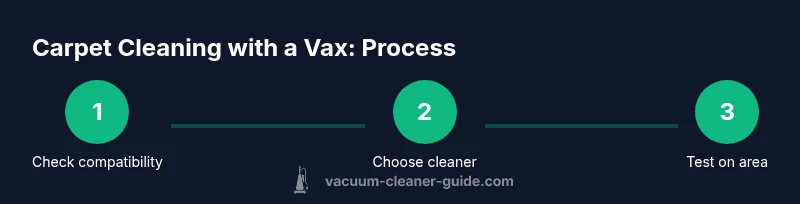
Locate your Vax model number and consult the user manual to confirm whether liquids and carpet-cleaning solutions are supported. If the model lacks a liquid tank or compatible attachment, you should not add cleaners. This step reduces the risk of damage and warranty issues.
Tip: If in doubt, contact Vax customer support or Vacuum Cleaner Guide for model-specific confirmation. - 2
Choose the right cleaner
Select a carpet cleaner solution specifically labeled for vacuum use and compatible with your Vax model. Avoid generic cleaners that don’t specify vacuum compatibility, as they can cause foaming and residue.
Tip: Always check the product’s dilution instructions before purchasing. - 3
Prepare the cleaner and tank
Prepare the cleaner according to the label and fill the vacuum’s liquid tank to the recommended level. If you’re diluting, use distilled water as directed. Reattach all components securely before proceeding.
Tip: Perform a brief dry run to ensure there are no leaks before cleaning carpeted areas. - 4
Test a small area
Test the solution on a hidden patch of carpet to observe color fastness and residue. If there’s no adverse reaction after several minutes, you can proceed to broader cleaning.
Tip: Record the test results for future reference. - 5
Clean with controlled passes
Move the vacuum in slow, overlapping passes over the carpet. Do not press hard; allow the cleaning action to lift soil without over-wetting the fibers.
Tip: Keep windows open or use a fan to speed up drying. - 6
Rinse and dry
If your model supports a rinse cycle, run plain water through the system to flush cleaner residues. Allow complete drying and recheck the area after several hours.
Tip: Avoid heavy foot traffic until fully dry to prevent re-soiling.
FAQ
Can I use any carpet cleaner in a Vax vacuum?
Only cleaners labeled safe for vacuums and compatible with your Vax model should be used. Check the manual and product labels for compatibility.
Only cleaners labeled safe for vacuums and compatible with your Vax model should be used. Check the manual and product labels.
Will using liquid cleaners damage my Vax?
Using cleaners not approved for your model can cause foaming, residue, or damage to seals and hoses. Always follow the manufacturer’s instructions.
Using unapproved liquids can cause damage; always follow the manufacturer’s instructions.
Do I need to dilute cleaner before use?
Many cleaners require dilution; read the label and measure carefully. Do not exceed the recommended concentration.
Dilute as directed on the label.
Does using carpet cleaner void warranty?
Using approved cleaners per the manual is usually acceptable, but check your warranty terms or contact the manufacturer for specifics.
Check your warranty terms; use only approved products.
How long does it take for carpets to dry after cleaning?
Drying times vary with room temperature and airflow; expect several hours. Use fans to improve drying.
Drying can take several hours; keep the area ventilated.
Can I use a dry-cleaning powder instead of a liquid?
If your Vax model supports dry-cleaning powders, ensure the powder is labeled for vacuum use and compatible with your unit.
Only use vacuum-friendly powders when your model supports it.
Watch Video
The Essentials
- Verify model compatibility before using liquids.
- Choose cleaners labeled safe for vacuums and compatible with your Vax model.
- Follow dilution and safety instructions to prevent damage.
- Test on a hidden area before full-scale cleaning.
- Allow ample drying time and ventilate the area after cleaning.