What Carpet Cleaner to Use with Shark Vacuums: A Practical Guide
Learn which carpet cleaners are safe for Shark vacuums, how to safely dilute solutions, and a clear step‑by‑step method for effective carpet cleaning.


Only use carpet cleaners approved by Shark for your model, or plain water if your model recommends it. Always check the manual for compatibility, dilute as directed, and test a small patch before full cleaning.
Understanding Shark compatibility for carpet cleaning
If you're wondering what carpet cleaner to use with Shark, the first step is to confirm your model's compatibility with any cleaning solution. According to Vacuum Cleaner Guide, some Shark models include a built-in solution reservoir or spray feature, while others are vacuum-only. The key rule is to avoid mixing cleaners or using products that aren't approved for your unit. Start with the manufacturer's guidance and test on a small, inconspicuous area to assess colorfastness and fiber reaction. This upfront check helps you avoid damage and ensures you preserve carpet texture and color over time.
For homeowners and pet owners, compatibility isn't just about the chemical itself—it's about how the solution interacts with the pump, hoses, and seals. If your model does not support solution dispensing, you should not try to force a cleaning solution through it. Vacuum Cleaner Guide highlights that using non-approved cleaners can void warranties and potentially shorten the life of the machine.
What counts as a carpet cleaner for Shark: solutions, concentrates, and dilution
A carpet cleaner for Shark is a formula designed for machine-assisted cleaning and safe for the vacuum's internal components when used at the recommended dilution. You’ll find products labeled as carpet cleaning concentrates or ready-to-use solutions. Always read the label for dilution ratios and fiber suitability. Neutral pH formulas are typically gentler on fibers, while highly alkaline or solvent-based products can damage fibers or leave residues. Avoid bleach-based cleaners and ammonia unless the manual explicitly allows them. Dilution matters: use the instructed amount to prevent oversaturation and residue that can attract more dirt over time. For pet owners, enzyme-based or odor-control blends can help reduce traffic-area odors without harsh fumes.
Vacuum Cleaner Guide’s guidance emphasizes following the model’s recommended formulas to maintain suction, prevent buildup, and protect filtration.
Safe cleaning solutions: recommended vs avoid
When selecting a solution, prioritize products labeled for machine-assisted carpet cleaning and compatible with your Shark model. If in doubt, opt for a mild, low-residue cleaner designed for household carpet care. Shark-approved cleaners, when available, are the safest choice because they’re formulated with the pump and nozzle geometry in mind. In contrast, household cleaners with high foaming agents, solvents, or bleach can strain the pump, clog passages, or leave sticky residues. The general rule is to avoid anything that foams excessively, creates strong odors, or requires aggressive rinsing. Vacuum Cleaner Guide notes that a safe, diluted formula yields the best suction and drying times while protecting fibers from wear.
Always test on an inconspicuous area before committing to a full room.
Preparation: tank, filters, and sprays
Before you start, ensure the Shark model is configured for cleaning solution use if applicable. Empty the tank and inspect seals, hoses, and filters for signs of wear. Rinse the reservoir and any spray nozzles with clean water to remove old residues. Pre-vacuum the carpet to lift surface dirt, which reduces the need for heavy cleaning. If your model uses a replaceable filter, check whether it needs cleaning or replacement after use; a clogged filter will reduce suction and performance. Remember, the goal is to apply a controlled amount of cleaner to dampen the carpet—not soak it.
By taking a few minutes to prepare, you protect your machine and improve drying times.
Step-by-step overview (compatibility and setup)
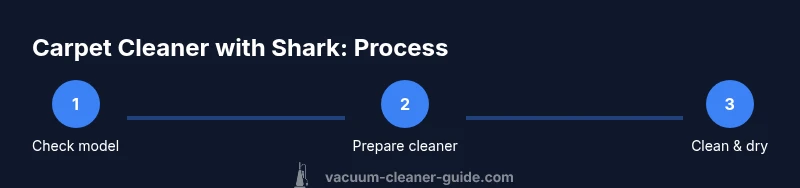
The following outline explains how to approach the process generally. Detailed, model-specific steps appear in the dedicated Step-by-Step section below, but you can start with a quick sanity check: confirm compatibility, prepare the area, dilute, fill, and perform a controlled cleaning pass. This overview helps you plan a safe session and sets expectations for drying time and potential odor changes.
In practice, many Shark systems require careful calibration of dilution and pump settings to avoid over-wetting. Always refer to the manual for exact instructions on pressure, flow, and reservoir capacity.
Common mistakes and how to avoid them
Common mistakes include using high-suds cleaners, over-wetting the carpet, and neglecting to dry the area properly. Avoid applying cleaner directly onto the floor or saturating a patch; instead, apply a small amount and allow it to dwell briefly if the model supports it. Another frequent error is skipping tissue tests or failing to vacuum before cleaning, which can trap dirt and increase drying time. Vacuum Cleaner Guide recommends frequent maintenance checks on hoses and filters to prevent loss of suction and odors. By avoiding these errors, you’ll achieve more consistent results and reduce the need for repeat passes.
Alternatives and maintenance considerations
If your Shark model doesn’t support a built-in cleaning solution or you want deeper extraction, consider using a separate carpet cleaning machine or hiring a professional service for heavily soiled carpets. For routine upkeep, vacuuming with the correct setting and periodic steam-cleaning with a dedicated unit can be safer and more effective. After cleaning, empty and rinse the tank, clean the nozzle, and allow carpets to dry thoroughly to prevent mold growth. Vacuum Cleaner Guide’s approach is practical: use the right tool for the job and maintain your equipment to extend its life.
Tools & Materials
- Shark vacuum with compatible solution reservoir (or model with spray feature)(Check manual to confirm solution use is supported)
- Carpet cleaning solution approved by Shark or a mild, manufacturer-recommended cleaner(Avoid bleach, solvents, or high-foam formulas)
- Water (cool or room temperature)(For dilution and rinsing if applicable)
- Measuring cup or bottle for dilution(Follow labeled dilution ratios)
- Microfiber cloths or towels(For blotting and drying)
- Soft-bristled brush(For spot pretreatment)
Steps
Estimated time: 60-90 minutes
- 1
Verify compatibility
Consult your Shark model’s manual to confirm it supports cleaning solution use. If compatible, identify where the reservoir, spray nozzle, or hose attaches and ensure all seals are intact. This prevents leaks and potential damage during cleaning.
Tip: If you’re unsure, contact Shark customer support. - 2
Test on a hidden area
Choose a small carpet patch that’s out of sight. Apply a diluted cleaner and run a short pass to observe colorfastness and fiber reaction. If there’s any bleeding or discoloration, don’t proceed with the full area.
Tip: Allow 15-30 minutes to assess the test spot. - 3
Dilute cleaner and prepare tank
Dilute the cleaner according to the product label and your model’s guidelines. Fill the reservoir to the recommended level, and ensure the solution mix is uniform to prevent concentrated pockets that scorch carpet fibers.
Tip: Never exceed the maximum fill line. - 4
Begin cleaning with controlled passes
Set the Shark to the appropriate cleaning mode and use slow, overlapping strokes. Maintain a consistent distance from the carpet and avoid pushing liquid too deeply into the fibers to prevent saturation and longer drying times.
Tip: Work in small sections and avoid rushing. - 5
Rinse or dry-pass as needed
If your model supports a rinse pass with clean water, perform it to remove residue. Otherwise, run a dry pass to lift moisture. Then blot with towels and vent the area to speed up drying.
Tip: Do not leave puddles; they can cause mold. - 6
Finish and clean the machine
Empty and rinse the tank, rinse nozzles, and clean filters if applicable. Let carpet dry completely before heavy use. Inspect hoses for leaks and store the unit in a dry place.
Tip: Drying can take several hours depending on humidity.
FAQ
Can I use any carpet cleaner in all Shark models?
No. Only cleaners approved by Shark for your model should be used, or the manual's recommended alternatives. Differences in reservoirs and pumps mean compatibility varies by model.
No. Use only Shark-approved cleaners for your model and follow the manual.
Are vinegar-based or ammonia cleaners safe with Shark vacuums?
Vinegar or ammonia-based cleaners are generally not recommended unless the manual explicitly allows them. They can degrade seals or leave residues.
Vinegar and ammonia aren’t recommended unless your manual says they’re safe.
What should I do if cleaner residue remains after cleaning?
Rinse with a compatible, clean-water pass if your model supports it, or perform a dry pass and blot the area to speed drying. Residue can attract more dirt.
If residue remains, run a rinse pass or blot and dry thoroughly.
Can I use Shark cleaning tips on upholstery?
Some models support fabric surfaces, but always check the manual and test on a hidden patch before using cleaners on upholstery.
Check your model’s guidance and test patch before upholstery cleaning.
Should I use hot water when diluting cleaners?
Most carpet cleaners perform best with cool or room-temperature water. Hot water can alter cleaning chemistry and damage fibers in some carpets.
Typically, use cool or room temperature water.
What if my Shark model has no solution reservoir?
If your model doesn’t support cleaning solution, don’t attempt to add one. Use a dedicated carpet-cleaning machine or hire a professional for deeper cleanings.
If there’s no reservoir, use a separate machine.
Watch Video
The Essentials
- Verify model compatibility before cleaning.
- Dilute cleaners per instructions and avoid residues.
- Test on a hidden patch to prevent damage.
- Avoid over-wetting; dry thoroughly after cleaning.
- Use Shark-approved solutions when available.