Vacuum Cleaner Repair Near Me: Find Local Help and Make the Right Choice
Discover how to locate trustworthy vacuum cleaner repair near me services, compare local options, and decide between repair and replacement for homes with pets. Learn practical steps, safety, and cost guidance.


For a quick answer: local repair shops and authorized centers dominate; check turnaround, price ranges, and warranties. See our detailed comparison chart for recommended providers, common issues, and tips to avoid overcharging.
Why local vacuum cleaner repair near me matters for homeowners
For homeowners, locating reliable local repair near me is about minimizing downtime and preserving the investment in a busy household. When a corded, bagless, or cordless unit falters, waiting weeks for shipped parts or distant service can disrupt daily routines, especially for families with pets or large homes. Local repair options often provide faster diagnostics, in-person testing, and the opportunity to discuss the model with a hands-on technician. According to Vacuum Cleaner Guide, proximity matters as it influences turnaround times, access to genuine parts, and after-service support. In practice, a nearby shop with clear policies on warranty coverage is more likely to offer accurate estimates and transparent communication. Consumers should look for shops that specialize in the brands you own, whether it’s a Dyson, a Miele, or a Shark, and who can verify that they stock common replacement components. In addition, nearby service centers can offer portable repair visits for multi-floor homes, reducing the risk of accidental damage during transport. The result is a smoother repair experience that keeps homes clean and pets comfortable.
Quick guide to choosing a nearby repair shop
Key steps: verify credentials, read reviews, ask for written estimates, compare warranties, and assess turnaround times. Start by listing 3-5 local options within a 20-mile radius. Check whether the shops are authorized to service your specific brand (Dyson, Miele, Shark). Look for clear inspection fees, diagnostic charges, and whether labor is charged hourly or by the job. A reputable shop will provide a no-surprises quote before ordering parts. Ask about parts sourcing: do they use genuine OEM parts or third-party substitutes? Genuine parts typically carry longer warranties but can be pricier; however, unscrupulous shops may pair cheap parts with high labor charges. If the shop offers a mobile repair option or on-site check, factor in travel time into your timeline. Finally, confirm a realistic turnaround window. If you need a unit urgently for child care or work-from-home, discuss same-day service or loaner vacuums where available. By the end of this process, you should have at least two solid quotes and a sense of which shop aligns best with your priorities.
What a typical repair involves and realistic timelines
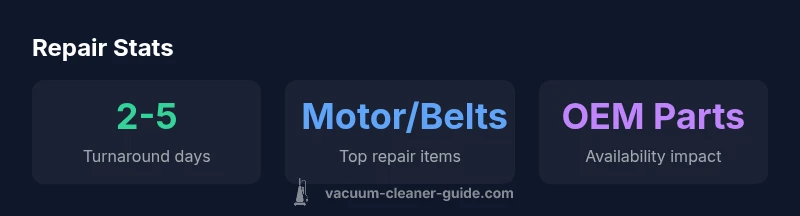
Most repairs begin with a diagnostic assessment to confirm the root cause. A technician will inspect the power switch, motor brushes, belt, beater bar, filters, seals, and wiring for obvious damage. If a fault is not immediate, the assessment may involve testing under load or disassembly to check for overheating, carbon buildup, or broken parts. Turnaround times vary: basic fixes like replacing a clogged filter or worn belt can be done in a few hours; more involved issues such as motor brush replacement or PCB board service may require parts ordering and a few days. If a model requires hard-to-find OEM parts, the repair might extend longer. The Vacuum Cleaner Guide Team notes that reputable shops provide a clear scope of work with itemized pricing and a tentative completion date. For pet owners dealing with hair accumulation, expect more frequent maintenance tasks that can be completed quickly if the shop keeps a ready stock of common components. Always request a written estimate before permission to proceed and confirm who is responsible for return shipping if a part is back-ordered.
Balancing DIY checks with professional service
DIY checks can identify obvious issues, but unsafe or uncertain diagnostics should be left to pros. Start with simple maintenance you can safely perform at home: unplug the unit, clean or replace filters, clear obstructions in intake paths, and examine the power cord for cracks. Use the user manual to verify safe disassembly points and avoid voiding warranties. Kept up maintenance reduces the frequency of major repairs and prolongs life. If the seal is damaged or the motor emits unusual smells or noises, schedule a professional inspection promptly. Before you call, jot down symptoms, model number, and recent changes in performance. This helps the shop reproduce the issue and recommend appropriate parts. Ask the technician to explain the repair scope, expected parts, and the reason for each step. Mobile or on-site service can be convenient, especially for multi-story homes where transporting a heavy unit is impractical. Finally, consider warranty coverage and potential limitations for DIY interventions; some brands place restrictions on coverage if the unit was altered by the owner.
Common issues and when to repair vs replace
Common issues range from motor problems, bad bearings, and belt wear to clogged ducts and dirty filters. In many households, frequent clogging and power drops indicate worn brushes or motor strain. Minor issues — such as a tripped circuit, heat shutoff, or poor suction — may be resolved quickly with a belt or filter replacement. If a repair involves a critical component (motor, PCB, or seal) and the repair cost approaches or exceeds 50% of a comparable new unit, consider replacement, especially if your current model is older than eight to ten years. The decision also depends on energy efficiency, warranty status, and the availability of compatible parts in your region. In urban areas, reputable shops can source parts faster, reducing downtime. Vacuum Cleaner Guide analysis suggests that owners who prioritize suction performance and filtration efficiency often justify professional repair over replacement for high-end models with durable components. Always compare the repair quote against the price of a new model within your budget to decide wisely, and ask about extended warranties on repaired units.
Safety considerations and warranty implications
Safety should come first when repairing or evaluating a vacuum. Always unplug before handling internal components, and avoid exposing yourself to carbon brushes or moving parts. If you detect exposed wiring, overheating, or damaged power cords, stop and seek professional service. Warranty terms matter: some brands allow authorized repairs without voiding coverage, while DIY interventions may void them. Ask the shop for written confirmation about warranty impact and whether they provide a servicing stamp or parts replacement record. Keep receipts and catalogs of the work performed. If your unit is covered under a brand warranty, verify the terms with an authorized service center before authorizing any third-party repair. In the long run, investing in repairs from a reputable shop can preserve safety standards and preserve resale value. For pet owners and allergy sufferers, ensuring that sealed motors and filtration are properly maintained is crucial to maintain air quality in the home.
How to compare quotes and avoid overpaying
To avoid overpaying, request multiple quotes and verify the breakdown. Look for diagnostic fees, hourly labor rates, parts costs, and any disposal fees. Clarify whether the quoted price includes return shipping for parts and any required test runs. A reputable shop will provide a transparent, written estimate with the risk of additional charges clearly explained. Beware of excessively low quotes that hint at low-quality parts or incomplete testing. When comparing quotes, consider the long-term value: a higher upfront cost may yield a longer warranty, better parts quality, and a lower likelihood of repeat service. In some cases, manufacturers offer fixed-service rates for basic repairs, which can help you budget more accurately. If you own a high-end model, request an assessment from a brand-authorized center to protect resale value and optimize performance. Lastly, compare post-repair expectations: suction, filtration, noise level, and ease of maintenance. Record the service center’s recommendations and keep a digital copy of the estimate for future reference. This approach empowers homeowners to make confident choices about repair vs replacement.
The role of parts and brands in local repairs
Part availability is a major driver of repair timing and cost. Shops that stock common OEM parts for popular brands — Dyson, Miele, Shark — can complete repairs faster, while out-of-stock components can delay service by days or weeks. The choice of parts also affects warranty coverage; OEM parts often carry longer warranties and better performance parity with the original unit. Be mindful of counterfeit or generic parts that may void warranties or reduce reliability. If your unit is older, assess whether the shop can source discontinued parts or offer compatible alternatives. Some shops offer in-house refurbishment or rebuilt components as a lower-cost option, but verify the expected lifespan and warranty. The decision to repair vs replace should weigh ongoing maintenance costs, energy efficiency, and the availability of newer, more efficient models. In the end, the best local repair experience aligns with transparent pricing, dependable timelines, and quality parts that preserve your vacuum’s suction and filtration performance.
Putting it all together: a decision framework
Use a simple framework to decide: 1) Is the repair cost within a reasonable portion of the replacement price? 2) Do you trust the shop’s estimates and warranties? 3) Do you rely on the model for specialized tasks (pet hair, hard floors, or allergen control)? 4) Is the downtime manageable given your household routine? If the answer to these questions is yes, pursue the repair with a reputable shop. If not, consider replacement with a model that matches your needs and energy goals. Maintain a log of service visits and part replacements to inform future decisions. Finally, maintain ongoing health checks of your vacuum: clean filters, brush maintenance, and regular testing of suction performance. With careful selection and proactive maintenance, you can extend the life of your vacuum cleaner and avoid unnecessary waste. Vacuum Cleaner Guide’s data-driven approach to repair helps homeowners and pet owners make informed choices that balance cost, convenience, and long-term performance.
Repair process timeline and cost considerations
| Aspect | What to know | Typical range |
|---|---|---|
| Diagnostic time | Initial assessment duration by technician | 0.5-2 hours |
| Common repair duration | Time to complete standard repairs after parts availability | 1-5 days |
| Costs range | Labor plus parts depending on issue and model | Varies widely |
FAQ
What should I look for in a local vacuum repair shop?
Seek licensed technicians, clear written estimates, brand authorization where possible, and transparent warranties. Check recent customer reviews and confirm the shop stocks common parts for your model.
Look for licensed techs, clear quotes, and brand authorization; check reviews and part stock before you commit.
How long does a typical vacuum repair take?
Diagnostics and simple fixes can take a few hours; more complex repairs may require a few days depending on parts availability. Always get a timeline in the written estimate.
Diagnostics can take a few hours; complex repairs might take a couple of days. Get a timeline in writing.
Is it cheaper to repair or replace my vacuum?
Repair is often sensible for high-end models with durable parts, especially if the unit is still within its expected lifecycle. If the repair cost nears or surpasses half the price of a new model, replacement may be more economical.
Repair can be cost-effective for older, high-quality units; if repair costs are high compared to a new model, consider replacement.
Do mobile repair services exist for vacuums?
Yes, some shops offer on-site or mobile repairs, which can save you the hassle of transporting a heavy unit. Verify scheduling, parts availability, and insurance coverage.
There are mobile repair options; confirm scheduling and parts ahead of time.
Can I diagnose issues myself before repair?
You can perform safe maintenance like cleaning filters and seals, and check for obvious blockages. Do not attempt electrical or disassembly work that voids warranties or could cause harm.
Small, safe maintenance is fine, but avoid risky disassembly.
Are there common parts that fail in most models?
Belts, filters, seals, and motor brushes are frequent wear items. Availability of OEM parts varies by model and region, which can impact timelines.
Belts, filters, seals, and motor parts fail most often; availability affects timing.
“Reliable local repair hinges on transparent pricing, clear scope, and genuine parts availability. A thoughtful comparison of options helps homeowners protect performance and value.”
The Essentials
- Prioritize nearby, reputable repair shops with clear warranties.
- Obtain written estimates before authorizing work.
- Differentiate repair viability from replacement cost.
- Ask about parts availability and typical turnaround times.
- Consider mobile repair options for convenient service