How to Clean Carpet Without Washing: A Practical Guide
Learn safe, effective methods to refresh carpets without washing. This guide covers dry cleaning powders, odor control, spot treatments, and maintenance tips for pet owners.


This guide shows you how to refresh carpet without washing using dry methods, spot treatments, and odor removal. You'll learn powder application, safe cleaners for pet-friendly homes, and when to call a professional. By following these steps, you minimize moisture, speed up drying, and maintain carpet fibers for longer. This approach suits busy households and allergy-aware homes.
Why Clean Carpet Without Washing Matters
Carpets accumulate soil, pet dander, and odors, and traditional wet cleaning can introduce moisture risks. For households with pets, children, or moisture-sensitive environments, avoiding water-based cleaning can reduce mold risk and shorten drying times. This no-wash approach uses dry-cleaning powders, odor absorbers, and targeted spot treatments to refresh fibers without saturating the carpet. According to Vacuum Cleaner Guide, maintenance of carpets between deep cleanings is essential to extend fiber life and preserve color. Dry methods are particularly effective for light to moderate soils and for high-traffic zones like living rooms, hallways, and entryways. The right combination of preparation, product selection, and technique will remove surface soil, lift embedded oils, and neutralize smells without the downtime or risk associated with shampooing. In this guide, you’ll learn how to tailor the method to your carpet type—whether it’s loop pile, cut pile, or Berber—so you can achieve consistent results with confidence.
The Science Behind Dry Cleaning Powders
Dry cleaning powders work by absorbing oils and soils from the carpet fibers as you work them in with a brush or pad. The key is to balance absorption with friction—enough to lift soil but not so aggressive that fibers fuzz or pill. Look for powders that are designed for synthetic and natural blends and are labeled pet-safe if you have animals. When you brush the powder into fibers, it creates a micro-mechanical lift that traps oil and dirt, which you then remove with a thorough vacuum pass. Avoid powders with heavy fragrance or unnecessary fillers, especially around children or allergy-prone households. Vacuuming after application is essential to prevent any short-lived residue from remaining on the surface and to restore a clean, fresh feel to the carpet.
Fiber-Friendliness: Wool, Nylon, and Polyester
Carpet fibers respond differently to dry cleaning approaches. Wool blends can be delicate, requiring gentler powders and shorter agitation times to avoid roughing the surface. Nylon is durable and forgiving, often tolerating a slightly more vigorous brush with effective results. Polyester fibers are generally easy to clean with dry powders, but you should avoid over-saturating the pile with any deodorizing agents that could leave residues. When choosing a product, check fiber compatibility and test a small, inconspicuous area first. A light, even application tends to yield the most consistent results, with fewer streaks and color changes. If you notice discoloration or texture changes, revisit your product choice and application technique.
Tools and Materials You’ll Need Before You Start
Before you begin, gather a simple set of tools that maximize efficiency and minimize mess. A vacuum with a hose attachment ensures thorough debris removal, while a dry cleaning powder designed for your carpet type provides the primary cleaning action. A stiff-bristled brush helps work the powder into fibers without abrading the surface, and microfiber Cloths are useful for blotting and quick touch-ups. Optional items like baking soda for deodorizing and an enzyme-based spot cleaner for stubborn stains can enhance results, but they’re not essential for every job. Keeping a timer handy helps you manage sit times and drying periods. Finally, ensure pets and children are kept away during treatment to avoid accidental ingestion of cleaning powders.
Preparing Your Space: Safety and Setup
Create a safe, organized workspace to prevent accidents and ensure consistent results. Remove small furniture items and throw rugs from the area you’ll treat. Open nearby windows or run a fan to establish good air circulation, which speeds up drying. Vacuum the entire carpet thoroughly, paying attention to high-traffic zones and edges where dirt tends to accumulate. If you’re using a powder, pour a small amount into a shaker to distribute it evenly and avoid clumps. Test any product on a hidden area first to confirm there is no adverse reaction with the fibers. Finally, read product labels for safety instructions and keep a clean, dry cloth handy for any quick blotting if you notice surface moisture.
Phase Overview: Dry Cleaning, Deodorizing, Inspecting
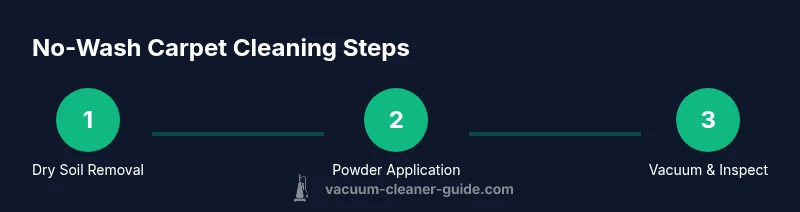
This no-wash approach happens in distinct phases rather than one long continuous pass. Phase one focuses on removing dry soil through meticulous vacuuming and edge-to-edge coverage. Phase two introduces the powder or dry solvent; you work it into the fibers using gentle, overlapping motions, then allow it to sit for a brief period to absorb oils. Phase three is extraction: vacuum again slowly and thoroughly to remove the powder along with soil and absorbed moisture. Finally, inspect for any remaining spots or odors; treat as needed with targeted spot cleaners or a light deodorizing step. If you follow a consistent 3-step rhythm across rooms, you’ll achieve balanced results without over-wetting.
Note: For busy households, plan this as a weekend or multi-room project to maintain steady carpet freshness throughout the home.
Spot Cleaning Stains Without Water
Stains that resist dry cleaning powder can sometimes be managed with a targeted, water-free spot treatment. Dab a small amount of enzyme-based cleaner onto a clean cloth and apply it gently to the stain, working from the outside edges toward the center to prevent spreading. Avoid scrubbing, which can embed soils deeper into the fibers. Always test on an inconspicuous area first, especially with sensitive textiles. For protein-based stains like gravy or dairy, enzyme cleaners are often more effective because they break down organic material rather than relying on solvents alone. After treatment, blot with a clean cloth and vacuum the area to remove any lifted particles. This approach keeps the carpet surface uniform and minimizes saturation.
Odor Control and Freshening Techniques
Odors can linger even after soil is removed. A light layer of baking soda can help neutralize smells, particularly in high-traffic rooms or areas with pets. Sprinkle evenly, wait a short period, then vacuum thoroughly. If you’re sensitive to scents, choose fragrance-free powders or natural deodorizers. For persistent odors, consider targeted enzyme cleaners or a professional solution that addresses sub-surface odors without introducing moisture. Regular deodorizing, combined with consistent vacuuming, keeps carpets smelling fresh without needing a wash.
Common Mistakes and How to Avoid Them
Rushing through the process is the fastest way to miss soils or leave a powder residue. Avoid over-applying powder; start with a light layer and add more only where necessary. Using too much water-based product or saturating the carpet defeats the no-wash goal by introducing moisture that can take longer to dry. Skipping the edge and corner areas leads to uneven results; always work along baseboards and under furniture edges. Finally, neglecting to ventilate can prolong drying and increase odors. By stepping through a consistent routine, you’ll prevent typical missteps and maintain carpet health over time.
Maintaining Fresh Carpet Between Cleanings
Between no-wash treatments, a regular vacuum schedule is essential. Vacuum more often in high-traffic zones to prevent soil from becoming embedded, and consider rotating furniture to distribute wear evenly. For households with pets, keep pet areas clean and address accidents promptly with spot cleaning to minimize odor-seepage. Over time, you may also schedule periodic dry cleaning sessions to address deeper soils without introducing excess moisture. Keeping a small toolkit on hand—vacuum, brush, powder—simplifies upkeep and helps you stay on top of carpet freshness.
Tools & Materials
- Vacuum cleaner with upholstery tool(Ensure suction is strong and attachments ready for edge cleaning)
- Dry cleaning powder or dry solvent cleaner(Choose pet-safe, fragrance-free if possible)
- Stiff-bristled brush(Gently agitate to help powder reach fibers)
- Microfiber cloths(For blotting and touch-ups; reuse when clean)
- Baking soda (optional)(Odor absorption; use sparingly and vacuum thoroughly)
- Enzyme-based spot cleaner (optional)(Treat stubborn stains; test on hidden area first)
Steps
Estimated time: 45-60 minutes
- 1
Clear and Prep the Area
Move furniture, remove loose objects, and vacuum the area to loosen surface dirt. This creates a clean working zone and reduces the chance of pushing soil deeper into the pile. If you’re dealing with pet hair, use a lint roller or a dry microfiber sheet before you begin.
Tip: Use edge-to-edge passes and overlap each stroke to catch debris near baseboards. - 2
Vacuum Deeply Before Applying Powder
Run the vacuum slowly, with the nozzle at low suction, focusing on seams and high-traffic areas. Use the crevice tool for corners and transitions to ensure no soil remains that could hinder powder effectiveness.
Tip: Take your time; multiple light passes outperform a single aggressive pass. - 3
Apply Dry Cleaning Powder Evenly
Sprinkle a light, even layer over the carpet using a shaker or sifter. Avoid clumps and marks that indicate heavy deposits in one spot, which can leave residue after vacuuming.
Tip: Begin in the farthest corner and work toward the door to maintain a clean exit path. - 4
Work Powder into Fibers
Gently brush or work the powder into the fibers using slow, circular motions. This increases contact with oils and soils without over-saturating the pile.
Tip: Use a soft-bristled brush to prevent fuzzing on delicate fibers. - 5
Let the Powder Sit
Allow 5–15 minutes for the powder to absorb oils and lift soils. The exact time depends on soil level and carpet type; avoid waiting too long as powder may become hard to remove.
Tip: Set a timer to ensure consistent sit time across rooms. - 6
Vacuum to Remove Dirt and Powder
Vacuum slowly and methodically, making multiple passes across each area. Use a combination of horizontal and vertical strokes to capture lifted soils and any remaining powder.
Tip: Check the vacuum bag or canister and clear clogs to maintain optimal suction. - 7
Spot Treatment for Stains (If Needed)
Apply enzyme-based cleaner to stubborn spots, working from the outside edges toward the center. Blot rather than scrub to minimize fiber damage and spread.
Tip: Test on a hidden area first and allow to dry completely before proceeding. - 8
Odor Control and Freshening
Dust a light layer of baking soda and let it sit briefly before vacuuming again. For pets or strong odors, consider a pet-safe deodorizer after the initial cleanup, following product guidelines.
Tip: Ventilate the room during and after treatment for faster drying. - 9
Air Dry and Final Check
Allow the carpet to air-dry completely before placing furniture back. Do a quick visual and tactile check for any missed spots and re-clean if necessary.
Tip: Open windows or run a fan to speed up drying and reduce humidity.
FAQ
What is the most effective method to clean carpet without washing?
Dry cleaning powders combined with thorough vacuuming and targeted spot treatments provide effective soil removal without water. This approach works best for light to moderate soils and quick refreshes between deeper cleanings.
Dry cleaning powders plus careful vacuuming and targeted spot treatments remove soil without water, ideal for light soils and quick refreshes.
Can these methods damage carpet fibers?
If used as directed for your fiber type, dry powders are generally safe. Always test on a hidden area first and avoid aggressive brushing on delicate fibers like wool blends.
Most fibers are safe when you test first and avoid aggressive brushing on delicate materials.
Are these methods safe for homes with pets?
Yes, choose pet-safe, fragrance-free powders and cleaners. Keep pets out of the treated area until it’s fully dry, and always follow product labels.
Yes, with pet-safe products and proper ventilation, it’s pet-friendly while drying.
How often should I perform a no-wash refresh?
Frequency depends on traffic and shedding. High-traffic areas may benefit from monthly quick-refresh sessions, while low-traffic areas can do every few months.
Do a quick refresh every month for busy areas, every few months otherwise.
Will this remove odors completely?
Odors improve with deodorizing steps like baking soda and proper ventilation. For persistent smells, a specialized odor-control product may be needed.
Odors improve with deodorizing steps; persistent smells may require a targeted product.
Watch Video
The Essentials
- Use dry methods to refresh carpet without washing.
- Test products on hidden areas before full use.
- Ventilate to speed drying and reduce odors.
- Regular vacuuming prevents soil buildup between no-wash sessions.