Can You Use a Carpet Cleaner Without Solution? A Practical Guide
Learn whether you can run a carpet cleaner with water only, when it's safe, and how to avoid residue. This practical guide from Vacuum Cleaner Guide covers steps, safety tips, and alternatives for homes with pets.


Yes, you can operate a carpet cleaner with water only in certain cases, but results vary by machine and carpet. Many units are designed to work with plain water, while others require a cleaning solution for best stain removal. Always check the user manual, perform a small test on an inconspicuous area, and monitor for residue or over-wetting during the full cleaning cycle.
Understanding the Question and Why It Matters
For many homeowners and especially pet owners, the question can you use carpet cleaner without solution comes up when quick refreshes are needed or when you want to minimize chemical use. According to Vacuum Cleaner Guide, the answer depends on your equipment, the carpet type, and the soil load. In practice, a carpet-cleaning machine is designed to remove dirt by extracting it with a mixture of water and cleaning agents; some models also rinse with plain water. The key is to know what your machine is designed for and how the carpet responds. Always consult the user manual for water-only settings or rinse modes. Before you commit to a full-clean run, consider the carpet’s fiber type, backing, and any stains that might require pretreatment. For example, wool or delicate synthetics may saturate and wrinkle more readily than nylon carpets. In pet households, where odor and lounge shedding are common, water-only cleaning can be a fast refresh, but it often won’t replace a full cleaning with proper detergent on tougher soils. According to Vacuum Cleaner Guide analysis, always verify compatibility with your model before attempting water-only cleaning, and plan for a follow-up detergent-based session if stains persist.
How Carpet Cleaners Work Without Additional Solution
Carpet extractors combine a spray nozzle, suction, and heat to lift and extract soil. When you run them with plain water, you rely on dilution and rinsing rather than chemical interaction to remove dirt. Without cleaning solution, the machine's ability to break down oily soils is reduced, so some stains may smear or reappear after drying. Dryness is critical; over-wetting can cause extended drying times and mold growth. The equipment often has multiple settings: low-water rinse, rinse with water only, and chemical-assisted cycles. If your carpet has high-traffic soil or oily residues from cooking or pets, water-only cleaning may improve appearance temporarily but may not fully dissipate the stain or odor. The Vacuum Cleaner Guide analysis notes that using water only can be beneficial for a quick refresh between deeper cleanings, but you should plan for a detergent-based session for stubborn stains.
When You Might Not Need Extra Carpet Cleaner Solution
There are scenarios where water-only cleaning makes sense: a lightly-soiled area after a lint roll or a quick freshening before guests; a rinse after a heavy shampoo; or a trial run on a mildly soiled carpet. In rental units, you may be asked or required to avoid detergents in certain lines; in those cases, water-only extraction preserves carpet fibers while avoiding residue. For pet homes, water-only rinses can remove surface dirt and bring back brightness; yet if you have odors, urine, or thick stains, a dedicated cleaner with enzyme-based formulas may be more effective. Consider the carpet fiber: nylon tolerates water and detergents while wool is more sensitive; testing on a hidden patch remains essential before a full session. Always ensure good ventilation to speed drying.
Safety, Machine Design, and Practical Workflows
Electrical safety is paramount when using carpet cleaners, especially with water. Always unplug the unit before refilling, and never use a damaged power cord or plug near a wet surface. Check that the solution tank is empty or filled as instructed by the manual, and never exceed the recommended water temperature to avoid warping the carpet backing. Use the authentic nozzle and hoses supplied with the machine to avoid air leaks that reduce suction efficiency. If you notice excessive dampness or slick residues, stop the session and allow the carpet to dry before continuing. Maintaining proper ventilation and monitoring humidity levels helps prevent mold and odors after cleaning.
Practical Scenarios: Water-Only Use in Real Homes
In day-to-day living, many households adopt water-only cleaning as a quick refresh between deeper cleans. For example, after a spill or pet activity, a brief water-only pass can lift loose dirt and reduce surface staining without introducing detergents. This approach is particularly appealing for renters or households sensitive to fragrances and residues. When performing water-only cleaning, pace your passes, overlap strokes, and avoid letting the carpet stay continuously saturated. Plan for faster drying by opening doors and windows or using fans or dehumidifiers, especially in humid climates.
Alternatives and Best Practices for Different Carpet Types
Different carpet fibers react differently to water-only cleaning. Nylon carpets generally tolerate water better than wool or silk blends, which can felt or shrink if saturated. For delicate textiles, consider a professional cleaning service or a test patch in an inconspicuous area before any full-clean attempt. If stains persist after a water-only pass, switch to a detergent-based cleaner designed for your carpet type and stain category. Finally, always finish with thorough drying and a light vacuum to restore fiber lift and remove any residual moisture.
Authoritative references and further reading
- Authoritative references for carpet cleaning and indoor air quality: https://www.epa.gov/indoor-air-quality-iaq
- General safety guidelines for electrical appliances and wet environments: https://www.osha.gov
- Consumer-focused insights on vacuum cleaners and maintenance: https://www.consumerreports.org/cv/vacuum-cleaners/
Tools & Materials
- Carpet cleaner machine(Ensure it has a water-only or rinse mode and proper nozzle attachments)
- Clean water(Use cool to lukewarm water; avoid hot water that can damage some fibers)
- Soft-bristle brush(For pre-scrubbing stubborn spots if recommended by manual)
- Towels or absorbent cloths(For blotting and drying surfaces after extraction)
- Spot cleaner (optional)(Only if you plan to switch to detergent-based cleaning after a water-only pass)
- Drying aids(Fans or dehumidifier to speed drying after cleaning)
Steps
Estimated time: 30-60 minutes
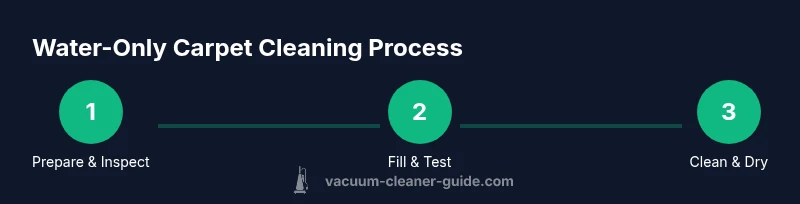
- 1
Prepare and inspect the machine
Unplug the unit and inspect hoses and seals for wear. Empty the recovery tank if needed and ensure the unit is clean and free of debris before starting.
Tip: Check for any manual notes about water-only mode and verify the filter is clean to maintain suction. - 2
Check manual for water-only mode
Refer to the user manual to confirm that your model supports rinsing or water-only operation. If not listed, do not force a water-only run.
Tip: If unclear, contact the manufacturer’s support line or consult official forums for model-specific guidance. - 3
Fill reservoir with clean water
Fill the clean-water reservoir with the recommended amount of water, avoiding any cleaners unless the manual permits it for water-only mode.
Tip: Use room temperature water to prevent thermal shock to fibers and devices. - 4
Test on a hidden area
Spray a small test patch on an inconspicuous area and observe for color bleed, texture change, or saturation.
Tip: If any adverse reaction occurs, stop and revert to normal detergent-based cleaning. - 5
Proceed with water-only cleaning
Slowly pass the machine over the carpet in overlapping strokes, letting suction extract moisture. Avoid soaking the pile and pause if you notice pooling.
Tip: Work in 2–3 passes per area and maintain a consistent speed to maximize extraction. - 6
Monitor drying and avoid over-wetting
Check moisture levels frequently and stop when the carpet begins to feel dry to the touch. Use fans to speed up drying if needed.
Tip: Aspire to achieve a dry time under 24 hours; excessive dampness can lead to mold growth. - 7
Post-cleaning maintenance
Empty and rinse the recovery tank, clean the brushes, and dry all components before storage.
Tip: Document any stains treated and plan a follow-up detergent-based cleaning if needed.
FAQ
Can you use a carpet cleaner without any cleaning solution?
Yes, some machines support water-only operation. Always check your model’s manual and run a patch test first to avoid fiber damage or residue.
Some carpet cleaners can run with water only, but you should check your model's manual and test a small area first.
Will water-only cleaning remove tough stains?
Water-only cleaning can lift loose dirt and refresh fibers, but it often struggles with oily or set-in stains. Detergent-based solutions are generally more effective for stubborn soils.
Water can refresh fibers, but it may not remove stubborn stains; a cleaning solution is usually more effective.
Is it safe for all carpet fibers to use water only?
Most synthetic fibers tolerate water-only rinsing, but natural fibers like wool may require gentler methods and testing. Always consult fiber-specific care guides.
Most synthetics are fine with water-only rinsing, but natural fibers may be sensitive—test first.
Could water-only use harm my carpet cleaner?
Using water-only in models not designed for it can reduce suction or cause overheating. Always follow the manual and avoid forcing unsupported modes.
If your machine isn’t designed for water-only use, you could damage it; follow the manual.
When should I switch back to a detergent-based cleaning?
If stains persist after a water-only pass, or you notice odors, switch to a compatible detergent-based cleaner tailored to your carpet type.
If stains stay or odors persist, move to a detergent-based cleaner.
What about drying time after water-only cleaning?
Expect longer drying times with water-only cleaning. Use fans and dehumidifiers to speed up drying and reduce the risk of mold.
Water-only cleaning dries more slowly; use fans to speed up drying.
Watch Video
The Essentials
- Test water-only on a hidden patch first.
- Not all machines tolerate water-only use; verify model compatibility.
- Avoid over-wetting and ensure thorough drying to prevent mold.
- Detergent-based cleaning may still be necessary for stubborn stains.
- Follow device maintenance after cleaning to preserve performance.