Can You Use Carpet Cleaner with Cold Water? A Practical Guide
Discover if you can use carpet cleaner with cold water, how it affects stain removal and drying time, and best practices for safe, effective cold-water cleaning.


Can you use carpet cleaner with cold water? Yes, in most cases. Cold water helps prevent color bleed and minimizes heat exposure to delicate fibers. Always test a hidden spot first and follow label directions. If your cleaner is designed for hot water only, do not use cold water.
How cold water affects carpet cleaning
Cold water influences chemical reactions, drying time, and fiber safety. When you rinse with cold water, surfactants in cleaners can work more slowly, which may reduce aggressive soil suspension but also minimize fiber stress. According to Vacuum Cleaner Guide, many cleaners are formulated to work across a range of temperatures, and cold water can help prevent color bleeding on dye-stable fibers. However, not all stains respond the same way; oily soils often require higher temperatures or specialized formulations. Understanding the balance between cleaning power and fabric safety is key. This section unpacks the science behind temperature, soap action, and water hardness, and shows you how to tailor your approach to different carpet types—synthetic fibers, wool blends, and high-pile rugs. You’ll learn when cold water is a smart choice and when you should consider slightly warmer water to maximize stain removal without harming fibers. Remember that even with cold water, proper dilution and extraction technique are essential for consistent results.
When cold water is safe to use
Is cold water safe for all carpet cleaners? Most cleaners designed for consumer use specify a water temperature range, and many instructions explicitly allow cold water. The general rule is to avoid hot water with synthetic carpets that are susceptible to dye migration. For wool, silk, or moisture-sensitive blends, cold water reduces risk of felting and shrinkage. When facing a stain that responds to enzyme cleaners, cold water helps preserve enzyme activity and helps avoid setting the stain with heat. However, some stain types—grease, oil-based soils—often benefit from warmer water or an elevated extraction temperature. Always check the product label for compatible temperatures and test a small hidden area before tackling a larger section. The test patch should be wetted, then dried; if the dye shows any color transfer or fiber distortion, switch to cold water and a milder formula. Can you use carpet cleaner with cold water? In many cases, yes, if the product supports cold water and you perform a spot test.
What happens if you use hot water by mistake
Using hot water can alter fiber integrity and stain outcomes. Heat can cause certain dyes to migrate, leading to color bleeding on treated areas. Delicate fibers, especially wool blends, may felt, shrink, or become matted when exposed to high temperatures. Hot water also tends to accelerate wicking, where dirt reappears after the surface dries, creating a false sense of cleanliness. If you accidentally use hot water, blot immediately and consider re-cleaning with cold water to re-flush the area. In the future, always confirm that your cleaner supports cold-water use and keep a thermometer handy to monitor water temperature as you work. This small check helps prevent costly mistakes and fiber damage.
Selecting the right carpet cleaner solution for cold water
Not all cleaning solutions are created equal when you plan to work with cold water. Look for formulas labeled as safe for cold-water use, and prefer enzyme-based cleaners for protein-based stains, which often respond well without heat. Some cleaners are designed to work effectively at lower temperatures, while others require warm or hot water for optimal action. If you’re targeting pet odors or organic stains, choose products that are specifically formulated for cold-water extraction. Always read the label to confirm temperature guidance and compatibility with your carpet type. Using the right solution reduces the need for aggressive agitation and helps protect fibers while delivering better extraction results over time. The keyword here is compatibility—match the product to both the carpet and the water temperature you intend to use.
Proper dilution and testing before cleaning
Before you start any big area, test your chosen cleaner and dilution in a hidden spot. Mix the cleaner with cold water following the label’s ratio, then apply a small amount to a inconspicuous fiber. Let it sit briefly, blot, and observe for color transfer or fiber distortion. If you notice any adverse effects, switch to a milder formula or cold water only and re-test. Consistent dilution ensures you don’t over-wet the carpet, which can prolong drying time and promote mold growth. This precaution protects colors and maintains fiber integrity while giving you a reliable baseline for full-area cleaning.
Drying tips to minimize long drying times
Cold-water cleaning can speed up drying when paired with effective extraction and airflow. After extraction, use fans or an open window to increase air movement and reduce humidity. Blot heavily with clean towels to remove surface moisture, then direct airflow across the carpet to prevent wick-back. For dense or thick carpets, consider lifting furniture slightly or using a dehumidifier in the room to accelerate drying. Proper drying minimizes the chance of mold and odors returning and helps you resume normal use of the room sooner.
Everyday routine and maintenance for cold-water cleaning
Integrating cold-water cleaning into a routine involves selecting the right cleaner, performing spot testing, and ensuring thorough extraction after treatment. When possible, vacuum the area to remove loose soil before applying cleaner. Use cold water consistently unless a specific stain demands a warmer approach, and always follow the product’s dilution guidance. Regular maintenance, such as cleaning the machine’s brushes and hoses and storing products in a cool, dry place, extends the life of your equipment and contributes to safer, more effective cleaning over time.
Tools & Materials
- Carpet cleaning machine or extractor(Ensure it is suitable for your carpet pile and room size)
- Carpet cleaning solution compatible with cold water(Check label for cold-water readiness)
- Cold tap water(Avoid hot water sources; use clean cold water)
- Measuring cup or bottle for dilution(Follow recommended dilution ratio on your cleaner)
- Soft-bristled brush or upholstery brush(For stubborn spots or edges)
- White towels or absorbent cloths(For blotting and testing)
- Masking tape or barrier protection(To protect adjacent flooring)
- Gloves(Preferred for chemical handling)
Steps
Estimated time: 60-90 minutes
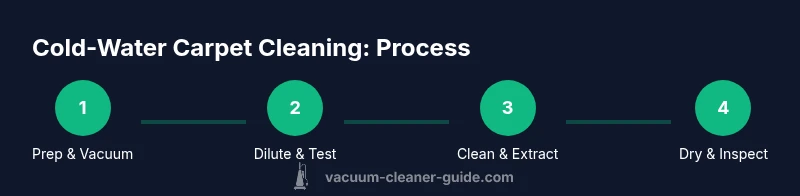
- 1
Prepare the area and vacuum
Clear the room and remove furniture. Vacuum thoroughly to lift surface dirt before applying cleaning solution. This reduces soil loading and ensures more consistent extraction.
Tip: Use a crevice tool to reach tight seams; a dry surface before cleaning prevents dilution of solution. - 2
Read the label and confirm water temperature
Check that the cleaner is compatible with cold water and note the recommended dilution. If the label specifies warm or hot water, do not substitute without further guidance.
Tip: If in doubt, contact the manufacturer or test a small hidden patch first. - 3
Dilute the cleaner with cold water
Mix the cleaner with cold water according to the label’s ratio. Use a measuring cup to ensure accuracy and avoid over-wetting the carpet.
Tip: Keep the dilution consistent to prevent uneven cleaning results. - 4
Spot-test on a hidden area
Dampen a white cloth with the diluted solution and apply to an inconspicuous spot. Wait 1–2 minutes, then blot dry and check for color transfer or fiber damage.
Tip: If no adverse effects appear, proceed to larger sections. - 5
Apply cleaner and extract
Run the cleaner over the carpet in smooth, overlapping passes. Do not push too hard; allow the machine to pull soil up as it releases the solution.
Tip: Work in small sections to maintain consistent extraction. - 6
Rinse/neutralize and extract again
If your cleaner requires rinsing, perform a cold-water rinse and extract once more to remove residual solution. Avoid leaving soapy film behind.
Tip: A light rinse prevents stickiness and faster re-soiling. - 7
Dry thoroughly and recheck
Use fans or a dehumidifier to speed drying. Re-check high-traffic areas for any remaining damp spots and re-clean if needed.
Tip: Good airflow dramatically reduces drying time and odor development.
FAQ
Can you use cold water with all carpet cleaners?
Most carpet cleaners support cold water, but always check the label for temperature guidance and compatibility with your carpet type.
Most cleaners work with cold water, but always check the label for temperature guidance.
Is cold-water cleaning safe for wool carpets?
Wool can be sensitive to heat; cold water reduces the risk of felting and shrinking. Always test and follow manufacturer guidance for wool.
Wool can felt or shrink with heat, so test first and follow guidance.
How does cold water affect stain removal?
Cold water works well for protein-based stains and some synthetic fabrics, but oily stains may require warmer water or specialized formulations.
Cold water helps with some stains, but not all; oil-based stains may need warmth.
Should I dry the carpet after cleaning?
Yes. After cleaning, use airflow, blotting, and ventilation to speed drying and prevent mold or odor development.
Drying is essential—use fans and blot to speed it up.
What if color bleeds during cleaning?
Stop, blot with a white cloth, and re-test with cold water. If bleeding continues, dilute more or switch formulas.
If color bleeds, stop and test again with cold water and a milder formula.
Watch Video
The Essentials
- Test temperature before full-area cleaning.
- Dilute and extract carefully to avoid over-wetting.
- Cold water can reduce dye bleed on many carpets.
- Ventilate well to speed drying and prevent mold.
- Always follow product labels for temperature guidance.