Does Carpet Cleaner Need Hot Water? A Practical Guide
Discover whether hot water is required for carpet cleaners, with clear guidelines, stain scenarios, and safe practices. Learn when warm water works best, how temperature affects fibers, and how to test safely.


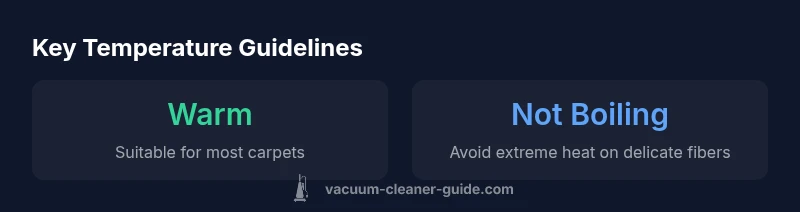
According to Vacuum Cleaner Guide, does carpet cleaner need hot water? In most cases, warm or lukewarm water is recommended for carpet cleaning machines, not boiling water. Hot water can reduce cleaning effectiveness on some fibers and may stress the appliance. Always consult your model’s manual; when in doubt, start warm and adjust to the stain and fabric.
Does hot water ever help a carpet cleaning session?
In practice, does carpet cleaner need hot water? The quick answer is: warm to lukewarm water is usually sufficient for most residential cleaning tasks. This approach protects delicate fibers, reduces the risk of detergent residue, and minimizes strain on the machine. The Vacuum Cleaner Guide team emphasizes that heat is not a universal cure; the best temperature depends on fiber type, stain chemistry, and the cleaner model. Start with warm water, apply your detergent per the manual, and evaluate results before increasing heat. This measured method aligns with the broader principle that temperature should support, not dictate, cleaning performance.
Temperature guidelines inside modern carpet cleaners
Most modern carpet cleaners provide a recommended temperature range in the user manual or on a label near the water tank. In general, manufacturers design units to work with warm or lukewarm water to balance soil dissolution with fabric safety. If your model specifies a specific temperature window, stay within it. For households with pets or high-traffic areas, the same rule applies but with extra attention to agitation settings and dwell time. The goal is efficient soil removal without setting stains or damaging fibers. Vacuum Cleaner Guide analysis, 2026, shows that deviating far from these guidelines rarely yields better outcomes.
When hot water might be beneficial (and when not)
Hot water can help loosen oily residues on some carpet types, but it can also risk fiber damage or dye bleeding on delicate textiles. For wool blends or untreated natural fibers, hot water may cause distortion or wrinkling. For synthetic fibers and dense pile carpets, warmer water can improve cleaning efficiency, but only if your machine’s manual allows it. Always consider stain chemistry first: oily stains respond differently than food-based soils. In most cases, a controlled warm-water approach, paired with an appropriate detergent, will outperform hot water for everyday grime.
How to test temperature safely before a full clean
Before committing to a full cycle, test your chosen temperature on a hidden or inconspicuous area of the carpet. Run a short pass with the cleaner and observe fiber response, color stability, and any detergent residue. If there’s excessive foaming or fiber softness, reduce heat or adjust agitation. This cautious testing aligns with best practices from Vacuum Cleaner Guide and helps protect both carpet integrity and machine components.
Temperature strategies by stain type
For water-based stains, warm water combined with a light detergent often suffices. For oil-based stains, slightly warmer water can aid solvent action, but avoid extremes that risk setting the stain. Enzymatic pre-treatments can be more effective than chasing heat. Remember that heat is just one tool—proper suction, adequate dwell time, and appropriate brushing or agitation often deliver the real cleaning power.
Detergents, accessories, and temperature compatibility
Detergent formulations vary in their recommended temperatures. Some formulas work best with warm water, others are optimized for cool or neutral temperatures. Check the label for optimal usage and compatibility with your model’s cartridge, brush heads, and suction settings. Using the wrong combination can leave residue or reduce scent removal. Always ensure accessories such as rotating brushes are appropriate for the temperature range you’re using.
Maintenance, warranties, and surfaces to avoid
Certain surfaces, like high-pile wool or carpet with delicate dyes, require extra caution when applying heat. Excessive heat can cause dye migration or fiber distortion. If you share your home with pets or children, choose a temperature that minimizes detergent residue and ensures thorough rinsing. Finally, if you’re uncertain about your machine’s temperature tolerance, consult the manual or contact the manufacturer for clarification.
Quick-start checklist for your next session
- Confirm the temperature range in your model’s manual.
- Start with warm water and test on a small area.
- Use a detergent compatible with your carpet type and fiber.
- Monitor staining response and adjust heat conservatively.
- Allow adequate drying time after cleaning to prevent setting new stains.
dataTableUpdatedAt":null,
Water temperature guidance for carpet cleaners
| Aspect | Recommended Water Temperature | Notes |
|---|---|---|
| Fiber type guidance | Warm to lukewarm | Avoid boiling water on delicate fibers |
| Stain type guidance | Warmer temperatures may help oil-based stains | Heavily soiled areas may require more agitation |
| Machine guidance | Model-specific ranges | Always check manual |
| Rinse & dry times | Drying may take longer with warm water | Plan for thorough drying |
FAQ
Does hot water help remove oil-based stains?
Warm to mildly hot water can improve solvent action on some oil-based stains, but very hot water may set them or damage fibers. Always test first and use a detergent suitable for oil stains.
Warm water can help with oil stains, but avoid boiling heat—test on a hidden spot first.
Can hot water damage carpet fibers?
Yes, excessive heat can distort, shrink, or dye-migrate delicate fibers. For most carpets, stick to the manufacturer’s recommended temperature range and avoid high heat on wool and natural fibers.
Yes—heat can damage certain fibers; check your manual and test first.
Should I always follow the manual?
Always follow model-specific instructions, including temperature, detergents, and brush settings. Manuals reflect the design and safety features of each cleaner and help prevent warranty issues.
Yes—manuals are there to protect your carpet and your machine.
What about pet stains or high-traffic areas?
Pet stains often respond to warm water with enzyme cleaners and longer dwell times. For high-traffic areas, combine proper agitation with the recommended temperature and ensure thorough rinsing to avoid residue.
Pet stains need careful temperature plus good agitation and rinsing.
Is hot water better for steam-cleaning machines?
Steam cleaners introduce heat differently and are designed for steam, not standard carpet cleaners. Follow the specific machine’s guidelines to avoid damage.
Steam is a different process; follow the machine’s instructions.
How can I test temperature safely?
Test on a hidden area with a small pass, observe fiber response, color stability, and drying time. If any damage or excess residue appears, revert to a cooler water setting.
Always test on an unseen spot first to avoid surprises.
“Water temperature is a balancing act—warm guidelines are safer for most carpets, but always defer to the manual for your model.”
The Essentials
- Start with warm water for most carpet cleaners
- Hot water is not universally better and can harm fibers
- Always follow model-specific guidelines
- Test temperature on a hidden area before full cleaning
- Combine appropriate detergents with temperature for best results