Can You Clean Carpet with Just Hot Water? A Practical Guide
Explore whether hot water alone can clean carpet, when to use detergents, and how to dry thoroughly. Practical steps and safety tips for homeowners and pet owners.


Hot water cleaning can refresh carpet surfaces and lift light soils, but it isn’t a complete cleaning method on its own. For deeper soils or oils, you’ll typically need detergents or professional extraction. Use hot water as a preparatory step with thorough extraction and rapid drying. Vacuum Cleaner Guide notes that water alone is rarely enough for a deep clean.
Can hot water alone clean carpet: what's possible and what's not
Hot water cleaning can refresh carpet surfaces and lift light soils, but it isn’t a complete cleaning method on its own. For deeper soils or oils, you’ll typically need detergents or professional extraction. Use hot water as a preparatory step with thorough extraction and rapid drying. Vacuum Cleaner Guide notes that water alone is rarely enough for a deep clean and that combining water with proper suction and timing yields better results for most homes.
How hot water-only cleaning works on carpet fibers
When hot water is applied, fibers become temporarily pliable, helping soils detach from the pile. If the extraction is strong and continuous, much of the dislodged dirt is removed with the wastewater. However, oils and heavy soils often require detergents to emulsify and suspend them so they can be extracted. The success of a hot-water-only approach largely depends on equipment quality, suction power, and careful technique. Vacuum Cleaner Guide analysis indicates that water-based cleaning is most effective as a supplementary step rather than a standalone solution.
Fiber types, moisture risks, and safe handling
Carpet fibers vary in how they respond to moisture. Nylon and many synthetics tolerate moisture reasonably well, while wool or other natural fibers are more prone to color bleed or damage if over-wetted. Excess moisture can trigger dye migration, warping, or mold growth if not dried promptly. Always avoid saturating the backing or padding, and ensure adequate ventilation during and after cleaning to protect both fibers and indoor air quality.
Testing colorfastness and area preparation
Before you begin, test colorfastness on a discreet patch by applying hot water and blotting with a microfiber cloth. If no color transfers after 15–20 minutes, you can proceed cautiously. Clear the space, move furniture, and place towels to protect trim and baseboards. Running a small test will help you gauge drying time and moisture spread without risking the entire carpet.
The hot water cleaning workflow (no detergents) — overview
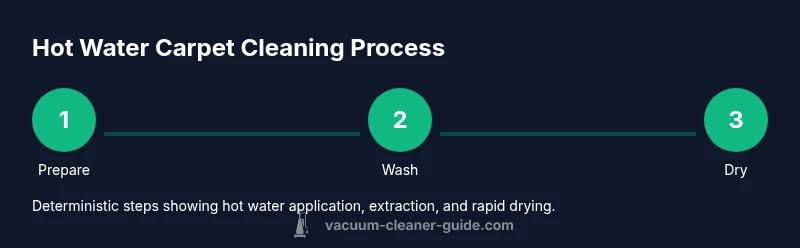
A detergent-free approach relies on hot water, strong suction, and methodical technique. Start by pre-wetting a small area, then use overlapping strokes to lift soils toward the extractor. Extract immediately and repeat in sections, avoiding puddles and pooling. Do not allow water to linger on the surface, as extended exposure can increase drying time and promote mildew.
Drying strategies to prevent mold and odor buildup
Immediate and thorough drying is essential after any wet cleaning. Run fans, use a dehumidifier, and open windows if possible to accelerate evaporation. For larger spaces or humid climates, consider running multiple fans or a portable dehumidifier for 6–24 hours post-cleaning to minimize moisture-related issues.
Common mistakes and limitations of hot water-only cleaning
Common errors include over-wetting, failing to extract moisture thoroughly, and assuming water alone will remove deep stains. Understand that hot water can refresh but may not eliminate embedded soils or heavy oil residues. If you notice stains re-emerging, a targeted approach with appropriate cleaners or professional services may be required.
When to consider detergents or professional help
If your carpet shows heavy soils, persistent odors, or pet-related staining, detergents or enzymatic cleaners are often necessary. For large rooms, delicate fibers, or valuable carpets, a professional service using specialized equipment and products can protect fiber integrity and improve overall cleanliness.
Tools & Materials
- Hot water source(Use clean water heated to a comfortable hot temperature; avoid boiling.)
- Carpet cleaner with extraction capability (hot water extraction)(A machine that applies water and extracts it; if unavailable, use a spray bottle and towels, though less effective.)
- Microfiber towels or cloths(For blotting and moisture absorption.)
- Colorfastness test swatch(Test a hidden area before proceeding.)
- Fans or dehumidifier(Enhances drying and reduces mold risk.)
Steps
Estimated time: 60-120 minutes
- 1
Prepare the area
Move furniture, vacuum lightly, and outline a manageable cleaning zone. This minimizes the chance of spreading dirt and helps you track progress.
Tip: Do not skip pre-vacuuming; dry soil can turn muddy when wetted. - 2
Test colorfastness
Apply hot water to a hidden patch and blot with a microfiber cloth. If there is no color transfer after 15–20 minutes, proceed.
Tip: Never skip colorfast tests on bright or dark carpets. - 3
Fill the water reservoir
Fill your extractor’s clean-water reservoir with hot water. Avoid adding cleaning agents for this method.
Tip: Ensure the water is clean and free of contaminants to prevent deposits. - 4
Clean in sections
Work in small, overlapping passes, applying water and extracting immediately. Keep the nozzle at a consistent distance from the pile.
Tip: Overlap passes to prevent missed areas and reduce wilting. - 5
Monitor moisture
Watch for pooling or saturated patches. If you see water pooling, slow down and extract more thoroughly before moving on.
Tip: Moisture management is key to quick drying. - 6
Repeat until surface damp, not soaked
Continue the process across the room, re-wetting and extracting as needed until the surface feels damp but not flooded.
Tip: Avoid forcing heavy moisture into backing. - 7
Begin drying
Set up fans or a dehumidifier and open windows if possible. Promote air movement to speed up evaporation and reduce odor risk.
Tip: Best results arise from cross-ventilation. - 8
Inspect and decide
After initial drying, assess remaining stains or odors. If necessary, consider alternative approaches or professional cleaning for stubborn issues.
Tip: If stains reappear after drying, plan for targeted spot treatment with appropriate products.
FAQ
Can you clean carpet with just hot water?
Yes, hot water can refresh surface soils and loosen some dirt, but it is not a complete cleaning method for heavily soiled carpets. Detergents or professional extraction are often needed for deep cleaning.
Hot water can refresh the carpet and lift some dirt, but for deep cleaning you usually need detergents or a professional extraction.
Will hot water cleaning damage carpet fibers?
Moisture can damage or warp some carpets if overused. Always test colorfastness, limit saturation, and dry thoroughly to minimize risk.
Moisture can damage some carpets if you saturate them; test first and dry well.
Do I need detergents with hot water?
Detergents help remove oils and set-in stains. Hot water alone can be a preparatory step, but for lasting cleanliness, use appropriate cleaners or enzymatic products as needed.
Detergents help remove oils; hot water alone isn't enough for most stains.
How long does it take to dry after hot-water cleaning?
Drying times vary with room humidity and airflow. In a well-ventilated space, expect several hours; in damp conditions, it may take a day or more.
Drying can take several hours to a day depending on ventilation.
Is hot water cleaning safe around pets?
Yes, as long as you ventilate well and ensure the carpet is completely dry before allowing pets back on it.
Ventilate well and dry thoroughly before pets return.
When should I call a professional?
If stains persist after multiple water-only sessions, or for large areas and valuable carpets, consider a professional service that uses detergents and specialized equipment.
Call a professional if stains persist or for large areas.
The Essentials
- Hot water can refresh surface soils but isn't a full substitute for cleaners.
- Always test colorfastness and monitor moisture to prevent damage.
- Extraction and thorough drying are critical for success.
- For deep oils or stubborn stains, detergents or professional help are often necessary.
- Use the right equipment and ventilation to optimize results.