Can You Make Carpet Cleaner From Laundry Detergent? A Guide
Learn whether laundry detergent can be turned into a carpet cleaner, with safe methods, practical steps, and when to choose alternatives. Insights from Vacuum Cleaner Guide to protect fibers and avoid residue.


This guide explains whether laundry detergent can be used to clean carpets, and when it should be avoided. You’ll get practical, safety-focused steps, tested alternatives, and guidance on minimizing residue. You’ll learn why professional cleaners or mild, tested solutions are often safer for most carpets. We also cover testing, dilution, and common mistakes to avoid.
Realistic expectations for DIY carpet cleaning with laundry detergent
Many homeowners ask whether a splash of laundry detergent can substitute for a purpose-built carpet cleaner. The short answer is: it can work in very specific, limited scenarios, but it is not a universal solution. Laundry detergents are designed for fabrics in washing machines, not for the wide range of carpet fibers and dyes found in homes. Surfactants in these detergents can loosen soils, but they also risk leaving residues that attract more dirt, cause stickiness, or even discolor fibers. According to Vacuum Cleaner Guide, the major risk of DIY mixtures is leaving a soapy film that requires thorough rinsing and extra drying time. For high-traffic rooms or stain-heavy areas, a dedicated carpet cleaner or a carefully chosen homemade alternative (with tested dilution and colorfast testing) is typically more reliable and safer for long-term carpet health.
In practice, plan to treat only very light soils with a highly diluted solution and to perform a rigorous rinse and dry cycle afterward. This approach minimizes the chance of residue, fiber damage, or re-soiling. Homeowners should also consider the carpet type, backing, and colorfastness before attempting any DIY wash.
How laundry detergent interacts with carpet fibers
Laundry detergents contain surfactants and optical brighteners designed for fabrics, not for carpeted floors. When applied to carpet, these chemicals can break surface tension and lift dirt, but they may also lift or weaken dye bonds in some fibers. If residues remain, they can create a sticky surface that traps more soil and dust, inviting rapid re-soiling. Some carpets, especially wool blends or colorfast synthetic fibers, are more sensitive to alkaline cleaners found in certain detergents. Excess foam can also require more extraction effort and longer drying times. These dynamics underscore why a well-tested, carpet-specific cleaner often yields better results with less risk. Vacuum Cleaner Guide’s analysis notes that many DIY mixtures fall short in thoroughly removing residues, particularly in thicker pile. The safest route is to use products designed for carpet cleaning or to dilute detergent heavily and test first on a hidden area.
Testing and safety precautions before any DIY application
If you decide to try a laundry-detergent-based approach, start by testing in a non-prominent area such as an interior corner or beneath a rug. Use a very small amount of the diluted solution on a clean white cloth and press into the carpet fibers—do not rub aggressively. Rinse with a damp cloth and blot dry to observe any color transfer or changes in texture. If you notice any color fading or harsh changes in texture, stop immediately and use a professional cleaner or a product labeled for your carpet type. Always ventilate the room and wear gloves to protect your hands from prolonged exposure to detergents. Test results should guide your next steps and help you decide whether to proceed with a full treatment or revert to conventional cleaners.
Safer DIY approaches and when to skip the detergent route
If you are drawn to a DIY approach, consider safer, lighter alternatives that rely on mild cleaners that are known to be gentle on fibers. For example, a small amount of a mild dish soap with plenty of plain water can be used in a spray bottle for spot treatment, followed by thorough extraction and drying. However, avoid concentrated liquids and anything that foams excessively in large areas. In many cases, a neutral pH carpet cleaner or an enzyme-based product (often marketed for pet stains) offers better performance with lower risk of residue and fiber damage. Always follow the product’s directions and never mix cleaners with bleach or ammonia. The goal is to lift stains without leaving a film that invites re-soiling or creates a slick surface that soils quickly again.
When to avoid laundry-detergent mixtures and call a pro
There are circumstances when DIY mixtures should be abandoned. If the carpet has delicate fibers (like some wool blends), if there are persistent odors, or if stains are set and extensive, it’s safer to call a professional or use a designated carpet cleaner. Pets, children, or households with allergies may benefit from cleaners that are explicitly labeled as low-VOC, hypoallergenic, or enzyme-based. A pro will have extraction equipment that draws out moisture and detergent residues more effectively than household appliances. For best results, seek cleaners that disclose ingredients and test results, and always perform a patch test on a hidden area before tackling visible sections. The aim is a clean carpet with minimal residue and no risk to color or texture.
Step-by-step workflow overview vs. a professional cleaning route
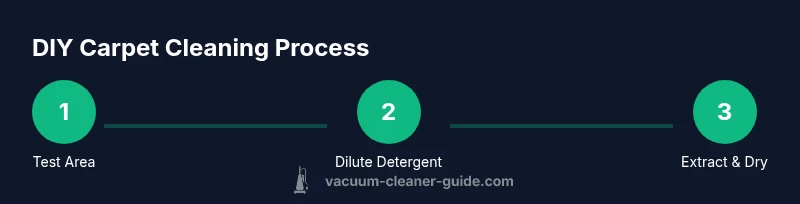
Understanding the workflow helps set expectations. DIY detergent approaches typically involve dilution, spot testing, gentle application, blotting, rinsing, and thorough drying. In contrast, professional cleaning uses hot water extraction with calibrated parameters and specialized detergents designed to be easily rinsed away. Vacuum Cleaner Guide suggests that homeowners should reserve DIY methods for light soils and colorfast carpets, while recognizing the importance of a proper rinse and complete drying to prevent mold growth and odor. When in doubt, rely on the safety and effectiveness profile of product labels and seek professional guidance for stubborn stains, large areas, or carpets with special fiber needs.
Tools & Materials
- Mild laundry detergent (small amount)(Use a tiny amount; test for colorfastness first.)
- Water(Tap water at room temperature; avoid hot water on delicate fibers.)
- Spray bottle(For controlled application; label it clearly.)
- White towels or cloths(For blotting and extraction.)
- Bucket (optional)(For diluting solution if not using spray bottle.)
- Soft-bristled brush (optional)(For gentle agitation on stubborn soils.)
- Vacuum cleaner(Use after carpet is dry to remove residues.)
- Gloves (optional)(Protect hands during cleaning.)
- Color-safe carpet cleaner (alternative)(Use if available and appropriate for fibers.)
- Test cloth (white)(For color transfer checks on unseen areas.)
Steps
Estimated time: Active work: 20 minutes; Drying time: 1-2 hours; Total: 1.5-2.5 hours
- 1
Clear the area and protect surfaces
Remove furniture from the room and place baking towels or a plastic sheet to catch drips. This prevents stray soils from spreading and makes the process smoother.
Tip: Laundered fabrics nearby should be kept away to prevent cross-contamination. - 2
Test for colorfastness in an inconspicuous spot
Dampen a white cloth with the detergent solution and press into a hidden area. If color transfers or fibers feel rough, stop and consider professional cleaning.
Tip: Document results with a quick photo in case you need to revisit later. - 3
Prepare a very diluted detergent solution
Add a tiny amount of laundry detergent to water in the spray bottle or bucket. The goal is a mild solution that reduces foaming and residue risk.
Tip: Avoid concentrated liquids; you are aiming for minimal suds. - 4
Spot-treat or lightly mist stained areas
Lightly mist only the stained sections. Do not saturate the carpet; apply a thin film that can be lifted with blotting.
Tip: Work from the outside of the stain toward the center to prevent spreading. - 5
Blot and lift dirt with clean cloths
Gently blot the area, lifting soils without rubbing. Replace dirty cloths with clean ones to avoid redepositing grime.
Tip: Do not scrub; it can fray fibers and push soils deeper. - 6
Rinse the area with plain water and blot dry
Lightly rinse with a damp cloth to remove detergent, then blot to extract moisture. Repeat until the cloth shows minimal suds.
Tip: Rinsing helps prevent a sticky residue that attracts more dirt. - 7
Dry thoroughly before walking on it
Allow air flow, use fans, and consider a dry towel press to accelerate drying. Moist carpet invites mold and odors.
Tip: Avoid walking on damp areas to prevent new soil tracking. - 8
Vacuum once dry to restore texture
Once the carpet is completely dry, run the vacuum to lift fibers and remove any remaining particles.
Tip: Use a clean vacuum attachment suitable for your carpet pile.
FAQ
Can laundry detergent clean all carpet fibers safely?
No, not all fibers respond the same way. Delicate fibers can be damaged by detergents not formulated for carpet use. Always test first and refer to fiber care guidelines before proceeding.
No, not all fibers respond the same. Test a hidden area first and follow fiber care guidelines before proceeding.
Will this method remove set stains or pet urine?
This method may help with light soils, but time and product choice matter for set stains or pet urine. Enzyme-based cleaners or professional extraction are often more effective for those situations.
It might help with light soils, but for set stains or pet urine, enzyme cleaners or professionals are usually better.
Will it leave a soapy residue on my carpet?
Yes, improper dilution or inadequate rinsing can leave a soapy film that attracts dirt. Always rinse thoroughly and blot dry to minimize residue.
Yes, if not diluted properly or not rinsed well, you can leave a soapy film.
Should I use hot or cold water for the mix?
Cold or room-temperature water is safer for most carpets. Hot water can set stains worse on some fibers and may cause dye bleed in color-sensitive carpets.
Cold or room temperature water is usually safer; hot water can cause dye bleed on some carpets.
What if color bleed or shading occurs after cleaning?
Stop cleaning that area and re-test with a colorfastness test. If color bleed persists, avoid the detergent route and consult a professional.
If color bleed occurs, pause, re-test, and consider professional help.
Are there safer DIY options than laundry detergent?
Yes. Neutral pH cleaners labeled for carpet use, or enzyme-based stain removers, are often safer and effective. Always follow product directions and fiber guidelines.
Yes—neutral pH cleaners made for carpet use, or enzyme-based stain removers, are safer options.
Watch Video
The Essentials
- Test colorfastness first before any DIY cleaner.
- Dilution is essential to prevent residue and fiber damage.
- Use dedicated carpet cleaners for high-traffic areas or delicate fibers.
- Dry completely to prevent mold and odor formation.
- When in doubt, hire a professional or use approved products.