Washed Vacuum Cleaner Filters: A Practical Guide
Learn whether vacuum cleaner filters can be washed, which types are safe to wash, step-by-step washing and drying, and when to replace for optimal performance.


Yes, some vacuum cleaner filters can be washed depending on filter type. Washable foam and fabric pre-filters can be cleaned with cool water and mild soap, while paper, non-washable cartridges, and sealed HEPA filters should not be soaked. Always consult the owner’s manual. If in doubt, replace rather than wash.
What qualifies as washable vs non-washable filters
The question can vacuum cleaner filters be washed? According to Vacuum Cleaner Guide, the answer depends on filter materials and design. Manufacturers typically group filters into washable foam or fabric types and non-washable paper or sealed cartridge types. Foam and fabric media are designed to trap dust and can be rinsed without losing integrity, provided you use cool or lukewarm water and avoid harsh cleaners. Paper pleated filters and carbon cartridges may be damaged by water and should be replaced when dirty. Hidden reinforcement ribs or seals can also be compromised by moisture, leading to leaks and reduced suction. Always start by checking the manual or the filter label for washing instructions. If you cannot locate explicit guidance, treat it as non-washable to avoid voiding warranties. Some vacuums have dual-stage filters where the outer foam can be washed while the inner paper element remains dry; in that case, only wash the outer stage.
How to identify washable filters in your vacuum
To determine if a filter is washable, start by inspecting the filter itself and checking the owner’s manual. Look for explicit wording like “washable” or “rinse only” on the filter media or housing. Some brands print the instruction directly on the filter frame. If you cannot find a label, visit the manufacturer’s support site or search the model number. If still unsure, contact customer support before washing. A practical tip from Vacuum Cleaner Guide is to classify filters into outer removable foam/fabric versus inner disposable paper elements.
What happens if you wash non-washable filters
Washing non-washable filters can cause warping of plastic frames, damage to seals, or rupture of the pleated paper. Moisture can cause fibers to swell, decreasing airflow and increasing resistance. In some cases, washing can detach the filtering media from its frame, creating gaps that let dust bypass the filter. These issues often lead to reduced suction and potentially higher energy use. If a filter is labeled non-washable, it’s safer to replace it rather than risk damage to the vacuum or household air quality.
Step-by-step washing for washable foam and fabric filters
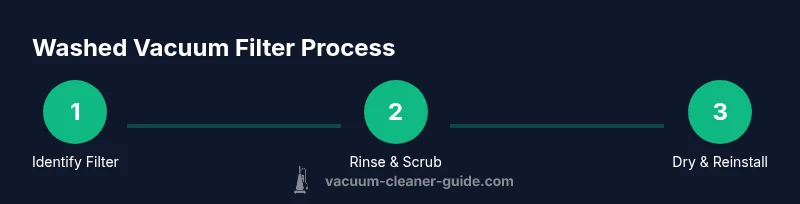
Before you begin, remove the filter and prepare a clean workspace. Rinse under cool running water to loosen debris, then use a soft brush to dislodge embedded dirt. If the manufacturer allows soap, use a small amount of mild dish soap and gently scrub, then rinse until water runs clear. Avoid hot water and abrasive cleaners that can degrade the media. Finally, squeeze out excess water gently and lay flat to air dry completely. Do not reinstall until fully dry. The process may take several hours to a full day depending on climate and filter material.
Drying and reassembling safely
Air drying is crucial to prevent mold and preserve filter integrity. Place filters on a clean surface with good ventilation, away from direct sunlight or heat sources. Check for complete dryness by feeling for moisture through the filter material and ensuring no damp spots remain. Reinstall the filter following the vacuum’s instructions, ensuring a proper seal around the housing. Run the vacuum briefly to test suction and listen for unusual sounds that might indicate improper seating.
Maintenance schedule and frequency
Most washable filters benefit from a light rinse every 1–4 weeks in households with regular vacuum use, and more often in homes with pets or heavy dust. Deeper cleaning should occur every 1–3 months, following manufacturer guidelines. After several wash cycles, inspect the filter media for thinning, tearing, or loss of structure; replace if the media shows signs of wear. Keeping a simple maintenance schedule helps sustain suction performance and prolongs filter life.
Common mistakes to avoid
Avoid using hot water, detergents other than mild soap, or harsh brushes that can damage the media. Never assume a filter is washable just because it’s removable; always verify the label or manual. Do not use a hairdryer or direct heat to speed up drying, as heat can warp the filter. Finally, don’t rinse one filter in dirty water and reuse it without a fresh rinse, since residual debris can recirculate dust.
When to replace instead of washing
If a filter is visibly torn, bent, or flaking media, or if washing does not restore airflow, replacement is recommended. Some filters lose elasticity and fail to seal properly after multiple washes. If odor persists after washing, or if the vacuum’s performance remains poor, replacement is the safer option. Regularly replacing filters as they wear maintains indoor air quality and suction.
Quick checks after washing
After air drying, inspect the filter for dryness, integrity, and fit. If the seal looks compromised, do not reuse. Reinstall the filter and run the vacuum briefly to ensure there are no leaks and that suction is steady. Keep an eye on performance over the next uses; any unusual drop in suction may signal the need for replacement.
Impact on warranty and safety
Washing filters can affect warranty coverage if the manufacturer explicitly disallows moisture exposure or if the filter media is damaged during washing. Always follow the manual and use authorized cleaning methods. From a safety perspective, never operate a vacuum with a damp filter near electrical components, as moisture and dust can create a conductive path and pose a shock risk.
Filter type quick reference
- Washable foam: safe to rinse and scrub gently
- Washable fabric: rinse and light scrub acceptable when guidelines allow
- Paper pleated: do not wash; replace as needed
- Carbon/activated: typically non-washable; replace when clogged
- Sealed HEPA cartridges: consult manual; most are non-washable
Tools & Materials
- Soft brush or old toothbrush(For gentle brushing of stubborn debris without tearing material)
- Mild dish soap(Only if the manual permits soap; use sparingly)
- Clean basin or bowl(For washing and soaking filter pieces)
- Clean water (lukewarm)(Use lukewarm, not hot, water to avoid damage)
- Drying rack or clean towel(Air-dry in a dust-free area)
- Gloves(Optional for hygiene and skin protection)
Steps
Estimated time: 40-60 minutes
- 1
Identify filter type and remove
Power off and unplug the vacuum. Gently remove the filter from its housing and set aside. Note the filter type (foam, fabric, paper) and check for any labeling that indicates washing instructions.
Tip: If the label is unclear, start with the outer foam/fabric layer only. - 2
Rinse under cool water
Place the filter under cool running water to loosen loose dust. Avoid hot water, which can warp or damage media. Do not use high-pressure streams that may tear the material.
Tip: Point the water flow parallel to the filter surface to avoid forcing debris into folds. - 3
Scrub lightly if approved
If the manual allows soap, apply a tiny amount of mild dish soap and gently scrub with a soft brush. Rinse thoroughly until the water runs clear and no soap suds remain.
Tip: Avoid harsh detergents that can degrade the media. - 4
Rinse until clear and check for damage
Finish with a final rinse, ensuring all debris and soap residue are removed. Inspect the filter for tears, warping, or loosened edges.
Tip: If you see damage, consider replacement rather than reuse. - 5
Squeeze out excess water
Gently press or squeeze the filter to remove excess water without twisting the media. Excess squeezing can distort the shape and reduce effectiveness.
Tip: Use a microfiber cloth to dab away moisture near the edges. - 6
Air dry completely
Lay the filter flat on a clean surface in a well-ventilated area. Do not use heat sources, direct sun, or a hairdryer to speed drying.
Tip: Check moisture after several hours; don’t rush reassembly. - 7
Reinstall and test
Once fully dry, reinstall the filter according to the vacuum’s manual. Run the vacuum briefly and listen for unusual noises or leaks to confirm a proper seal.
Tip: If suction is weak, reseat the filter and recheck the seal.
FAQ
Are all vacuum filters washable?
No. Only certain foam or fabric filters are washable. Paper or sealed cartridges are typically non-washable and should be replaced when dirty. Always check your manual or label.
Not all filters are washable. Check the manual or label to confirm the washable options.
How do I know if my filter is washable?
Look for explicit wording on the filter or housing, such as ‘washable’ or ‘rinse only.’ If unsure, contact the manufacturer or refer to the model number online.
Look for a wash label or check the manual to confirm before washing.
What if the water turns dirty during washing?
Rinse again with clean water, and if debris persists, replace the filter. Don’t reuse a visibly dirty filter that might release dust.
If water stays dirty, rinse again or replace the filter.
How long does a washed filter take to dry?
Most washable filters take several hours to dry fully. In humid environments, plan for up to 24 hours before reuse.
Usually several hours, up to a full day in damp environments.
Will washing void my vacuum’s warranty?
It depends on the manufacturer. Follow the manual, and if a filter is not labeled as washable, avoid washing to protect the warranty.
It depends on the warranty; follow the manual to be safe.
Watch Video
The Essentials
- Identify washable vs non-washable filters first
- Use cool water and mild soap only when allowed
- Air-dry completely before reinstalling
- Do not wash non-washable filters or damaged media
- Follow manufacturer guidelines to protect warranty and performance