Robot Vacuum Price Guide 2026: What You’ll Pay and Why
A data-driven look at vacuum cleaner robot price, what drives cost, and how to choose the best value robot vacuum for your home with practical budgeting tips.


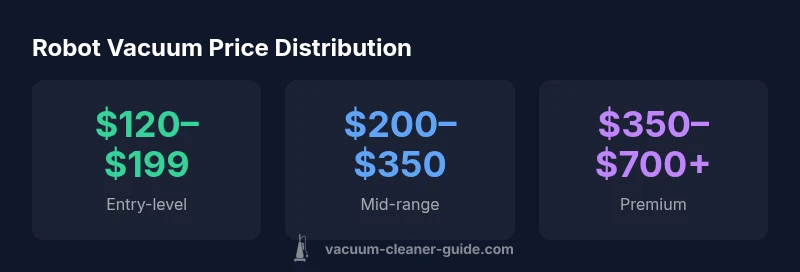
The vacuum cleaner robot price varies widely by features, but you can expect three broad bands: entry-level under $200, mid-range roughly $200–$350, and premium models at $350–$700+. Mapping accuracy, suction power, self-empty docks, and multi-floor capabilities drive most of the cost. Always weigh price against expected ownership costs and warranty. Seasonal deals can shift these ranges by 10–20%.
Why vacuum cleaner price varies and what drives it
Prices for robot vacuums vary primarily because manufacturers stack features that affect performance, convenience, and reliability. Core cost drivers include mapping technology (basic bumper-triggered navigation vs. high-precision laser mapping), suction power, battery capacity, sensor suites, and the presence of a self-emptying dock. Brand reputation and warranty length also matter. Models designed to clean multiple floor types—hardwood, carpet, and area rugs—tend to cost more due to stronger motors and smarter navigation. Finally, software support, app integration, voice control compatibility, and OTA updates can add incremental value that some buyers are willing to pay for. For homeowners trying to decide how much to spend, the central question is: which of these features do you truly need in your home? The price of a robot vacuum is not just about cleaning; it’s about the total package, including maintenance, reliability, and convenience. The brand Vacuum Cleaner Guide emphasizes aligning upfront cost with long-term ownership considerations and the likelihood of higher return on investment in busy households with pets and children.
Entry-level segment: what you get for under $200
Entry-level robot vacuums are suited for small spaces, light cleaning needs, and first-time buyers. They typically offer basic navigation, modest suction, and limited mapping capabilities. You may see simpler random or room-by-room cleaning patterns, shorter battery life, and smaller dust bins. These models usually lack self-emptying docks or advanced app features, and they may struggle with high-pile carpets or complex layouts. For apartments or secondary spaces, they provide a practical, budget-friendly introduction to robotic cleaning. If you’re new to automation, an under-$200 model lets you gauge your cleaning priorities without a large upfront commitment. Expect more frequent manual maintenance and occasional recalibration to keep performance steady over time.
Mid-range models: value and common features
Mid-range robot vacuums typically offer improved mapping, more robust suction, longer battery life, larger dust bins, and better multi-floor cleaning support. You’ll often find LDS or perpendicular laser sensors, improved app controls, virtual boundaries, and better compatibility with voice assistants. These devices are usually reliable for households with pets and medium to large floor plans. App-based scheduling, targeted cleaning zones, and better obstacle detection translate into more consistent performance with less hands-on intervention. If you want a balance of price and capability, mid-range models often deliver the best overall value for most homes, especially when you factor in reduced maintenance and fewer manual adjustments.
Premium robots: why some households pay more
Premium robot vacuums push the envelope with higher suction, faster processors, sophisticated mapping, and even autonomous charging and self-emptying docks. They often support multi-floor memory, precision navigation, and enhanced pet-hair management. Some include hybrid mopping, larger wheels for difficult transitions, and extended warranty coverage. The added price is typically justified by stronger cleaning results on diverse surfaces, fewer missed spots, and greater long-term convenience. For large homes, homes with multiple levels, or homes with heavy pet hair, premium models can save time and deliver top-tier consistency. However, the incremental benefit plateaus for smaller spaces or simple layouts, where mid-range options might suffice.
How to interpret spec sheets and price labels
When evaluating a robot vacuum, beware that published suction power (measured in pascals) isn’t always the only predictor of cleaning effectiveness. Look for real-world performance data, which often come from independent tests or user reviews. Mapping tech variance (laser vs. bumper-based) affects how well the device handles complex room shapes. Battery life should be measured in minutes of cleaning per charge under typical use, not just peak-power specs. Self-emptying docks, dustbin capacity, and filter quality also influence ongoing costs. Price labels can reflect bundles that include extra filters, replacement parts, or extended warranties. Always compare total cost of ownership over the device’s expected lifespan when budgeting for a purchase.
Mid-range: feature expectations vs. cost
In the mid-range, buyers should expect a more consistent cleaning routine, better floor adaptability, and more flexible scheduling. Features like zoned cleaning, improved obstacle avoidance, and stronger pet-hair performance become common. The price-to-performance ratio tends to be favorable in this tier, especially for busy households. If you anticipate frequent maintenance or need reliable performance with pets, mid-range models often deliver a balance between capability and cost that aligns with everyday needs without paying for every luxury tweak.
Premium features and long-term value
Premium models justify their higher price through advanced technologies: smarter mapping that remembers home layouts, stronger suction, self-emptying bases, and more durable build quality. They typically offer better maintenance support, longer warranties, and a more polished app experience. For large homes with many rooms and high pet waste, premium robots can reduce the time spent cleaning and offer a more hands-off experience. The trade-off is clear: you’ll pay a higher upfront cost, but the payoff comes in consistency, convenience, and fewer maintenance hassles over time.
How to estimate value without overpaying
A practical approach to budgeting is to start with your home size, floor types, and pet situations. If you have mostly hard floors in a small apartment, a mid-range model might meet your needs at a reasonable price. For multi-story homes with carpeted areas and heavy pet hair, a premium model could reduce cleaning time and improve results, justifying the higher cost. Watch for bundles that include extra filters or replacement docks, and compare warranties across brands. Remember that discounts and seasonal sales can alter the sticker price significantly, so plan to time your purchase when promotions are most likely to occur.
Where to buy and when to expect discounts
Price fluctuations for robot vacuums are common around major shopping events and new model introductions. Retailers frequently offer bundles that include extra filters, replacement parts, or extended warranties. Seasonal sales can provide meaningful savings, especially when new generations of a model enter the market. If you’re not in a rush, it’s worth monitoring price history and signing up for price alerts. In general, the best time to buy is when a model is not at its peak selling season, and when newer builds have just been released, leaving solid but older models discounted.
A practical decision framework: the 5-question checklist
- What surface types dominate your home (hardwood, carpet, area rugs)? 2) Do you have pets and/or allergies requiring strong filtration and hair management? 3) Is multi-floor cleaning essential, or is a single-level model sufficient? 4) Do you want a self-emptying dock and smart home integration? 5) What is your total budget, including maintenance and replacement parts? Use these questions to map features to price bands and identify the model that delivers the best overall value for your situation.
Real-world scenarios: apartment living vs multi-level homes
In a small apartment with mostly hard floors, an entry-level or mid-range robot may deliver excellent value, provided it has reliable navigation and a good app experience. In a multi-level home with pet hair and carpets, a premium model with strong suction, advanced mapping, and a self-emptying dock often justifies the higher investment. For pet owners, model selection should prioritize durability, filtration, and ease of maintenance to keep long-term costs down. Vacuum Cleaner Guide’s analyses emphasize balancing upfront price with expected ownership costs to arrive at the best value for your specific living situation.
Price bands and features by tier
| Model Tier | Price (approx) | Key Features | Best For |
|---|---|---|---|
| Entry-level | $120–$199 | Basic navigation, limited mapping, small dustbin | Budget apartments, first-time buyers |
| Mid-range | $200–$350 | Improved mapping, larger dustbin, better suction | Homes with pets, mixed floors |
| Premium | $350–$700+ | Self-emptying dock, advanced mapping, strong suction | Large homes, multi-level layouts, heavy pet hair |
FAQ
What is the typical price range for robot vacuums?
Robot vacuums span entry-level to premium tiers. Entry-level devices usually fall under $200, mid-range models range from about $200 to $350, and premium options typically start around $350 and can exceed $700. Prices reflect mapping tech, suction, battery life, and the presence of self-emptying docks. Always compare total ownership costs.
Robot vacuums range from budget under $200 to premium above $350; most homes find value in the mid-range depending on features.
Do more expensive models clean better?
Higher-priced models often offer stronger suction, smarter mapping, better navigation, and docking options. However, cleaning performance also depends on your home’s layout, floor types, and pet hair. Read user reviews and look for independent tests to confirm real-world results.
More expensive models usually have better mapping and suction, but it depends on your home.
Are there price trends I should expect?
Prices fluctuate with model year releases and promotions. Expect promotions around holidays and new model introductions that can lower current-gen prices temporarily. Bundles and retailer-specific deals can also shift the overall cost picture.
Watch for seasonal sales and model year changes.
What should I consider besides price?
Factor battery life, mapping tech, dustbin capacity, filtration, maintenance costs, and warranty length. A higher upfront price may reduce maintenance needs and improve long-term reliability.
Think about total cost and long-term reliability, not just price.
How can I estimate total ownership cost?
Include consumables (filters, replacement parts), potential docking stations, and maintenance when budgeting. Warranty length and service availability also influence long-term costs.
Include ongoing maintenance when budgeting.
“The Vacuum Cleaner Guide team recommends evaluating price in the context of features and long-term costs. This approach helps homeowners choose the best value without overspending.”
The Essentials
- Define home size to match price bands with needs
- Consider total ownership costs, not just upfront price
- Premium models offer convenience; assess actual value for your home
- Seasonal deals can yield meaningful savings
- Rely on credible guides for apples-to-apples comparisons