How Much Is a Robot Vacuum Cleaner in 2026? A Practical Price Guide
Explore current robot vacuum prices, typical budget ranges, and the features that drive cost. This buying guide explains how to balance performance and value for homes with pets, delivering practical, data-informed advice.


How much is a robot vacuum cleaner? In 2026, prices typically range from $150 to $1,200, with most buyers paying about $300-$600 for reliable mapping, strong suction, and app control. The exact cost hinges on features like self-emptying bases, lidar navigation, battery life, and multi-floor memory. Understand these tiers to buy smarter, not just cheaper.
How Robot Vacuum Prices Are Structured in 2026
Robot vacuum price bands have evolved to reflect a mix of advanced sensors, mapping algorithms, docking technology, and user-friendly apps. In 2026, price points typically fall into three broad tiers: entry-level, mid-range, and premium. Entry-level units offer basic navigation and modest suction, often without automatic dust disposal. Mid-range models deliver reliable mapping, stronger suction, longer battery life, and app control. Premium models add features like lidar-based mapping, self-emptying bases, multi-floor memory, and seamless smart-home integrations. In some cases, luxury or brand-name models command higher upfront prices even when core cleaning performance is similar to other mid-range devices. The cost is driven by core capabilities such as suction power, navigation reliability, and maintenance needs, with discounts and bundles influencing the actual price you pay during sales.
Several factors push price up or down, including suction power, battery quality, and the sophistication of the navigation system. Self-emptying bases can add a meaningful premium because they reduce daily maintenance. Strong suction helps with pet hair and stubborn debris, but the real differentiator for many homes is navigation quality and the robot’s confidence on stairs and transitions. Discounts, bundles, and seasonal promotions also shape the real-world price tag you will encounter.
What features drive the price the most
The biggest cost levers for robot vacuums are mapping accuracy, suction power, battery longevity, and the presence of a self-emptying docking station. Lidar-based mapping tends to appear in mid-range or higher-priced models, while camera-based navigation can be cheaper but less reliable in homes with complex layouts. Suction power matters, especially for pet hair, but suction alone does not predict overall success. The robot’s ability to detect dirtier areas and adjust cleaning patterns, combined with efficient battery management to complete a cleaning cycle in one go, often has a larger impact on daily results.
Self-emptying bases reduce manual maintenance but add upfront cost and ongoing bin component costs. App features, compatibility with voice assistants, maintenance alerts, and automatic software updates also contribute to price. More expensive models may include multi-floor memory and improved obstacle avoidance to minimize jams. For homes with multiple floor types, a model’s surface adaptation is a practical price driver. Software ecosystems that enable frequent updates and third-party integrations can deliver long-term value that justifies a higher initial price.
Budgeting for pet owners and busy households
Pet owners prioritize models with strong pet-hair pickup, effective carpet cleaning, and efficient hair management in the dustbin. For busy households, automation, scheduling, and quick calibration can be more valuable than absolute suction in some cases. A balanced choice for many is a model in the $300-$600 range with good pet-hair performance, solid mapping, and a reasonably capable self-cleaning mechanism for the brush roll. When budgeting, plan for total cost of ownership, including replacement filters, brushes, and occasional docking station components. Shopping during sales can significantly reduce overall cost, especially around holidays.
How to evaluate price against value: a buying framework
A practical framework helps translate sticker price into ongoing value. Step 1: List must-have features (pet hair performance, self-emptying, multi-surface mapping). Step 2: Map these features to price bands and identify non-negotiables. Step 3: Consider total cost of ownership, including filters and maintenance. Step 4: Read independent reviews and compare performance scores across models in the same tier. Use price as a guide, but prioritize real-world performance in homes with pets and mixed floor types. This approach helps avoid overpaying for features you won’t use and keeps budgets realistic.
When in doubt, create a simple scoring rubric: assign points to key features, weight what matters most to your household, and compare models within the same price band.
Price brackets and model profiles (entry, mid, premium)
-
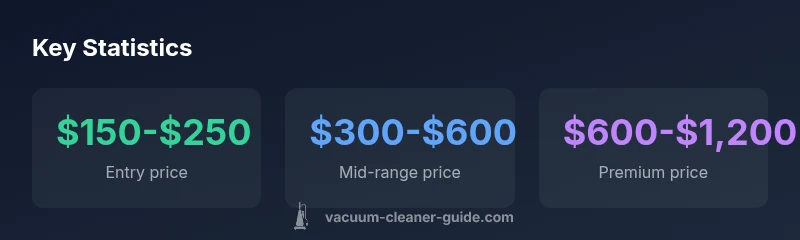
Entry-level: Basic mapping, limited suction, and straightforward cleaning routines. Price range: $150-$250. Pros: low risk, quick addition to household. Cons: fewer features, less reliable navigation.
-
Mid-range: Balanced performance with stronger suction, improved mapping, and app control. Price range: $300-$600. Pros: solid value, dependable navigation, reasonable upkeep. Cons: may lack self-emptying or advanced multi-floor memory.
-
Premium: High-end mapping, self-emptying bases, maximum suction, long battery life, and smart-home integration. Price range: $600-$1,200. Pros: convenience and top performance; Cons: higher upfront cost and potential replacement-part expense.
Hidden costs to consider and warranties
Upfront price is only part of the story. Some models charge for premium replacement parts or require subscription services for advanced mapping updates or cloud features. Self-emptying bases decrease manual maintenance but can increase bin replacement frequency or bin bag costs. Warranties vary by brand and may cover brushes and sensors for a limited period. If you rely on a robot for daily cleaning and pet hair management, a robust warranty and an accessible service network can save money over the device’s life.
Practical tips for saving on a robot vacuum
- Buy during major sales events (Black Friday, seasonal promotions) to reduce list price.
- Consider refurbished or certified pre-owned units from reputable sellers—these often carry solid warranties.
- Look for bundles with extra filters, brushes, and docking stations to maximize value.
- Compare features across brands to avoid paying a premium for a brand-name sticker.
- Prioritize models with strong customer support and easy-to-find replacement parts to minimize long-term costs.
The future of robot vacuum pricing
As technology scales and supply chains stabilize, price competition among major brands may compress the high-end tier. Software updates and improved mapping could add value without a proportional upfront cost, while new form factors or energy-efficient motors may shift the price curve downward for entry-level devices. Consumers could see more affordable self-emptying options as engineering improves, and broader multi-surface capabilities could become standard rather than premium features. For homes with pets and stairs, the price-to-value ratio will hinge on reliability, maintenance frequency, and part longevity.
Typical price ranges by model tier and features
| Model Type | Avg Price Range | Notable Features |
|---|---|---|
| Entry-level (basic mapping) | $150-$250 | Basic navigation; limited suction |
| Mid-range (smart mapping) | $300-$600 | Smart mapping; app control; decent suction |
| Premium (self-emptying) | $600-$1,200 | Self-emptying base; multi-floor memory; strong suction |
| Ultra-premium (top-tier) | $1,000-$1,500 | Advanced lidar, exhaustive automation, premium parts |
FAQ
What determines the price of a robot vacuum cleaner?
A robot vacuum’s price is driven by mapping accuracy, suction power, battery life, self-emptying capability, sensors, app features, and warranty coverage. Upfront price often reflects feature density rather than cleaning performance alone. Consider how often you’ll use advanced features before paying for them.
Prices depend on features like mapping, suction, and self-emptying. Focus on what you’ll actually use in your home.
Are cheaper models suitable for homes with pets?
Cheaper models can work for homes with light pet hair in smaller spaces, but most pet owners benefit from mid-range models with stronger suction and reliable mapping. If you have multiple pets or thick carpets, plan for a higher tier.
Cheaper models can handle light pet hair, but for multiple pets, a mid-range model is usually better.
Do robot vacuums last as long as traditional vacuums?
Robot vacuums typically last several years with proper maintenance. Battery health and brush wear influence longevity, and warranties vary by model. Routine maintenance can extend the life of the device.
They last several years with good care; the battery and brushes wear over time.
Should I buy a self-emptying model right away?
Self-emptying models add cost but save daily maintenance for busy households. Evaluate your tolerance for bin maintenance and ongoing part costs before committing.
Self-emptying saves time, but it costs more upfront and in parts later.
Do robot vacuums require ongoing subscriptions?
Most core features ship with the device; some advanced mapping or cloud services may require optional subscriptions. In most cases, you won’t need ongoing payments for essential cleaning.
Most features are included; some extra services may have optional fees.
“Prices for robot vacuums reflect the trade-off between convenience and capability, and a well-chosen model can meaningfully reduce daily chores in homes with pets.”
The Essentials
- Define must-have features before shopping
- Price bands align with feature density
- Pet owners should prioritize pet-hair performance and reliable mapping
- Shop during sales to maximize value