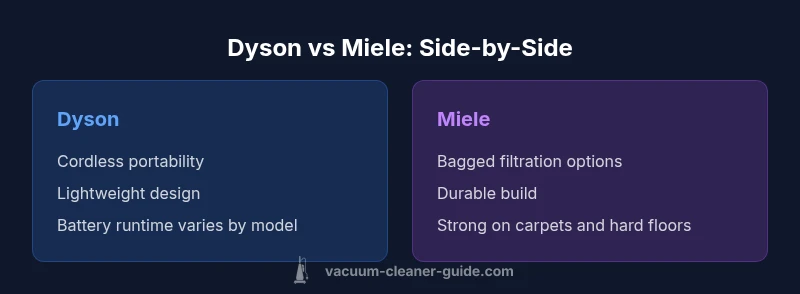
Dyson vacuum cleaner vs Miele: In-Depth Comparison
A comprehensive comparison of Dyson vacuum cleaner vs Miele, analyzing cordless vs canister designs, filtration, maintenance, and value for homes with pets and hard floors.


When weighing the Dyson vacuum cleaner vs Miele, most homeowners prioritize cordless versatility, deep cleaning on stairs, and maintenance costs. Dyson excels in lightweight, battery-powered models, especially for quick pickups, while Miele emphasizes durability, filtration, and long-term reliability for allergy-prone households. The right pick depends on your floor types, pet hair load, and willingness to invest upfront for longevity.
Overview: Dyson vs Miele in the real world
In the world of vacuuming, the dyson vacuum cleaner vs miele debate often narrows to two core questions: do you need cordless freedom or do you want a robust, long-lasting corded solution? Dyson has built a compelling portfolio of cordless stick vacuums that are light, maneuverable, and quick for everyday messes. Miele, by contrast, leans into a traditional but exceptionally durable design philosophy, offering powerful corded canisters and premium filtration that many families rely on for daily cleaning and for households with allergies. According to Vacuum Cleaner Guide, consumers frequently switch between these brands when their living spaces evolve—smaller, multi-level homes often reward Dyson’s portability, while larger, static layouts and allergy-prone homes may lean toward Miele’s sealed filtration and reliability. In this section, we’ll split the differences in a way that clarifies not just raw suction but the full ownership experience, including filtration, maintenance, and service expectations. For readers with pets, the choice becomes a balance of hair capture, battery runtime, and ease of use in hard-to-reach corners.
Design philosophies and power sources
Dyson built its popular reputation on cordless, battery-powered vacuums that deliver impressive suction without the hassle of dragging a cord around the house. The design emphasis is agility: slim profiles, swiveling joints, and quick cleanup cycles. In most Dyson cordless models, you get a lightweight stick with modular accessories that target corners, upholstery, and stairs. Miele, meanwhile, champions a heritage of mechanical robustness and precision engineering. Their corded canisters—while heavier—are designed for sustained, high-performance cleaning with consistent suction. Miele also offers premium cordless options in some lines, but the hallmark remains a sealed system that maintains performance over longer cleaning sessions. If you live in a multi-story home, the immediate convenience of a Dyson stick is hard to beat; if your cleaning routine includes frequent deep cleans on carpets and you prioritize filtration and longevity, Miele stands out as a durable, high-quality choice.
Filtration and allergen control
Filtration quality is a major differentiator between Dyson and Miele. Dyson’s higher-end models often feature sealed filtration with advanced cyclones that help capture fine particles; several cordless models offer HEPA filtration options, which can be beneficial for households managing pet dander and dust allergies. Miele is renowned for its sealed filtration systems and widely used bagged designs, which many allergy sufferers prefer because the bags trap dust until disposal. Both brands provide effective filtration when paired with the right accessories and routine maintenance. However, for households with severe allergies or asthma, Miele’s long-standing emphasis on sealed systems and replaceable bags can offer a calmer, cleaner indoor environment over time, provided the bags are changed regularly and the system is kept well maintained.
Cleaning performance on surfaces
Real-world performance depends on the surface mix in your home. Dyson’s cordless sticks excel on hard floors and low-pile carpets, with quick pickups and good edge cleaning on a variety of surfaces. On stairs and upholstery, the lightweight design and reach of a Dyson can be a tangible advantage. Miele’s canister vacuums provide powerful suction and sustained performance on deeper-pile carpets, rugs, and hard floors alike, delivering consistent results during longer cleaning sessions. If your home includes high-pile carpets or frequent deep-clean needs, Miele’s traditional design often maintains suction more consistently over time. For households with pets, a light, maneuverable Dyson can help manage hair in hard-to-reach areas, while a Miele canister may be preferred for thorough, methodical cleaning of larger areas.
Maintenance and long-term costs
Maintenance costs and frequency differ notably between Dyson and Miele. Dyson’s bagless approach relies on cyclone technology, with routine emptying and occasional filter maintenance necessary to maintain suction. Battery replacement is a consideration for cordless models; high-use households may eventually incur battery refresh costs, though newer generations have improved runtimes and efficiency. Miele typically uses replaceable bags and filters, which simplifies disposal and can be cleaner for allergy-prone homes, though ongoing bag and filter purchases add to running costs. Over the lifetime of the product, many homeowners find that Miele’s durable construction offsets the higher upfront price, especially when the unit remains serviceable and parts are readily available through authorized channels. Vacuum Cleaner Guide’s analysis shows that the total cost of ownership often depends on how long you plan to keep the machine and how you prioritize filtration and maintenance convenience.
Noise, weight, and ergonomics
Noise levels vary widely across models within both brands, but you can segment expectations by type. Dyson cordless sticks tend to be lighter and easier to maneuver, which makes them appealing for quick, on-the-spot cleans. However, some higher-power models can produce noticeable noise during peak suction. Miele canister vacuums are typically heavier, but their ergonomics—especially handles, wands, and hose setups—are engineered for long cleaning sessions. If you have limited storage space or you frequently clean stairs, the lighter Dyson option may be advantageous. Conversely, if a long, uninterrupted cleaning session is common in your house, the ergonomics and balance of a Miele canister could reduce fatigue and improve overall effectiveness.
Durability, warranty, and service networks
Durability and service availability are essential considerations. Dyson’s modern cordless range emphasizes lightweight construction with battery platforms that can be updated across generations, which can be a practical advantage if you regularly upgrade. Miele’s reputation for solid build quality and accessible service networks often translates into longer product lifespans and easier parts replacement. Warranty terms vary by model and region, but both brands offer standard warranties that cover manufacturing defects for a set period. For households counting on a machine to perform reliably for many years, Miele’s track record with durable canisters and service support can be a meaningful factor in the decision.
Pricing, value, and total cost of ownership
Price is a perennial factor in the dyson vacuum cleaner vs miele debate. Dyson’s cordless stick models carry a premium for portability and cutting-edge design, while Miele’s canisters and premium cordless options emphasize durability and filtration quality. Both brands generally position themselves in the upper mid to high price range, and the best value is often tied to how well the model aligns with your cleaning habits and home layout. When evaluating total cost, consider not only the upfront price but ongoing maintenance costs—bags and filters for Miele, replacement batteries and filters for Dyson—as well as potential savings in time and energy due to better ergonomics or faster cleaning cycles.
Use-case scenarios and buying decisions
If your home features multiple levels, stairs, and a lot of quick cleanups on the go, Dyson’s cordless range can be the pragmatic choice, delivering convenience without plugging in consistently. If you have a high percentage of wall-to-wall carpeting, allergies, or prefer a machine you can rely on for daily deep-cleaning sessions, Miele’s canister and premium filtration options can justify the higher upfront cost. For pet lovers, consider how you manage hair: Dyson’s suction on lightweight sticks is handy for daily pickup, while Miele’s fixed filters and bags can help contain allergens more effectively during disposal. The best approach is to map your floor types, pet hair load, storage space, and tolerance for maintenance tasks to determine which brand aligns best with your lifestyle.
Common myths and real-world tips
Myth: Cordless always equals better cleaning. Reality: Cordless models offer great convenience but may have runtime limits on large cleaning tasks. If you have a big home, you might prefer a corded Miele canister for extended sessions. Myth: Heavier means less effective. Modern designs balance weight with suction and battery efficiency; ergonomics matter just as much as raw power. Real-world tip: Test suction on your most-used surfaces, check bag or filter maintenance intervals, and assess how easy it is to reach under furniture before committing to a model.
How to test and validate in your own home
Before you buy, take a hands-on approach. Bring home your top Dyson and Miele candidates and run them on your typical floors—hardwood, tile, low-pile carpet, and area rugs. Assess battery runtime for cordless models, ease of tool switching, and the weight when carrying the unit up and down stairs. Check how easy it is to empty or dispose of dust and whether the filtration system visibly reduces dust re-entrainment. Finally, verify warranty terms and service availability in your region to ensure your investment is protected for the long term.
Comparison
| Feature | Dyson vacuum cleaner | Miele vacuum cleaner |
|---|---|---|
| Power source | Cordless/stick models common; strong battery options | Corded canister with some cordless models available |
| Filtration | Sealed filtration with HEPA options on higher-end models | Premium sealed filtration with HEPA options in many models |
| Maintenance model | Bagless cyclone design, frequent emptying required | Bagged with replaceable bags; typically lower dust exposure during disposal |
| Weight/ergonomics | Typically lighter and highly maneuverable for stairs | Heavier but very stable and balanced for extended cleaning |
| Surface performance | Excellent on hard floors and high-traffic small spaces | Strong on carpets and deep-cleaning tasks |
| Upfront price | Generally premium for cordless sticks | Premium price, with long-term durability factored in |
| Long-term costs | Battery replacement and filter costs over time | Bag and filter replacements; durable motors reduce frequency of repairs |
| Best for | Homes with stairs, quick cleans, and lightweight use | Allergy-sensitive homes and deep-cleaning needs |
Strengths
- Dyson offers unmatched cordless convenience for quick cleanups
- Miele emphasizes durable build and excellent filtration for allergies
- Wide model availability allows customization to budget and needs
The Bad
- Dyson cordless runtimes may limit large cleaning sessions
- Miele may come with higher upfront costs and heavier weight
Dyson wins on cordless convenience; Miele wins on durability and filtration
Choose Dyson for flexibility and quick cleanups. Choose Miele for long-term reliability and superior filtration, especially in allergy-prone homes.
FAQ
Which is better for pet hair: Dyson or Miele?
Both brands perform well on pet hair, but Dyson’s cordless sticks are especially convenient for quick, targeted cleanups on furniture and stairs. Miele’s canisters offer strong suction and comprehensive attachment sets for deep cleaning on upholstery and carpets. Choose based on how you manage hair spread and how often you clean hard-to-reach areas.
Dyson is great for quick catches on furniture and stairs, while Miele excels for deep cleaning upholstery. Pick based on your hair load and cleaning spots.
Are Dyson cordless vacuums worth the extra cost compared to Miele canisters?
Cordless models offer unmatched convenience for quick cleans, but they carry higher upfront costs and runtime considerations. If you value portability and rapid cleanup, Dyson is compelling; if you prioritize long-term durability and filtration with fewer ongoing purchase needs, Miele may be the better value.
Cordless models give you convenience, but weigh upfront cost and runtime against long-term durability and filtration.
Do Miele bagged vacuums perform better for allergies than Dyson bagless models?
Bagged vacuums, including many Miele models, generally trap dust more effectively until disposal and can reduce re-entrainment. Dyson bagless systems rely on sealed filtration, which can be competitive but requires careful maintenance. For allergy sensitivity, bagged designs with sealed filtration are often preferred.
Bagged designs with sealed filtration are commonly better for allergies, but good filtration in bagless models also helps if properly maintained.
What should I consider when choosing between Dyson and Miele?
Start with your space: if you need frequent quick cleans on multiple levels, Dyson’s cordless lineup shines. If you clean large areas and want maximum filtration and durability, Miele’s canisters are a strong bet. Also consider maintenance costs over several years and the availability of service in your region.
Think about space and maintenance: cordless for quick cleans, canister for durability and filtration.
What is the typical warranty and service scenario for these brands?
Both brands offer standard warranties and nationwide service networks in many regions. Warranty length and coverage vary by model and region, so check your local terms. A strong service network can significantly affect long-term satisfaction and repair downtime.
Both Dyson and Miele provide warranties and service networks; verify local terms and coverage for your model.
The Essentials
- Consider your floor mix and whether cordless cleanup matters most
- Prioritize filtration if allergies are a concern
- Expect higher upfront cost with premium models but potential long-term value
- Maintenance costs differ: bags/filters vs. batteries
- Test models in your space to confirm real-world performance