Vacuum Cleaner Like Miele: Premium Side-by-Side Guide
A rigorous, data-informed comparison of vacuum cleaners that resemble miele, including canister and cordless options, surface performance, filtration, maintenance, and value for homeowners and pet owners.


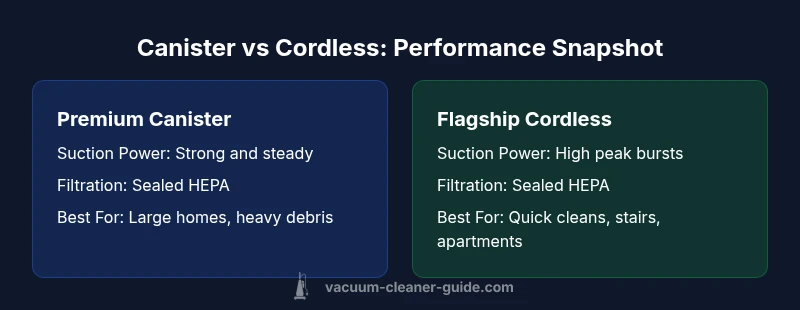
For homeowners seeking a vacuum cleaner like miele, the closest high-end alternatives are premium canister vacuums and flagship cordless models with sealed HEPA filtration. This quick comparison highlights how they stack up on suction, filtration, maintenance, and price, so you can decide whether a canister or cordless setup best matches your home, pets, and flooring.
Why a vacuum cleaner like miele matters
A vacuum cleaner like miele sets a benchmark for filtration, build quality, and multi-surface performance. For homeowners and pet owners, matching that level of reliability means understanding how canister and cordless designs differ in ergonomics, maintenance needs, and long-term value. According to Vacuum Cleaner Guide, the best starting point is mapping your daily routines, floor types, and allergy considerations to core performance metrics such as suction consistency, filtration efficiency, and ease of maintenance. This perspective helps you avoid overpaying for features you rarely use while ensuring you can tackle stubborn pet hair on both carpet and hard floors. The goal is practical performance that minimizes effort and maximizes cleanliness in real homes.
Core design philosophies behind miele-style machines
Premium miele-like vacuums emphasize three pillars: strong, steady suction; sealed filtration for allergies; and modular tools for diverse surfaces. Achieving durability typically means a metal or high-grade plastic chassis, well-balanced weight distribution, and dependable seals around the cyclone and filters. These machines often pair with long-lasting motors and washable filters that maintain performance over years. For households with pets, filtration quality is as important as raw power because fine dander can circulate if seals wear or filters clog. Design choices also influence noise and handling—crucial for homes with children or pets that dislike loud appliances.
Canister vs cordless: how they differ in practice
Canister vacuums in this tier tend to excel at sustained suction, large debris pickup, and deep cleaning across carpets and hard floors with a long wand for reach. They are generally heavier but offer robust tool assortments like motorized brushes for upholstery and crevice tools for tight spaces. Flagship cordless models prioritize freedom of movement, quick cleanups, and stealth usability in tight areas or quick daily touch-ups. However, cordless units typically trade some sustained suction and runtime for convenience. When evaluating a miele-like setup, consider your home layout, stair access, and how often you need to clean in one go without recharging.
Filtration and airflow: what to look for
A top-tier vacuum in this category uses sealed filtration with true HEPA or equivalent filtration to trap fine particles. Effective filtration is paired with a smooth airflow path that minimizes pressure drop, maintaining suction as the bin fills. Look for cyclonic separation, closed-loop filtration, and easily replaceable or washable filters. For allergy sufferers, sealed systems reduce circulating particulates, which is a key reason many homeowners seek a miele-like benchmark. Avoid models with porous seals or exposed gaps where air can leak and filtration efficiency can degrade over time.
Surface performance: pet hair, carpets, and hard floors
Pet owners prioritize consistent suction and effective pet-hair removal on both carpet and hard floors. In practice, premium canister vacuums deliver strong performance on dense pile carpets, while cordless options excel on hard flooring and quick pickup tasks. The best miele-like models balance brushroll effectiveness with intelligent airflow control to prevent hair wrapping and clogging. For homes with mixed surfaces, a model that offers an adjustable brush height or toggled suction levels tends to deliver the most uniform results without requiring multiple tools.
Noise, weight, and ergonomics
Noise levels and weight significantly affect daily use. High-end canisters often weigh more but incorporate ergonomic handles and balanced weight distribution to reduce fatigue during long cleaning sessions. Cordless models offer greater maneuverability, but shorter bursts of power and faster motor heat buildup can limit their sustained performance. When choosing a vacuum cleaner like miele, evaluate handle comfort, trigger placement, wand length, and tool accessibility—these ergonomic details noticeably impact user satisfaction over time.
Maintenance, bags, and filters
Maintenance planning is a practical factor in total cost of ownership. Bagged canisters simplify dust disposal, while bagless designs require more frequent filter cleaning. Washable or replaceable filters extend the life of the motor, but improper maintenance can reduce suction and air quality. A miele-like benchmark usually includes easily accessible filters, clear dirt indicators, and tools that make internal cleaning straightforward. For households with pets, budget extra time for regular filter checks and occasional tool maintenance to keep performance consistent.
Durability, warranties, and service
Durability is driven by motor reliability, sealed components, and the quality of seals around the dust cup. Warranties vary by manufacturer and model, but the best miele-like options typically offer multi-year coverage on the motor and a limited period on attachments. Service availability matters, particularly in areas with fewer repair centers. If you anticipate frequent use on rough surfaces or heavy pet traffic, prioritize units known for long-term reliability and accessible service networks.
Price and value: budgeting for long-term ownership
Premium canister and cordless vacuums in this tier span a wide price spectrum. Use price as a proxy for durability, filtration quality, and tool versatility, but also weigh expected maintenance costs, filter replacements, and potential add-ons. A well-chosen miele-like vacuum often delivers strong resale value and durable performance that minimizes total ownership cost over several years. When considering value, focus on the combination of filtration quality, sustained suction, and user-friendly maintenance rather than the sticker price alone.
How to compare models: a practical checklist
Create a simple side-by-side evaluation based on your home, floors, and pet profile. Key criteria include suction consistency across carpet and hard floors, filtration type, tool versatility, runtime for cordless models, and ease of maintenance. Consider lifecycle costs: filter replacements, bag availability, and potential service intervals. A structured checklist helps you avoid overemphasizing features that do not align with your daily cleaning routine and flooring mix.
Practical buying scenarios: which setup for which home
If you have a large multi-floor home with pets and varied flooring, a premium canister with a robust tool kit often provides the best balance of suction and filtration. For small apartments or daily spot-cleaning on hard floors, a flagship cordless unit may be more convenient, provided you manage runtime. If you live in a home with stairs, consider models with ergonomic hoses and long wand reach to reduce manual effort. In all cases, prefer sealed filtration and reliable customer support.
Final notes on selecting a miele-like vacuum
Choosing a miele-like vacuum is about aligning performance with your routine, floor types, and allergy concerns. Start with a clear list of surfaces you clean most often, then map these to suction consistency, filtration quality, and maintenance needs. As you evaluate, validate claims with independent reviews and user feedback, particularly from households similar to yours. The goal is a durable, efficient tool that makes daily cleaning easier and healthier for your family.
Comparison
| Feature | Premium canister vacuums | Flagship cordless vacuums |
|---|---|---|
| Suction power | Strong, sustained suction with longer cleaning sessions | High peak suction with rapid bursts and quick cleanups |
| Filtration | Sealed filtration with HEPA or equivalent | Sealed filtration with HEPA or equivalent |
| Maintenance frequency | Regular filter and bag changes; longer cycles between maintenance | Frequent filter checks; battery and motor care needed |
| Weight and maneuverability | Heavier overall; excellent wand reach | Lighter and more maneuverable; easier on stairs |
| Power source | Mains power; unlimited runtime | Battery-powered; limited runtime; rapid recharging |
| Best for | Large homes with mixed surfaces and pets | Compact spaces, quick cleans, and apartments |
Strengths
- Excellent filtration ideal for households with pets and allergies
- Consistent suction on varied surfaces
- Great tool variety for upholstery and stairs
- Long-term value through durability and reliability
The Bad
- Higher upfront cost
- Heavier weight can affect maneuverability on stairs
- Corded models require outlet access; cordless require battery management
Premium canister vacuums excel on filtration and sustained performance; flagship cordless vacuums win on convenience and flexibility
Choose a canister when you need deep cleaning, long runtimes, and robust filtration. Choose cordless for everyday quick cleans and tight spaces, accepting some trade-offs in sustained power and runtime.
FAQ
What is the main difference between a premium canister vacuum and a flagship cordless vacuum?
Premium canister vacuums provide sustained power and deep cleaning across large areas, with a robust tool kit. Flagship cordless vacuums offer unmatched mobility and quick cleanups, but may have limited runtime and slightly reduced sustained suction. Your choice should reflect floor plans, cleaning habits, and pet considerations.
Premium canisters offer steady power for big jobs, while cordless models focus on mobility and quick daily cleans. Pick based on your home layout and cleaning routine.
Are miele-like vacuums suitable for pet hair?
Yes, models in this category typically feature strong suction and sealed filtration that help capture pet hair and dander. Tool versatility, such as motorized brushes and specialized pet attachments, further improve performance on upholstery and stairs.
They're well suited for pet hair thanks to powerful suction and specialized tools.
How important is filtration when choosing a vacuum?
Filtration is crucial for air quality, especially in households with allergies or asthma. Sealed filtration reduces particle leakage back into the room, while HEPA or equivalent filters trap fine particulates. Consider maintenance requirements to keep filtration effective over time.
Filtration matters a lot for air quality; seal and maintain filters regularly.
What should I consider for hard floor vs carpet?
Look for adjustable brush height or a motorized brush with automatic floor type detection. A miele-like option should transition smoothly from hard floors to carpets, maintaining suction and preventing scatter on smooth surfaces while cleaning deep into carpet fibers.
Choose a model that adapts to your floor types without losing suction.
Bagged vs bagless: which is better for allergies?
Bagged designs can trap dust more effectively and prevent re-entrainment, which helps allergy sufferers. Bagless models require careful emptying and filter maintenance to minimize exposure to dust and particulates.
Bagged vacuums are typically better for allergies, but maintenance matters whichever you choose.
Can I expect easy service and parts availability for miele-like models?
Service and parts access varies by region, but top-tier brands usually offer broad support networks, replacement parts, and customer service. Check warranty terms and local repair options when selecting a model.
Most premium brands have solid service options; confirm in your area.
Is the initial cost the best predictor of long-term value?
Not always. A higher upfront price can correlate with better build quality and filtration, reducing maintenance and extending the device's life. Consider total cost of ownership, including filters, bags, and potential repairs.
Higher upfront can pay off with durability and lower maintenance over time.
The Essentials
- Define floor types and pet needs before choosing
- Prioritize sealed filtration and stable suction
- Balance upfront cost with maintenance expenses
- Cordless offers mobility; canisters offer endurance and power