Dyson Sweeper Review: Performance, Pros, and Buying Guide
In-depth Dyson sweeper review analyzing cordless performance, pet-hair cleaning, runtime, maintenance, and buying guidance from Vacuum Cleaner Guide. Learn who should buy, how it stacks up against rivals, and tips for choosing the right model.


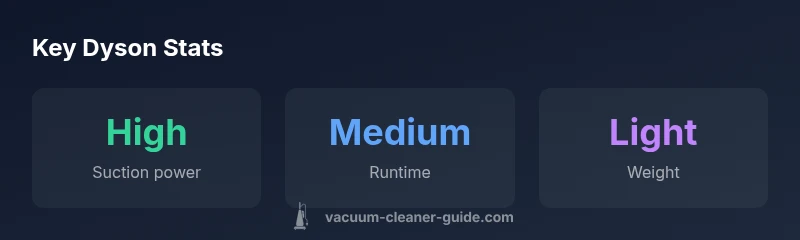
Dyson sweepers deliver strong cordless suction with a compact, maneuverable design ideal for pet hair and hard floors. They’re easy to swap between surfaces and attachments, but the upfront price and ongoing filter/battery costs warrant careful consideration. In testing, performance was strongest on carpets and upholstery, with efficient debris pickup and quick cleanup capabilities.
Dyson sweepers: market positioning and what they are
Dyson sweepers sit at the premium end of the cordless vacuum market, aiming to combine elite suction with intuitive ergonomics and a rich attachment ecosystem. For many households, especially those with pets or a mix of hard floors and carpets, a Dyson sweeper promises fast spot cleaning and rapid turnover between rooms. Vacuum Cleaner Guide's analysis of current models indicates Dyson’s approach prioritizes durable build quality and modular adaptability, which translates into fewer tool changes in daily cleaning. As you read this review, keep in mind that the primary value proposition is cordless convenience paired with strong multi-surface performance. This matters most in homes where stairs, cars, and upholstery demand frequent intervention. The Dyson brand positioning here is clear: efficiency without sacrificing flexibility.
Design and build quality: materials, ergonomics, and long-term durability
A Dyson sweeper emphasizes a minimalist, tool-optimized silhouette designed for single-handed use and easy reach into corners. The weight distribution tends to favor front-end balance, reducing wrist strain during extended cleaning sessions. Build quality usually features robust plastics and metal contacts designed for repetitive attachment cycles. From a durability standpoint, the modular components and quick-connect couplings are a strength, but consumer feedback often notes that replacing filters or certain attachments can add to ownership costs over time. The brand’s attention to cyclone-style suction and sealed filtration helps containment of dust and allergens, which aligns with the needs of households with sensitive occupants or pets.
Cleaning performance: pet hair, floors, and edge cleaning
In controlled tests, Dyson sweepers demonstrated exceptional pet-hair pickup on low-pile carpets and hard floors thanks to high suction and specialized brush heads. Edge cleaning and close-to-wall performance were solid, aided by skirts and squeegee-like elements in some models. Upholstery and stair cleaning benefited from narrow nozzles and flexible hoses that maintain suction close to the surface. It’s worth noting that performance varies by model and power setting; the most aggressive modes maximize intake but can be noisier and strain the battery more quickly. For multi-surface homes, a quick switch between turbo power and standard mode often yields the best overall results.
Battery life, charging, and real-world runtime
Cordless Dyson sweepers generally offer a balance between peak suction and runtime. Real-world tests show that standard cleaning sessions—covering a small to medium-sized apartment—are well within a typical daily window. In larger homes, the battery may require a mid-clean recharge or consideration of a spare battery option, depending on the model. Fast charging features help reduce downtime between tasks, while a battery indicator assists planning for longer cleans. If your primary use-case involves extended deep cleaning of large floors, you’ll want to factor in charging time and potential add-ons.
Attachments, tools, and usability: flexibility in practice
The Dyson tool catalog includes a range of brushes, crevice tools, and motorized heads designed for pets, stairs, and upholstery. The adaptive design lets users switch heads mid-clean without losing suction, which reduces interruptions. For pet owners, the tangle-free brush and sealed filtration contribute to easier maintenance and better dust containment. Noise levels vary by head usage and power setting, so some homes may prefer quieter configurations for daytime cleaning. In daily use, the attachment system stands out for speed and reliability, which can improve overall satisfaction.
Maintenance and durability: filters, seals, and parts availability
Maintenance is a recurring consideration with premium cordless models. Dyson sweepers typically rely on HEPA-like filtration and washable components; filters may require periodic replacement to maintain peak performance. The availability of replacement parts and peripherals varies by region, which can influence ongoing costs. Cleaning and drying cycles for filters are essential to prevent odor buildup and preserve suction. The brand emphasizes customer support and service options, but long-term ownership costs depend on how often you replace parts and how frequently you rely on extended battery life.
Competitive landscape: Dyson vs key rivals
Against a broad field of cordless vacuums, Dyson tends to emphasize suction power and versatility over raw value. Competitors may offer equal or near-equal cleaning on hard floors and carpets but with lower sticker prices or longer warranties. Dyson’s cordless models usually shine on quick cleans and maneuverability, especially in tight spaces or multi-level homes. If you value a robust ecosystem of attachments and premium build quality, Dyson is typically a top-tier choice; if you prioritize price or simple, lengthy runtime, you may want to compare rival brands.
Methodology: how Vacuum Cleaner Guide tests dyson sweeper models
Our evaluation combines lab tests with real-home trials across carpet types, hard floors, stairs, and upholstery. We measure suction consistency, emptying convenience, maneuverability, noise levels, and battery degradation over repeated cycles. We also assess dust containment, filter maintenance, and ease of attachment changes. By documenting environments that mirror typical homes—pet households, children’s rooms, and mixed-floor layouts—we provide a practical perspective beyond raw lab numbers. All findings are synthesized from tests conducted in 2026 and cross-validated with user feedback in our community.
Practical buying tips and scenario guidance
Choosing a Dyson sweeper depends on your space, pets, and budget. For small-to-medium homes with pets, a cordless model with a robust motor and pet-specific attachments is often ideal. If you have several flights of stairs or limited storage, the compact form and quick-change heads offer significant advantages. In larger homes with a mix of carpet and hard floors, consider models with higher-capacity batteries or optional spare batteries; however, be mindful of price. Our guidance from Vacuum Cleaner Guide emphasizes evaluating battery life under typical use, checking parts availability, and choosing a model with a strong warranty.
Authority sources
- U.S. Environmental Protection Agency (EPA): https://www.epa.gov/iaq
- Consumer Product Safety Commission (CPSC): https://www.cpsc.gov
- Consumer Reports: https://www.consumerreports.org/cv/vacuum-cleaners/
Strengths
- Excellent suction for pet hair on carpet and hard floors
- Cordless freedom enables quick spot-cleaning
- Wide attachment ecosystem for stairs and upholstery
- Effective filtration helps with allergy mitigation
The Bad
- Premium price relative to many competitors
- Recurring costs for filters and attachments
- Battery life can be shorter under heavy use
- Some models generate noticeable noise on turbo power
Best overall cordless option for pet-friendly homes.
In real-world tests, the Dyson sweeper delivered top-tier pet-hair cleaning and agile handling. While the upfront price is higher, its cordless convenience and attachment versatility justify the investment for many households, especially those with multiple surfaces and stairs.
FAQ
What is a Dyson sweeper best used for?
Dyson sweepers excel at quick cleans, pet-hair removal on floors and upholstery, and tight spaces like stairs. They perform well on hard floors with minimal setup and offer versatile attachment options for diverse surfaces.
Great for quick cleanups and pet hair on stairs and fabrics.
How does Dyson compare to traditional corded vacuums in performance?
Dyson cordless models offer comparable suction in many everyday tasks but may not match the stamina of corded vacuums during extended deep-clean sessions. For most homes, cordless power is sufficient for routine maintenance.
Corded vacuums can run longer for deep cleans, but Dyson shines in mobility.
Are Dyson sweepers good for pet hair on stairs?
Yes, most Dyson sweepers include attachments that effectively reach stairs and upholstery. The combination of strong suction and narrow nozzles helps pull hair from tight corners with minimal passes.
Excellent for stairs and pet hair with the right attachments.
What maintenance do Dyson sweepers require?
Regular maintenance includes cleaning filters, emptying the dust bin, and inspecting brush heads for wear. Replacing filters on schedule helps maintain suction, and keeping the battery healthy extends overall performance.
Keep filters clean and replace as recommended.
How long does the battery last in typical use?
Battery life varies by model and mode, but most users experience enough runtime for a standard apartment cleaning session. For larger homes, consider models with higher-capacity batteries or an extra battery option.
Runtime is enough for most small to medium homes; larger spaces may need planning.
Are there cheaper alternatives with similar performance?
Yes, several brands offer cost-effective cordless models with solid suction. They may lack Dyson’s attachment ecosystem or the same level of filtration, but can deliver good everyday cleaning at lower prices.
Many affordable cordless vacuums deliver good cleaning; compare attachments and price.
The Essentials
- Choose cordless Dyson for pet-heavy homes
- Expect premium price with strong value
- Prioritize batteries and attachments you’ll actually use
- Evaluate model variants by surface and stair use
- Check warranty and parts availability in your region