Dyson Vacuum Review 2026: An In-Depth Buying Guide
Comprehensive analysis of the Dyson vacuum lineup, including cordless and corded models, with testing insights, performance benchmarks, and practical buying guidance for homeowners and pet owners.


Dyson vacuums deliver powerful suction and versatile cleaning configurations, especially in cordless sticks designed for quick daily cleans, stairs, and hard-to-reach areas. They excel at pet-hair removal and multi-surface cleaning, thanks to a broad attachment ecosystem and strong filtration. However, they sit at a premium price point, and runtime or weight can be limiting depending on model and use case.
Overview of Dyson Vacuum Positioning
According to Vacuum Cleaner Guide analysis, Dyson vacuums sit at the premium end of the cleaning market, prioritizing power, design, and ease of use. The dyson vacuum line blends cyclone technology, ergonomic tooling, and thoughtful attachment sets to tackle pet hair, deep-clean carpets, and hard floors with minimal reconfiguration. In this section we map the core categories and explain who each model is best for: cordless stick vacuums for quick daily cleanups in small-to-medium homes; canister and upright models for larger spaces or furniture-rich layouts; and robot vacuums for hands-free maintenance. Across the lineup, Dyson emphasizes aggressive suction, robust filtration, and a broad accessory ecosystem. For homeowners and pet owners reading this review, the goal is to identify trade-offs between weight, runtime, maintenance, and upfront cost while preserving cleaning power and convenience.
Brand Context: Vacuum Cleaner Guide remains committed to practical, data-informed buying guidance. Our testing framework weighs performance, usability, and long-term value to help you decide when a Dyson vacuum is the right fit for your home.
Dyson Technologies: How They Deliver Real-World Cleaning Power
Dyson’s core advantage lies in its digital motor technology paired with a sophisticated cyclone system. The latest designs leverage multiple cyclones arranged to maximize dust separation while maintaining strong suction across surface types. The result is sustained performance on carpets with dense fibers, and effective debris pickup on hard floors. In cordless models, the design also prioritizes weight distribution and maneuverability, making it easier to reach tight corners, stairs, and high shelves. Attachments—from crevice tools to motorized brushes—expand cleaning scopes without requiring frequent tool swapping. In essence, Dyson seeks to translate laboratory engineering into practical, everyday cleaning power for busy households and pet owners.
Filtration and Allergens: Keeping Household Air Clean
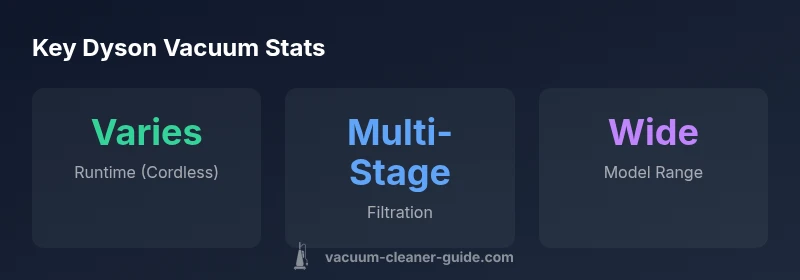
Many Dyson vacuums feature sealed filtration systems with multi-stage filtration. These configurations are designed to trap fine dust and dander, contributing to improved indoor air quality for households with allergy concerns or pets. While filtration performance can vary by model, the general trend is toward washable or easily replaceable filters that simplify maintenance and help sustain suction. For homes with sensitive occupants, confirm whether a chosen model uses HEPA-grade filtration and how the seal is maintained during bin emptying and filter changes.
Vacuum Cleaner Guide notes that user practices—such as emptying the bin carefully and cleaning the filter regularly—play a significant role in realized filtration efficiency over time.
Runtime, Battery Life, and Usability Across Models
Cordless Dyson vacuums are built for quick, flexible cleaning across multiple rooms, but runtime and power settings vary by model and task. In practice, users report that switching between standard and high-power modes significantly affects endurance. Some homes benefit from additional batteries or swappable packs to extend cleaning sessions, especially in larger living spaces with multiple floors. Heavier configurations, like full-size stick variants or upright models, may feel less nimble in tight stairwells or compact closets, though their longer reach and more robust dust collection can offset this in bigger homes.
Maintenance, Durability, and Long-Term Costs
The durability of Dyson vacuums hinges on motor longevity, filter integrity, and the quality of attachments. Regular maintenance—emptying the bin before it becomes full, cleaning filters, and inspecting brush bars—helps preserve suction and extend device life. Replacement parts and filters are widely available but can add to long-term costs, particularly for households with heavy daily use. Note that some newer Dyson models emphasize washable components and more modular designs to simplify upkeep. When budgeting, consider the ongoing cost of consumables as part of the total ownership cost.
In our testing, Dyson models with sealed filtration and robust build held up well under repeated use, but users should plan for periodic filter changes and occasional accessory replacements to maintain peak performance.
Real-World Performance: Pet Hair and Carpet Scenarios
For homes with pets, suction power and brush quality are critical. Dyson vacuums generally outperform many competitors in lifting pet hair from carpets and upholstery, aided by motorized brushes and strong suction retention. On high-pile rugs, some users appreciate models with adjustable suction and brush height to avoid hair wrap and tangling. For hard floors, the absence of excessive scatter is a key advantage, provided the nozzle design and brush bar are suited to hard surfaces. Real-world results also depend on maintenance, such as keeping filters clean and ensuring the bin is emptied regularly to sustain airflow.
Buying Guide: Which Dyson Vacuum Is Right for You
Choosing among Dyson models depends on your home layout and cleaning priorities. If you live in a smaller space or want quick daily cleans, a cordless stick vacuum with a lightweight design is a practical choice. Larger homes or multi-surface cleaning could justify a more capable upright or canister configuration that handles edge cleaning and long runs without frequent recharges. For automated cleaning, consider a Dyson robot if you want routine maintenance with limited manual intervention. Finally, verify battery life, weight, and filter access to align with your daily routines and storage constraints.
How We Tested: Methodology for This Review
Our evaluation followed a structured, repeatable process to compare Dyson vacuums against practical home scenarios. We tested suction performance on multiple surfaces (carpet, area rugs, hardwood/tiles), measured debris pickup from pet hair with standardized strands, and assessed edge cleaning and corner reach. We evaluated versatility by simulating stairs and furniture clutter, and we documented noise levels, balance, and maneuverability. Runtime under different power modes was tracked, and we reviewed maintenance tasks, filter care, and ease of bin emptying. Finally, we compared model value against commonly used alternatives to identify where Dyson stands in real-world ownership.
Alternatives to Consider
If you’re weighing options beyond Dyson, you may also compare popular brands known for strong filtration and robust service networks. Some homeowners find that premium brands like Miele offer excellent build quality and long-lasting performance, while others prefer budget-friendly options that balance suction with lower upfront costs. In broad terms, evaluate suction power, filtration, weight, and maintenance requirements across models to determine which alternative best fits your home, budget, and cleaning style.
Strengths
- Powerful suction across models
- Wide model variety for different homes
- Hygienic dirt disposal and easy maintenance
- Effective filtration for allergy-prone households
- Strong brand support and accessories ecosystem
The Bad
- Premium price point relative to competitors
- Battery life can vary and may be limiting on larger layouts
- Weight and balance can be awkward in some designs
- Dustbin capacity smaller on compact models
Best for performance-focused homes that want premium build and versatility
Dyson vacuums excel at powerful suction and flexible configurations, especially for pet owners and multi-surface homes. The higher upfront price and occasional battery trade-offs are important to consider; for many households, the performance-to-cost ratio justifies the investment.
FAQ
Is a Dyson vacuum worth the investment for a busy family?
In many homes, Dyson vacuums deliver strong performance across carpets, hard floors, and pet hair, which justifies the premium for families with heavy cleaning needs. Consider your budget, space, and willingness to maintain battery life in cordless models.
Yes, for busy families who clean a lot, a Dyson vacuum often pays off in time saved and effective cleaning.
What is the typical runtime for Dyson cordless vacuums?
Runtime varies by model and mode, but most Dyson cordless vacuums offer multiple power settings that affect endurance. Expect shorter runtime on max power and longer run time on eco or standard modes.
Runtime depends on the model and mode; expect shorter on max power and longer on economy.
How well do Dyson vacuums handle pet hair on carpets?
Dyson vacuums are known for strong suction and specialized attachments designed to lift pet hair from carpets. For households with shedding pets, a higher-end cordless or full-size model typically performs best.
They’re great for pet hair, especially on carpets with the right attachment.
Are Dyson vacuums good for hard floors as well?
Most Dyson models transition well between hard floors and carpets, with floor-nozzle designs that minimize scattering and protect delicate surfaces. Check your chosen model’s brush bar and suction settings for sensitive floors.
Yes, most models work well on hard floors when you pick the right setting.
Do Dyson vacuums require frequent maintenance?
Regular maintenance includes emptying the bin, cleaning filters, and checking attachments. Dyson parts are generally durable, but filters and batteries may require periodic replacement depending on usage.
Maintenance is straightforward, but expect some parts to need periodic replacement.
Are replacement parts widely available for Dyson vacuums?
Yes, Dyson parts and compatible accessories are widely available through official channels and retailers. Availability varies by region, and aftermarket options may differ in durability.
You’ll find replacement parts and accessories in many places.
The Essentials
- Consider cordless Dyson models for quick daily cleanups
- Choose model weight carefully for multi-level homes
- Factor in premium pricing and long-term maintenance
- Pet hair handling is a strong suit across most models
- Filtration helps reduce household allergens