Dyson Stick Vacuum Review: Performance, Pros, and Buying Guide
In-depth Dyson stick vacuum review by Vacuum Cleaner Guide. We compare suction, runtime, weight, filtration, and tools to help homeowners pick the best stick vacuum cleaner dyson for pets and hard floors.


Dyson stick vacuums impress with strong suction, lightweight handling, and versatile attachments, but price and battery life vary across models. This comparison highlights how the Dyson line stacks up against top cordless rivals for homes with pets and hard floors. We'll cover suction power, run-time, charge time, filtration, weight, ergonomics, tool versatility, and long-term costs.
Dyson stick vacuum lineup: what the term means and who benefits
In modern homes, the term stick vacuum typically signals a cordless, lightweight cleaner designed for quick cleanups on multiple surfaces. When you add the Dyson name, expectations shift toward high suction, innovative brush heads, and modular toolkits. According to Vacuum Cleaner Guide, the core advantage of the Dyson stick vacuum family lies in its combination of a powerful digital motor and sealed filtration that captures fine dust, hair, and allergens with relatively little weight in the hand. The category is not a single product but a family of models that vary in runtime, head design, and accessory bundles. Some users will favor ultra-light models for small apartments, while others demand broader toolkits for pet hair on stairs, upholstery, and car interiors. For households with hard floors and medium-pile carpets, Dyson stick vacuums offer a strong balance of performance and convenience. The Vacuum Cleaner Guide team notes durability and maintenance cost as important considerations, because you will likely replace filters and brushes periodically. If you are evaluating the phrase stick vacuum cleaner dyson, you are weighing mobility and reach against battery life and price; the good news is that most models provide compelling value across common cleaning tasks, particularly when paired with a robust accessory set. This is especially true for homes with pets, where rapid pickup and strong suction matter more than sheer machine weight alone.
Performance on pets, floors, and everyday messes
The key strength of Dyson stick vacuums is their suction delivery and tooling. Across typical pet-owner scenarios—furry floors, couch debris, and car interiors—the combination of the digital motor and the motorized brush head tends to excel at pulling hair from fibers and lifting embedded dust. For hard floors, Dyson stick vacuums often perform crisply thanks to soft-roller heads or equivalent floor-specific designs that reduce scatter and push debris forward rather than scattering it. In mixed environments, a model with a taller wand and a flexible joint can reach under furniture and around corners, which is a big advantage for busy households. The trade-off often comes in the form of brush-bar maintenance and filter care; more aggressive heads may require more frequent cleaning to avoid hair wrap or reduced airflow. In this sense, the Dyson ecosystem’s modular approach—extra heads, crevice tools, and upholstery attachments—becomes a practical advantage, especially when you compare it to multi-tool options that lack the same level of specialized brush performance.
Battery life, charging, and real-world endurance
Battery life is among the biggest variables in the Dyson stick vacuum lineup. Most owners experience longer runtimes on eco or standard modes, with shorter durations when using max suction for heavy debris or high-pile carpets. Real-world endurance is also shaped by the weight distribution, motor load, and accessory use; lighter configurations tend to extend run time, while full toolkits add nominal weight but improve cleaning versatility. Charging behavior matters, too: a fast top-up can keep a cleaning routine on schedule, whereas a longer recharge period may require planning around charging cycles. Vacuum Cleaner Guide analysis indicates that planning for at least one full cycle between heavy cleaning tasks helps maintain consistent performance. For homes with frequent messes, a model with easy-access charging docks or a quick-release battery option can be a meaningful convenience, reducing downtime between sessions.
Ergonomics: weight, grip, and balance in daily use
Weight distribution and grip quality play a major role in how pleasant a stick vacuum is to use over extended periods. Dyson’s stick vacuums are typically engineered to feel balanced in the hand, with slim handles designed for one-handed operation on stairs or car interiors. That said, even small weight differences become noticeable when you’re cleaning above head height or sweeping large areas continuously. The wand design and tool ergonomics influence how often you switch between attachments, which in turn affects cleaning efficiency. In practice, homeowners report that a compact, well-balanced model reduces wrist fatigue and makes it easier to reach tight spaces without sacrificing suction quality. If your cleaning sessions frequently involve ceiling corners, drapes, or upholstery, a flexible head and slim profile can dramatically improve usability.
Filtration and air quality for allergy sufferers
A standout feature of Dyson stick vacuums is the emphasis on filtration and sealed airflow. Most models offer multi-stage filtration with a dedicated filter that can be washed and reinstalled. For households with allergies or asthma, a model with the best filtration options—often including HEPA-ready configurations or true HEPA filtration—can help reduce airborne dust. Be mindful that filter maintenance affects overall performance; blocked or dirty filters reduce suction and increase downtime for cleaning. Dyson’s approach—paired with compatible replacement filters—helps maintain air quality in the home. If you or a family member experiences sensitivities, verify that the chosen model supports a complete seal and accessible filter cleaning routines, and consider models that emphasize allergen control in marketing and documentation.
Maintenance, parts, and long-term costs
Maintenance for Dyson stick vacuums is straightforward but not invisible. The primary responsibilities are emptying the dust bin, cleaning filters, and occasional brush maintenance to remove hair or fibers. Over time, rubber seals, gaskets, and motorized heads may require attention, especially with heavy use. While replacement parts are reasonably available, cost considerations extend beyond the purchase price: filters and heads accumulate usage costs and may require periodic replacement. The most economical approach is to adopt a routine of filter washing and timely head maintenance, along with purchasing any recommended replacement parts in bundles to minimize per-item costs. Vacuum Cleaner Guide suggests evaluating model warranties and service networks to ensure you’ll have access to parts and support if needed.
Attachments and use-cases by floor type
Dyson stick vacuums shine when matched with the right accessory kit. A motorized brush head excels on pet hair on carpets, while a soft-roller head is typically preferred for hard floors to minimize scattering and maximize debris pickup. Crevice tools and upholstery nozzles unlock tight spots, vehicle interiors, and sofa edges, expanding the vacuum’s reach beyond floor cleaning. For homes with mixed surfaces, a model that ships with a versatile toolkit and a comfortable wand length tends to deliver the best overall experience. In rental spaces or small homes, the ability to switch quickly between heads without tools is a practical advantage. The decision often comes down to whether you value broader tool coverage or lighter weight for quick cleans.
Dyson versus rivals: where it shines and where it lags
Compared with other leading cordless stick vacuums, Dyson models commonly deliver outstanding suction and a polished tool ecosystem, which is a meaningful advantage for pet owners and households with varied flooring. However, battery life and upfront cost can be higher than some competitors. In practice, Dyson tends to excel in maneuverability, head-to-head cleaning on hair, and overall cleaning precision, while some rival brands offer longer runtimes per charge and more budget-friendly maintenance. Vacuum Cleaner Guide’s analysis highlights that the best choice depends on your priorities—suction strength and tool versatility versus runtime and sticker price. For many buyers, Dyson remains an appealing balance of performance, ergonomics, and brand assurance, especially when paired with a robust set of accessories.
How to choose the right Dyson stick vacuum for your home
Choosing the right model starts with defining the primary use case. If you have multiple floor types and pets, prioritize models with strong suction, a flexible wand, and a wide accessory kit. Consider battery configurations—some users prefer replaceable batteries or a docked charging station to minimize downtime between uses. Weight matters if you have stairs or furniture to move around; a lighter model reduces fatigue, but you should also assess head design for efficient debris pickup. Review the warranty and part availability in your region, as a good support network can save time and money later. Finally, read real-world reviews focusing on your most critical tasks—pet hair on stairs, daily kitchen messes, or car-cleaning sessions—to gauge how the model performs in situations similar to yours. The key is to align core needs—suction, runtime, weight, and tool kit—with your home’s layout and cleaning cadence, ensuring you get the best value from a stick vacuum cleaner dyson.
Strengths
- Lightweight design facilitates quick cleans and easy storage
- Strong suction power with motorized brush options for pet hair
- Wide accessory kits cover stairs, upholstery, and car interiors
- Effective filtration with washable filters for lasting air quality
- Good balance of performance and ergonomics in many models
The Bad
- Premium price point compared with some cordless rivals
- Battery life may limit extended cleaning sessions on high suction
- Some users report additional parts and filters add to ongoing costs
- Heavier configurations can feel bulky when fully equipped
Best overall stick vacuum for homes with pets and hard floors
The Dyson stick vacuum lineup delivers top-tier suction and superb tool versatility, making daily cleans fast and effective. Price and run-time vary by model, so choose based on your floor types, pet-hair load, and acceptable maintenance costs. Vacuum Cleaner Guide recommends weighing your needs against budget to determine the best fit.
FAQ
Are Dyson stick vacuums worth the price for most homes?
Dyson stick vacuums offer strong suction, lightweight handling, and a broad accessory kit, which justifies the premium for many households. If budget is a primary constraint, there are capable alternatives with longer runtimes at a lower upfront cost. Consider your cleaning frequency, pet-hair load, and space to decide.
Dyson sticks are powerful and versatile, but they come at a premium. If you clean often or have pets, they’re usually worth it.
What is the typical runtime of a Dyson cordless stick vacuum?
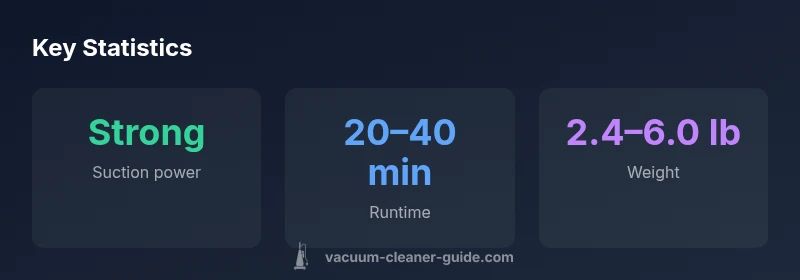
Runtime varies by model and power setting; expect around 20–40 minutes on standard mode and less on max power. If you need longer sessions, plan for models with higher-capacity batteries or spare batteries.
Most Dysons run about twenty to forty minutes on normal power; you may get less on max power.
Do Dyson stick vacuums handle pet hair well?
Yes, especially with motorized brushes and optimized heads designed for hair. Some models perform better on thick carpets, while others excel on hard floors for hair pickup.
They’re generally great for pet hair with the right head and attachments.
Are Dyson stick vacuums easy to maintain?
Maintenance involves regular emptying, filter cleaning, and occasional brush care to remove hair and fibers. Keeping filters dry and clean helps sustain suction and prolongs motor life.
Keep filters clean and empty the bin to maintain performance.
How do Dyson stick vacuums compare to other cordless vacuums?
Dyson typically offers stronger suction and lighter handling, with a broad accessory kit. Some rivals deliver longer runtimes and lower upfront costs. Choose based on your priority: suction vs. runtime, weight vs. price.
Dyson tends to lead in suction, but some rivals win on runtime and price.
What should I look for when buying a Dyson stick vacuum?
Look for runtime, weight, filtration, and included attachments. Check warranty coverage and the availability of replacement filters and heads in your region. Prioritize model features that align with your home’s surfaces and cleaning habits.
Focus on runtime, weight, and how the tool kit fits your floors.
Can Dyson stick vacuums replace a full-size canister or upright?
For many households, a Dyson stick vacuum handles daily quick cleans, pet hair, and hard floors well, but a full-size canister or upright may still be preferable for deep cleaning and large areas. Assess your cleaning needs and space.
Sticks cover most daily tasks, but a full-size vacuum can be better for deep cleaning.
Are there maintenance tips to extend a Dyson stick vacuum’s life?
Regularly clean filters, empty the bin before it’s full, brush the roller to remove hair, and check seals and hoses for wear. Proper storage and gentle daily use help extend the device’s life and maintain suction.
Keep filters clean, empty the bin, and brush off hair for best longevity.
The Essentials
- Evaluate runtimes against your cleaning cadence
- Prioritize models with pet-hair optimized heads
- Consider maintenance costs beyond the initial purchase
- Choose a tool kit that suits your floor types and tasks
- Ensure you have reliable parts and warranty access