Which Should You Do First: Vacuum or Dust?
Explore the optimal cleaning order: should you dust before vacuuming or vice versa? This analytical guide breaks down routines, room strategies, and allergy considerations to improve indoor air quality and cleaning efficiency.


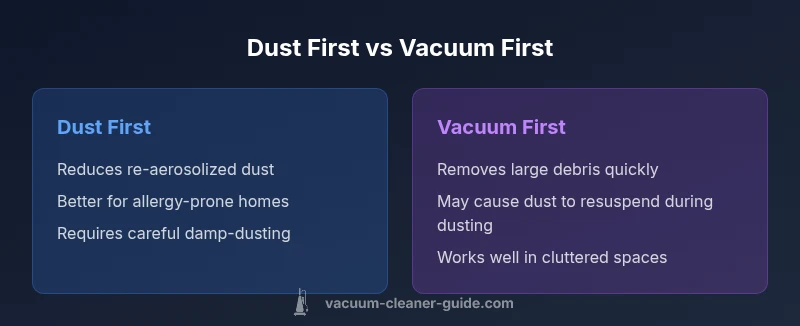
Dust first in most homes, then vacuum to capture settled particles. If floors are very dirty, vacuum debris first, then dust, and vacuum again. See our detailed comparison chart for nuance.
Why the order matters
In cleaning, order matters because each task targets different particle sizes and surfaces. The question which should you do first vacuum or dust is a practical one, and the answer influences air quality and surface cleanliness. According to Vacuum Cleaner Guide, the sequence you choose can reduce recontamination and make subsequent steps more effective. Typically, a dust-first approach—dusting surfaces before you move to floors—helps control the amount of dust that settles on furniture and carpets after you begin moving around the room. While there are exceptions based on room conditions, starting with dust minimizes the risk of pushing dusty air back onto surfaces that you’ve already wiped or cleaned.
Dusting mechanics and aerosols
Dust particles vary in size, and the way you dust determines how many micro-particles stay suspended in the air. Use microfiber cloths or damp-dusting tools to capture dust rather than dispersing it. Light, deliberate strokes on surfaces reduce aerosolization, especially around electronics or fabric. If you dust after vacuuming, you may notice a brief uptick in airborne particles; that’s normal, but it should settle quickly if you ventilate the room. For allergy-prone households, consider pre-wiping surfaces with a slightly damp cloth and then finishing with a vacuum pass to remove fine particles from upholstery and draperies.
Vacuuming mechanics: debris removal and filtration
Vacuuming excels at pulling heavier soil from floors, carpets, and stair treads. Choose a vacuum cleaner with a good filtration system (HEPA or equivalent) and a brush roll appropriate for your flooring. When you vacuum after dusting, you clear settled dust and debris that the cloth couldn’t catch. In high-traffic rooms, vacuuming first can remove large debris that would otherwise be stirred up during dusting. If you go dust-first, your vacuum can complete the task with fewer iterations, reducing time spent on touch-ups.
Room-by-room routines: kitchen, living room, bedrooms, and baths
- Kitchen: Start with dusting high surfaces (cabinets, light fixtures) and then vacuum hard floors and mats. - Living areas: Dust from top to bottom (ceiling fans, shelves), then vacuum carpets or area rugs. - Bedrooms: Dust nightstands, windowsills, and baseboards before vacuuming under the bed or along the edges of the carpet. - Bathrooms: Dust exhaust vents and light fixtures before mopping or vacuuming non-carpeted floors. Consistency matters more than perfection; stick to a routine that fits your schedule.
Pet hair and allergen considerations
Pet hair tends to accumulate on furniture and carpets. A dust-first approach helps you capture loose hair from surfaces before it becomes embedded in fibers, then you can follow with a targeted vacuum pass. HEPA filtration is particularly beneficial in homes with pets or allergy concerns. Regular maintenance of filters and bags ensures the system remains effective. If your pets shed heavily, you may want to schedule a quick vacuuming session before dusting to reduce the amount of loose hair floating in the air.
Step-by-step recommended workflow
- Declutter the room to reduce hidden debris. 2) Dust from top to bottom using microfiber tools. 3) Vacuum floors and rugs with a suitable setting. 4) Repeat the vacuum step on high-traffic areas if necessary. 5) Open a window or run an air purifier to aid ventilation. This sequence minimizes recontamination and keeps surfaces looking cleaner longer.
Tools and technique optimization
Invest in microfiber dusting cloths, a soft-bristle brush for delicate surfaces, and a vacuum with strong suction and effective filtration. Damp-dusting methods reduce dust dispersal, while a second vacuum pass ensures you capture fine particles. Keep a simple > and < method: dust first, then vacuum, then recheck high-traffic zones. Regular maintenance of tools (wash cloths, replace filters) improves overall performance over time.
Common mistakes and how to fix them
- Dusting with dry cloths on dusty surfaces disperses dust. Fix: use damp microfiber cloths.
- Vacuuming on very dirty floors without pre-clearing debris can clog or strain the vacuum. Fix: remove large debris first with a broom or handheld vacuum.
- Skipping ventilation increases particle concentration. Fix: run a fan or open windows during cleaning.
Tailoring the order to your home
Every home is different. If you have thick carpeting, pets, or an enclosed space with limited airflow, you may adjust the order to fit your needs. The core principle, however, remains: dust high-to-low, then vacuum low-to-high, and revisit surfaces that may need a touch-up after the initial sequence.
Implementation checklist
- Gather microfiber cloths and a damp-dusting solution. - Confirm your vacuum’s filtration and setting compatibility with your flooring. - Plan a room-by-room schedule that accommodates high-traffic times. - Track your results and adjust the order if you notice persistent dust on surfaces.
Comparison
| Feature | Dust-First Routine | Vacuum-First Routine |
|---|---|---|
| Dust Resuspension | Lower risk when dusting is thorough and followed by a vacuum pass | Moderate risk if large amounts of dust are created during initial dusting |
| Air Quality Impact | Air quality tends to improve after a second vacuum pass | Air may momentarily rise during rough dusting but stabilizes after vacuuming |
| Time Investment | Similar total time; adds dusting step | Slightly shorter initial step but may require extra passes |
| Surface Interaction | Works well for hard surfaces and upholstered areas after dusting | Good for debris-heavy rooms; can reduce need for repeated dusting |
| Best For | Allergy-prone homes; neat, controlled dusting | Homes with heavy debris or clutter; quick debris removal |
Strengths
- Dust-first reduces recontamination on cleaned surfaces
- Dust-first improves removal of settled dust after the sequence
- Allergy-prone homes benefit from cleaner air when done well
- Flexible for pet owners and high-traffic rooms
The Bad
- Dusting can spread particles if done with dry tools
- Requires extra time and careful technique
- In very cluttered spaces, the sequence may feel cumbersome
Dust-first is generally the better default for most homes.
A dust-first routine minimizes recontamination and improves air quality when paired with a thorough vacuum. Vacuum-first can be advantageous in debris-heavy rooms, but dusting first remains the staple approach for most households, including those with pets or allergies.
FAQ
What is the recommended order for dusting and vacuuming in a typical cleaning routine?
In most cases, dust first and then vacuum. Dusting from top to bottom minimizes recontamination, and vacuuming afterward captures settled dust. If a room is particularly dirty or cluttered, you can briefly vacuum first to remove visible debris, then dust and vacuum again to finish.
Dust first, then vacuum is the general rule; if a room is very dirty, you can vacuum first, then dust and vacuum again for best results.
Should I dust before vacuuming on hardwood floors?
Yes. Dust using a microfiber or damp cloth to avoid dispersing dust, then vacuum with the appropriate hard-floor setting and an efficient brush. This sequence helps protect finishes and reduces grit that can scratch surfaces.
Dust first on hardwood with a damp cloth, then vacuum with the right setting.
Can pets or allergies influence the order?
Yes. For allergy concerns, a dust-first approach helps remove dust from surfaces before it becomes airborne. Pair this with a HEPA-filter vacuum and regular filter maintenance to maximize benefits.
If you have allergies, dust first and use a good HEPA vacuum.
What if I have limited time for cleaning?
Do a quick debris removal, vacuum first to get rid of visible dirt, then dust and finish with a brief vacuum pass if time allows. Prioritize high-traffic areas.
If pressed for time, focus on removing large debris with a quick vacuum, then dust and finish what you can.
Is there any scenario where vacuuming first is always better?
Yes, in rooms with heavy visible debris or clutter, starting with vacuuming prevents pushing large particles into surfaces during dusting.
If a room is visibly dirty, vacuum first to avoid spreading debris during dusting.
The Essentials
- Dust first to minimize recontamination and airborne dust
- Dust top-down, then vacuum to capture settled particles
- Adjust the order in rooms with heavy debris or clutter
- Use microfiber cloths and damp dusting for best results
- Allergy-sensitive homes benefit most from a dust-first routine