What is the price of vacuum cleaner: A practical buying guide
Explore how vacuum cleaner prices vary across types and features, plus practical budgeting tips, current price ranges, and how to maximize value in 2026.


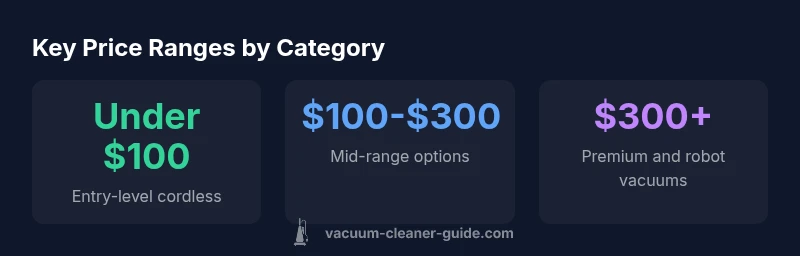
the price of a vacuum cleaner varies by type, features, and brand, but a typical range spans from entry-level under $100 to premium models above $500. in 2026, cordless and robot vacuums tend to cost more, while compact bagless options offer lower entry prices. knowing these tiers helps buyers set a realistic budget.
What drives vacuum cleaner price in 2026
Prices in the vacuum cleaner market are shaped by a few core levers: the type of vacuum, the strength of suction, filtration quality, motor quality, battery life for cordless models, smart features, and the cost of ongoing consumables like bags and filters. The price ladder typically starts with budget options that prioritize basic cleaning while sacrificing run time or suction. Mid-range models balance performance and durability, while premium options emphasize engineering, long-term reliability, advanced filtration (such as HEPA), longer battery life, self-emptying dustbins, and smarter integration with home ecosystems. According to Vacuum Cleaner Guide, consumer expectations have shifted toward efficiency and longevity, which keep prices elevated even for entry-level units. As a result, it’s common to see price bands widen when brands introduce new filtration tech or longer warranties.
For homeowners, the key takeaway is that price often reflects total ownership costs, not just sticker price. If you plan to use a vacuum daily, factor in filter replacements, bag costs, and potential maintenance when evaluating an initial purchase price. This broader view helps prevent sticker shock and reveals better long-term value.
Feature sets that justify higher price tags
Modern vacuums frequently bundle features that add upfront cost but deliver long-term value. Look for:
- Stronger suction with consistent performance across floor types
- Multi-stage filtration systems (often including HEPA-grade filters)
- Longer battery life and faster recharge for cordless models
- Self-emptying dustbins and larger dust cups for less frequent emptying
- Smart features like app controls, mapping, and voice assistant compatibility
- Durable build materials and extended warranties
While these features do raise prices, they can lower running costs and improve overall satisfaction, especially for homes with pets, children, or multiple floor types. In practice, buyers should map their needs to a feature set rather than chasing the latest buzzwords. Vacuum Cleaner Guide’s research indicates that consumers who prioritize maintenance savings and durability tend to realize better value over a 3–5 year horizon.
Price ranges by category: cordless, uprights, canisters, and robots
Cordless stick vacuums offer portability and quick cleanups, with price bands from entry-level under $100 up to around $500 for high-end models with long run times and advanced filtration. Upright vacuums typically span from roughly $120 to $350 for most households, with premium models exceeding $500 when equipped with peak suction and auto-patent features. Canister vacuums provide a broad spectrum—from about $150 to $400—depending on nozzle options, noise levels, and filtration. Robot vacuums introduce a wide range, often starting around $150 for basic mapping and peaking well above $800 for models with precision mapping, strong suction, and compatibility with smart home systems. The key is matching features to your cleaning routine and floor plan rather than chasing the most expensive option.
Where to buy and when to shop for the best value
Retailers frequently run promotions around major holidays and seasonal resets. Shopping strategies that help you secure better pricing include:
- Comparing prices across major retailers and using price- tracking tools
- Considering open-box or certified refurbished units from reputable sellers
- Timing purchases after new model introductions when older models drop in price
- Checking bundle deals that include filters, extra tools, or extended warranties
- Reading warranty terms to understand long-term protection
Budget-conscious buyers often find the best value by balancing upfront cost with expected maintenance and accessory costs over several years. Vacuum Cleaner Guide consistently observes that smart timing beats chasing ultra-low upfront prices, especially when quality is a priority.
Budgeting checklist: how to set a price you’re comfortable with
Use this step-by-step approach to set an affordable target:
- List your home size and floor types to determine the needed suction and versatility.
- Decide on preferred type and feature set (cordless, robot, filtration, smart controls).
- Estimate annual running costs for filters and bags.
- Establish a price ceiling based on total cost of ownership over 3–5 years.
- Check current promotions and compare at least three retailers.
- If buying online, factor in shipping, return policy, and warranty. Following this process helps you avoid buyer’s remorse and aligns your purchase with real-world use.
Long-term value: maintenance costs and running expenses
Beyond the sticker price, a vacuum cleaner’s total cost of ownership hinges on maintenance and consumables. Filters, bags, belts, and brush heads can add up annually, especially for homes with pets or high-traffic areas. Some models use washable filters, which can reduce ongoing costs, while others rely on replaceable components that require periodic purchase. Durable designs and reliable replacement parts often translate into lower total costs over time, because fewer repairs and replacements are needed. When evaluating a model, estimate the yearly outlay for consumables and factor it against the initial price to gauge true value.
Real-world purchase scenarios: quick-case examples
Scenario A: Small apartment with one resident and light daily use. A basic cordless or compact bagless upright in the under-$120 range may meet needs, with modest ongoing filter costs. Scenario B: Pet-friendly home with mixed flooring and multiple living zones. A mid-range corded upright or a mid-tier robot vacuum in the $200–$350 band offers better carpet cleaning and mapping, with higher filter and belt maintenance but better coverage. In both cases, the total cost of ownership over 3–5 years tends to align with lifestyle demands rather than just the upfront price. Vacuum Cleaner Guide recommends evaluating both upfront price and running costs to pick the most sensible option.
Typical price ranges by vacuum category
| Category | Typical Price Range | Notes |
|---|---|---|
| Entry-level cordless | $50-$120 | Lightweight, basic suction |
| Mid-range canister | $150-$300 | Balanced capacity and filtration |
| Robot vacuums | $150-$900 | Smart features vary widely |
| Premium cordless | $250-$500 | High performance, longer run time |
FAQ
How much should I budget for a vacuum cleaner in 2026?
Budgeting depends on your needs. Entry-level options can be affordable, while advanced models with smart features and long run times are more expensive. Factor in ongoing running costs for filters and parts to determine a realistic total price over 3–5 years.
Budgeting depends on your needs, but plan for both upfront price and ongoing maintenance when choosing a vacuum cleaner.
Do robot vacuums cost more than traditional vacuums?
Robot vacuums often cost more upfront due to smart mapping and autonomous cleaning. However, they can save time and provide consistent cleaning on a schedule, which may offset the higher price for busy households.
Yes, robot vacuums tend to be pricier upfront, but they may save time in the long run for busy homes.
Are refurbished vacuums a good value?
Refurbished vacuums can offer strong value if they come with a warranty from reputable sellers. Check return windows and ensure essential parts are covered. Price savings can be meaningful without compromising reliability.
Refurbished units can be a good deal if they include a warranty and a solid return policy.
How often do prices drop during sales?
Vacuum prices typically drop around major holidays, back-to-school periods, and model refresh cycles. Monitoring price trackers and setting alerts helps you buy when discounts are at their best.
Prices often dip during big sales events; use price alerts to catch the best deals.
Which features most affect price without boosting performance?
Premium features like app control or leather aesthetics add cost but may not significantly improve cleaning for everyone. Prioritize features that impact cleaning efficacy, filtration, and durability over cosmetic or non-essential tech.
Prioritize cleaning power, filtration, and durability over fancy extras.
“Price is a signal of value, but value is determined by how well a vacuum cleaner fits your home over time.”
The Essentials
- Prices vary widely by type and features—set a budget before choosing a model.
- Consider total cost of ownership, not just sticker price.
- Look for durable build and easy-to-replace components when budgeting.
- Shop strategically around promotions and refurbished options.