How Much Is a Small Vacuum Cleaner? A Practical Price Guide
Understand typical prices for compact vacuums, compare cordless and corded models, and learn how features affect cost. Vacuum Cleaner Guide analyzes 2026 trends to help homeowners budget wisely.


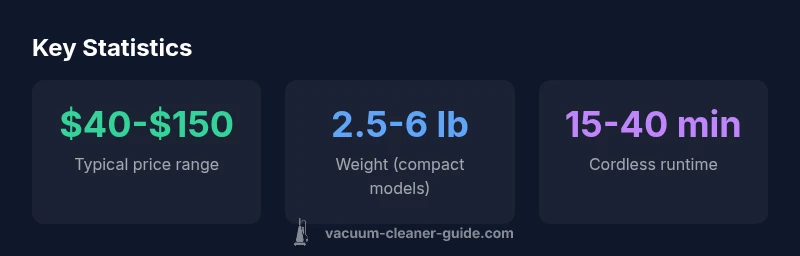
Overview: For a compact vacuum cleaner, prices typically range from about $40 to $150, depending on battery power, suction, and included features. Most basic cordless models start around $40–$60, while mid-range compact units with stronger suction and longer runtimes usually fall in the $70–$120 range. Premium small vacuums with advanced filtration or specialized attachments can approach $150.
What qualifies as a 'small vacuum cleaner'?\n\nIf you’re asking how much is a small vacuum cleaner, size and features matter. A true compact unit prioritizes portability, which often means a light frame, short storage footprint, and a handle that feels balanced in one hand. In practice, look for models labeled as compact, handheld, or stick vacuums that can squeeze into apartment closets, car trunks, or stair risers. Weight generally falls between about 2.5 and 6 pounds, with most dimensions kept under 12 inches wide and around 15–18 inches tall. For households with pets or upholstery needs, you may want a slightly bigger compact model, but still designed for quick pickups rather than full-room deep cleaning. The keyword here is balance: you want enough power to remove dirt and hair without dragging around a bulky unit. This balance sets the baseline for price comparisons later in this article.\n\nNote: While many shoppers use the term 'small vacuum cleaner' interchangeably with handheld or cordless sticks, it’s helpful to separate the concept into three practical tiers: ultra-portable handhelds, compact cordless sticks, and small canister variants. Each tier offers a different price-to-performance ratio, which will show up in the next sections as you compare how much to budget for your specific needs.
Price landscape for compact vacuums\n\nWhen shoppers ask how much is a small vacuum cleaner, the price landscape for compact models is broad but predictable with the right framework. In 2026 Vacuum Cleaner Guide analysis, most compact vacuums used in homes fall into three practical price bands: entry-level, mid-range, and premium. Entry-level cordless models typically start in the lower end of the spectrum, with many buyers finding solid functionality around the $40–$60 range. Mid-range compact vacuums, which offer stronger suction, longer runtimes, and better filtration, generally sit in the $70–$120 bracket. Premium compact units, especially those with HEPA filtration, motorized brushes, and comprehensive accessory kits, can approach $150. It’s important to compare price against value: a model may cost a little more but provide a longer warranty, replacement parts, and better customer support. Finally, be mindful of seasonal sales around holidays and campus moves, which can temporarily shift price norms by 5–15 percentage points depending on stock and promotions.
Cordless vs corded: cost and practicality in small vacuums\n\nCordless compact vacuums are the most common choice for small apartments and cars, but the price gap versus corded options is notable. Cordless models tend to be thinner, lighter, and more convenient for quick cleanups, which often translates to higher sticker prices relative to their corded cousins. Battery chemistry (NiMH vs. Li-ion) and runtime heavily influence cost: longer runtimes and quicker recharge times typically push price upward but deliver more usable minutes between charges. Corded compact vacuums tend to be cheaper initially and can outperform in sustained suction on carpets when a battery isn’t a concern. For pet owners, cordless units with strong suction and easy-to-clean filters often win for daily touch-ups, but you’ll want to verify that the heavier corded variants aren’t excluded from your budget due to higher upfront costs. The right choice boils down to how often you intend to use the vacuum and where you’ll store it.
Features that impact price in compact models\n\nKey features drive price in small vacuums more than any other factor. Motor power is the obvious driver: higher wattage or rpm delivers stronger suction but uses more energy and reduces battery life in cordless models. Filtration level matters as well; sealed HEPA or similar systems command higher prices but capture fine dust, which is important for allergy sufferers. Battery type and runtime are critical in cordless units: larger batteries offer longer cleaning sessions but add weight and cost. Attachments such as crevice tools, upholstery nozzles, motorized brush heads, and flexible hoses can push a model from mid-range into premium territory. Build quality and warranty length are also telling indicators of long-term value. If you seek a bargain, evaluate whether the extra features align with actual use; purchase decisions should hinge on performance per dollar rather than headline specs alone.
Shopping strategies: where to buy and how to save\n\nSmart shopping for a small vacuum cleaner combines patience with strategy. Look for seasonal promotions near major holidays or back-to-school periods, when retailers clear inventory. Refurbished or open-box units can offer significant savings if they come with a clear warranty and a return policy. Compare bundles rather than single-item prices—some retailers throw in extra attachments or replacement filters that reduce ongoing costs. Consider cash-back portals and loyalty programs to shave a few more dollars off the total. Finally, read independent reviews focusing on real-world performance, not just lab tests, to identify models that consistently deliver value in the 6–12 month window after purchase.
Quick-start buying checklist for homeowners and pet owners\n\n- Define your primary tasks: stairs, upholstery, pet hair, or quick daily pickups.\n- Choose cordless if you prioritize portability; select corded if you need consistent suction and long runtimes.\n- Verify runtime, suction, filtration, and available attachments against the price.\n- Check warranty length and parts availability.\n- Balance upfront price with ongoing costs like replacement filters and batteries.
Comparison of compact vacuum models by type and size
| Model Type | Typical Weight | Battery Life (min) | Price Range |
|---|---|---|---|
| Cordless compact | 2.5-4.0 pounds | 15-40 | $40-$120 |
| Corded compact | 4.0-6.5 pounds | N/A | $30-$90 |
| Ultra-compact hand vac | 1.2-2.5 pounds | N/A | $25-$60 |
| Pet-hair focused | 3.0-5.5 pounds | 20-35 | $60-$150 |
FAQ
What is considered a 'small' vacuum cleaner and when should I choose one over a larger model?
A small vacuum cleaner is defined by compact dimensions, light weight, and a storage-friendly footprint. Choose one when you clean tight spaces, stairs, or cars frequently. For whole-room cleaning or heavy pet hair, consider a larger, more powerful model.
A small vacuum is compact and portable—great for tight spaces and quick cleanups. If you need deep cleaning or heavy pet hair, you might want a bigger model.
Do compact vacuums differ in suction power, and how does that affect price?
Yes. Higher suction typically means a more expensive motor and better filtration, especially in cordless models. When price differences arise, compare real-world performance on common tasks, not just peak specifications.
Suction power often drives price. Look for models that perform well on your usual messes rather than chasing peak specs.
Are cordless small vacuums worth it for pet hair?
Cordless models offer convenience and maneuverability for pet hair in small areas. However, they may have shorter runtimes and higher upfront costs. If you clean multiple rooms or a large area, ensure the runtime fits your routine.
Cordless can be great for pets in small spaces, but check runtime to avoid interruptions during cleaning.
What features most affect price in compact models?
Motor power, filtration quality, battery capacity, and included attachments are the main price drivers. Higher-grade filters (like HEPA), longer battery life, and richer accessory kits push price upward but can improve long-term value.
Motor power, filtration, battery life, and attachments largely drive price in small vacuums.
How can I estimate annual running costs for a small vacuum?
Estimate by considering energy use, filter replacements, battery lifespan, and potential part replacements. Cordless models may incur higher recurring costs for batteries and filters, while corded ones mainly incur filter costs.
Think about energy use, filter replacements, and battery life to estimate yearly costs.
Should I buy a refurbished compact vacuum?
Refurbished compact vacuums can offer excellent value if they come with a warranty and a clear return policy. Verify battery health (for cordless models) and ensure parts are readily available.
Refurbished can be a smart choice if price and warranty line up with your needs.
“Price is a reflection of the value you get in reliability, runtime, and filtration. Compare features side-by-side to ensure you’re not paying for extras you won't use.”
The Essentials
- Set a price ceiling before shopping
- Cordless models offer convenience but cost more upfront
- Check runtime and filtration to ensure value
- Compare price against features, not just brand
- Look for warranties and spare parts availability